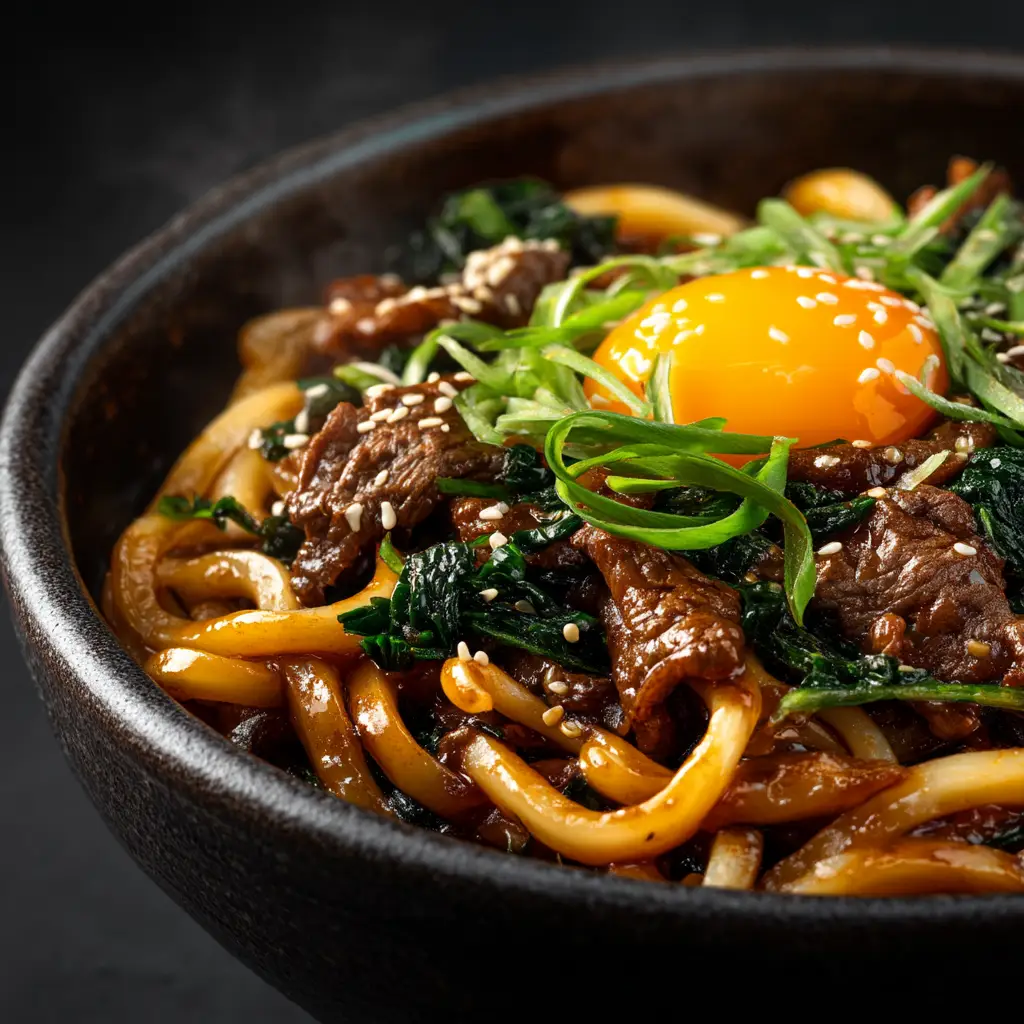
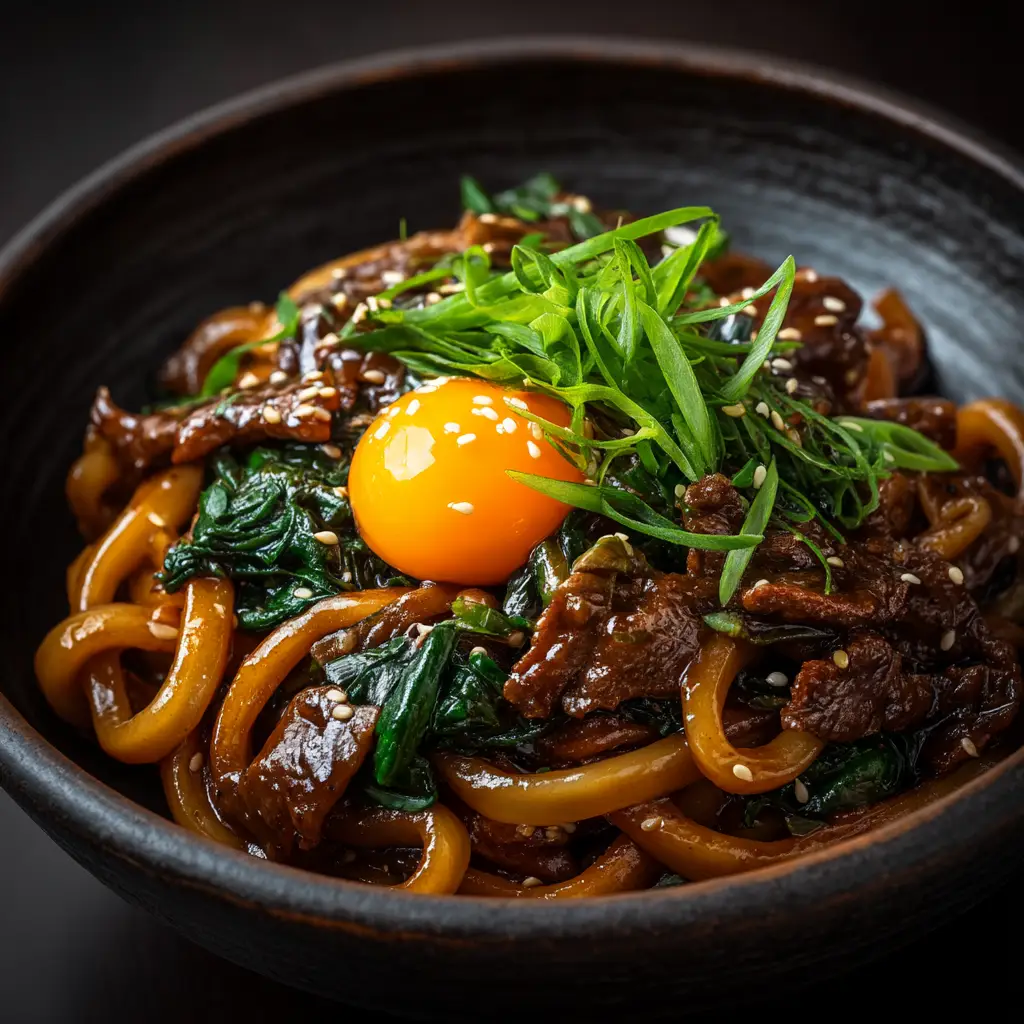
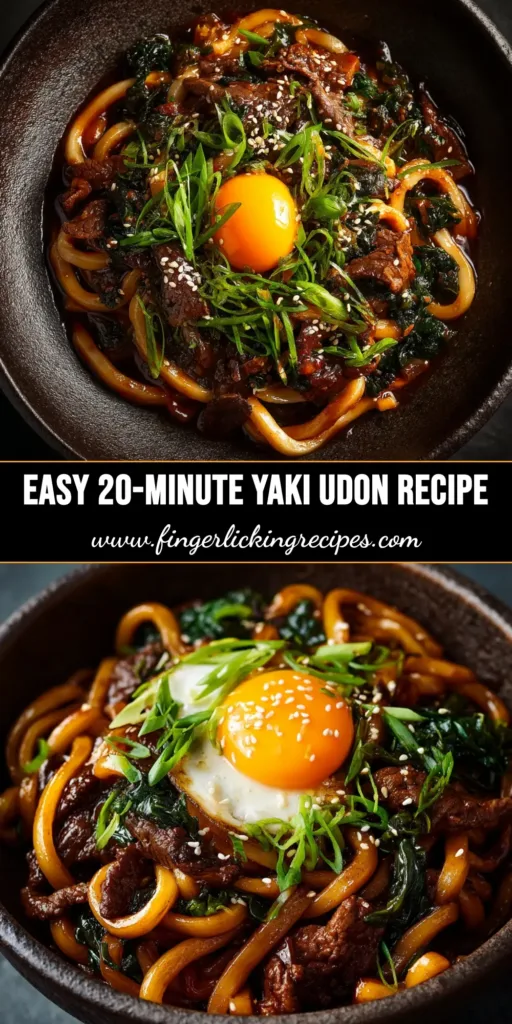
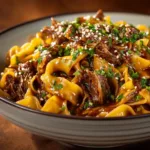
This easy Yaki Udon Recipe is your ticket to a restaurant-quality Japanese stir-fry in under 30 minutes. Chewy, thick udon noodles are tossed in a savory, slightly sweet sauce with crisp vegetables and your favorite protein. It’s the perfect satisfying weeknight meal that the whole family will love.
Forget takeout! Once you realize how simple it is to whip up this classic Japanese comfort food at home, you’ll be making it on repeat. We’ve packed this guide with everything you need to know, from picking the right noodles to mastering the perfect sauce.
Dinner is served in under 30 minutes!
What is Yaki Udon?
Yaki Udon is a popular Japanese stir-fried dish made with thick, chewy udon noodles, a variety of vegetables, and a protein, all coated in a delicious soy-based sauce. The name itself tells you what it is: “Yaki” (焼き) means “to fry” or “grill,” and “Udon” (うどん) refers to the specific type of thick wheat noodle used. Unlike soup-based udon dishes, this is a dry, pan-fried recipe full of savory and umami flavors.
Why You’ll Love This Yaki Udon Recipe
Quick & Easy: From start to finish, this entire meal comes together in less than 30 minutes, making it perfect for busy weeknights.
Better Than Takeout: The homemade yaki udon sauce is incredibly simple but packs a massive flavor punch that rivals any restaurant. For another amazing takeout-style dish, try this easy teriyaki chicken stir fry.
Completely Customizable: This recipe is a fantastic base. You can easily swap proteins or use whatever vegetables you have in your fridge.
Hearty & Satisfying: The thick, chewy noodles make this a wonderfully filling and comforting meal.
Ingredients You’ll Need
The magic of this dish lies in its simple yet flavorful components. The sauce is the star, bringing everything together in a perfect savory-sweet balance.
For the Yaki Udon Sauce:
Soy Sauce: The savory, umami backbone of the sauce. Use a low-sodium variety if you prefer to control the saltiness.
Mirin: A sweet Japanese rice wine that adds a mild sweetness and beautiful glaze.
Oyster Sauce: Adds a deep, savory, and slightly sweet flavor that is essential for an authentic taste.
Brown Sugar: A touch of brown sugar balances the saltiness and adds a hint of caramel flavor.
Sesame Oil: For a rich, nutty aroma that finishes the sauce perfectly.
For the Stir-Fry:
Udon Noodles: The star of the show! Frozen udon noodles are highly recommended for the best texture, but pre-cooked vacuum-sealed or even dry udon will work.
Protein: We’re using boneless, skinless chicken thighs, but you can easily substitute with shrimp, beef, pork, or tofu.
Vegetables: A classic combination of onion, garlic, mushrooms, bok choy, and carrots adds flavor, texture, and nutrients.
Avocado Oil: Or any neutral oil with a high smoke point for stir-frying.
Garnish: Green onions and sesame seeds for a fresh, finishing touch.
The perfect savory and sweet sauce makes this dish irresistible.
How to Make Yaki Udon
Making this homemade Yaki Udon recipe is a simple three-step process: prepare your ingredients, make the sauce, and stir-fry everything together. Let’s get started!
Step 1: Prepare the Noodles and Ingredients
First, cook the udon noodles according to the package directions. It’s crucial not to overcook them; they should still have a nice chew. Once cooked, drain them and rinse with cold water to stop the cooking process and prevent sticking. While the noodles cook, chop your chicken and vegetables so they are ready to go into the pan.
Step 2: Mix the Yaki Udon Sauce
In a small bowl, whisk together the soy sauce, mirin, oyster sauce, brown sugar, and sesame oil. Stir until the brown sugar is completely dissolved. Set the sauce aside.
Step 3: Stir-Fry to Perfection
Heat the avocado oil in a large skillet or wok over medium-high heat. Add the chicken and cook until it’s browned and cooked through. Next, add the onion and garlic, and cook for another minute until fragrant. Add the remaining vegetables (mushrooms, carrots, and bok choy) and stir-fry for 3-4 minutes until they are tender-crisp.
Step 4: Combine and Serve
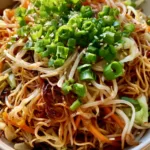
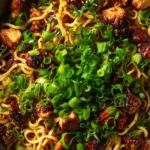
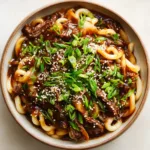
Finally, add the cooked udon noodles to the skillet with the chicken and vegetables. Pour the prepared sauce over everything and toss gently to coat the noodles and ingredients evenly. Cook for another 1-2 minutes until everything is heated through. Serve immediately, garnished with sliced green onions and a sprinkle of sesame seeds. If you love noodle dishes, you should also check out this delicious Korean Beef Noodles recipe.
Tips for the Best Stir-Fried Udon
Don’t Overcook the Noodles: This is the most important tip! Udon noodles can become mushy if overcooked. Cook them just until they are al dente, as they will cook a bit more in the skillet.
Use Frozen Udon: For the best texture, use frozen “sanuki” style udon noodles. They have a superior chewy and bouncy texture compared to the shelf-stable kind.
High Heat is Key: A hallmark of a great stir-fry is cooking quickly over high heat. This gives the vegetables a nice char while keeping them crisp.
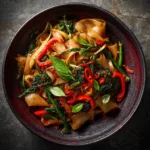
Have Ingredients Ready: Stir-frying moves fast. Have all your vegetables chopped, protein sliced, and sauce mixed before you even turn on the stove. This French cooking principle is called “mise en place.” For another recipe where this is crucial, see our Black Pepper Chicken.
Recipe Variations & Substitutions
Protein Power: Swap the chicken for thinly sliced beef, peeled shrimp, ground pork, or crispy fried tofu for a vegetarian option.
Vegetable Medley: Feel free to use other vegetables like broccoli florets, bell peppers, snow peas, cabbage, or bean sprouts.
Make it Spicy: Add a teaspoon of chili garlic sauce, sriracha, or a pinch of red pepper flakes to the sauce for a spicy kick.
Make it Vegan: Use a vegan oyster sauce (made from mushrooms) and swap the chicken for pan-fried tofu or extra mushrooms.
How to Store and Reheat
Store any leftover Yaki Udon in an airtight container in the refrigerator for up to 3 days. To reheat, simply microwave for 1-2 minutes or, for best results, stir-fry in a skillet over medium heat with a splash of water to help loosen the noodles until heated through.
The main difference is the noodles. Yaki Udon is made with thick, chewy, white wheat noodles (udon), while Yakisoba is made with thinner, yellow, ramen-style wheat noodles (soba) that are often steamed or boiled before being fried.
Frozen udon noodles are highly recommended for the best texture. They tend to be bouncier and chewier than the pre-cooked, vacuum-sealed varieties, which can sometimes be a bit mushy. If you can’t find frozen, the vacuum-sealed packs are the next best choice.
Yaki udon sauce is typically a simple, savory, and slightly sweet sauce. Our recipe is made from a balanced mixture of soy sauce, mirin (sweet rice wine), oyster sauce, a little brown sugar, and toasted sesame oil for aroma.
Absolutely! To make it vegetarian, simply substitute the chicken with pan-fried firm tofu, edamame, or extra mushrooms. To make it vegan, also ensure you use a mushroom-based vegetarian ‘oyster’ sauce.
The key is to not overcook them during the initial boiling step. Cook them until they are just ‘al dente’ (firm to the bite), as they will cook more in the skillet. Immediately rinsing them with cold water after draining also helps to stop the cooking process.
Love This Recipe? Share It!
We hope you enjoyed this fantastic Yaki Udon Recipe! It’s a true go-to for a fast, flavorful, and satisfying meal. If you made it and loved it, please feel free to share your creation on Pinterest. We love seeing your takes on our recipes!
Get the best Yaki Udon recipe right here! So easy and delicious.
Yaki Udon Recipe
FL Recipes
Yaki Udon Recipe: The Ultimate Guide to Stir-Fried Noodles
This easy Yaki Udon Recipe delivers restaurant-quality Japanese stir-fried noodles in under 30 minutes. Chewy udon noodles, a savory sauce, and your favorite protein make this the perfect weeknight dinner.
1lbBoneless, skinless chicken thighsCut into bite-sized pieces
1tbspAvocado OilOr other neutral oil
1smallOnionThinly sliced
2clovesGarlicMinced
8ozMushroomsSliced (shiitake or cremini)
1headBok ChoyRoughly chopped
1CarrotJulienned
2Green OnionsSliced, for garnish
1tspToasted Sesame SeedsFor garnish
Equipment
1 Large Skillet or Wok
1 Large Pot For boiling noodles
1 Small Bowl For mixing the sauce
Method
Cook udon noodles according to package directions until al dente. Drain and rinse with cold water to prevent sticking. Set aside. Prepare all vegetables and chicken.
In a small bowl, whisk together soy sauce, mirin, oyster sauce, brown sugar, and sesame oil until the sugar is dissolved.
Heat avocado oil in a large wok or skillet over medium-high heat. Add the chicken and cook until browned and cooked through. Add sliced onion and minced garlic, cooking for one more minute until fragrant.
Add the mushrooms, carrots, and bok choy to the skillet. Stir-fry for 3-4 minutes until the vegetables are tender but still crisp.
Add the cooked udon noodles to the skillet. Pour the sauce over everything and toss to combine. Cook for 1-2 minutes until everything is heated through. Garnish with green onions and sesame seeds before serving.
Nutrition
Calories: 580kcalProtein: 38gFat: 18gFiber: 6g
Notes
Tip 1: Use frozen udon noodles if you can find them. They have a much better chewy texture than shelf-stable varieties. Tip 2: Don't overcrowd the pan. If you are doubling the recipe, cook in two batches to ensure everything stir-fries properly instead of steaming. Tip 3: For a vegetarian version, swap the chicken for firm tofu and use a mushroom-based vegetarian oyster sauce.
Hi, I’m Emily Carter, and welcome to FL Recipes! I share simple, healthy recipes that make cooking easy, fun, and delicious for everyone. more about me »