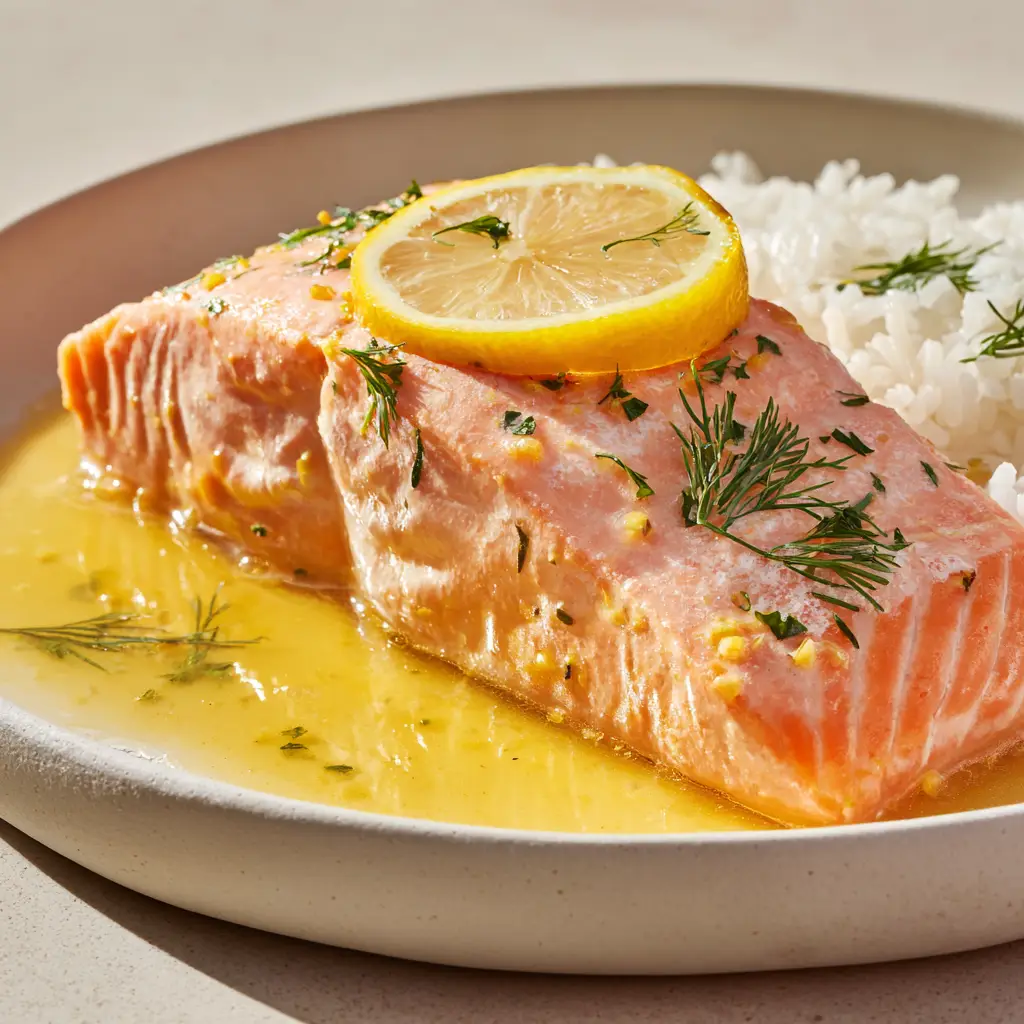
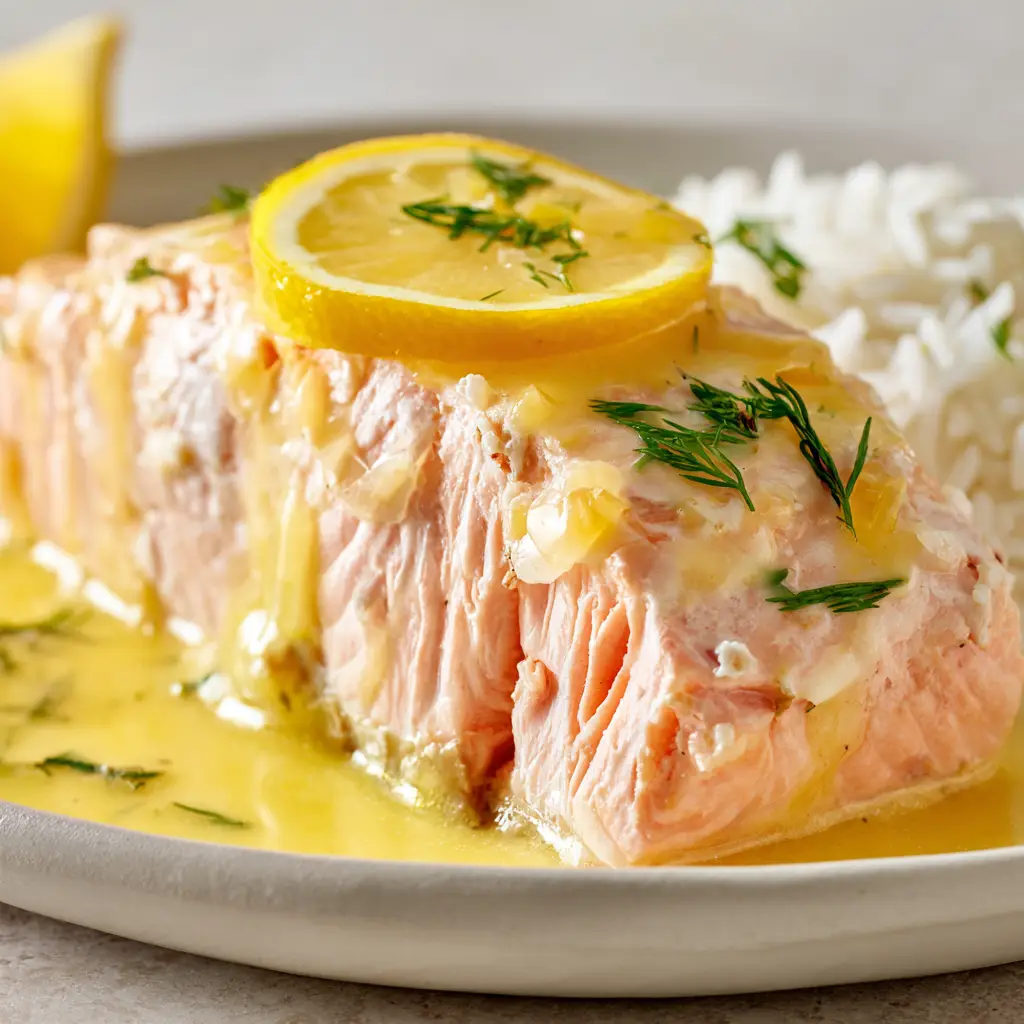
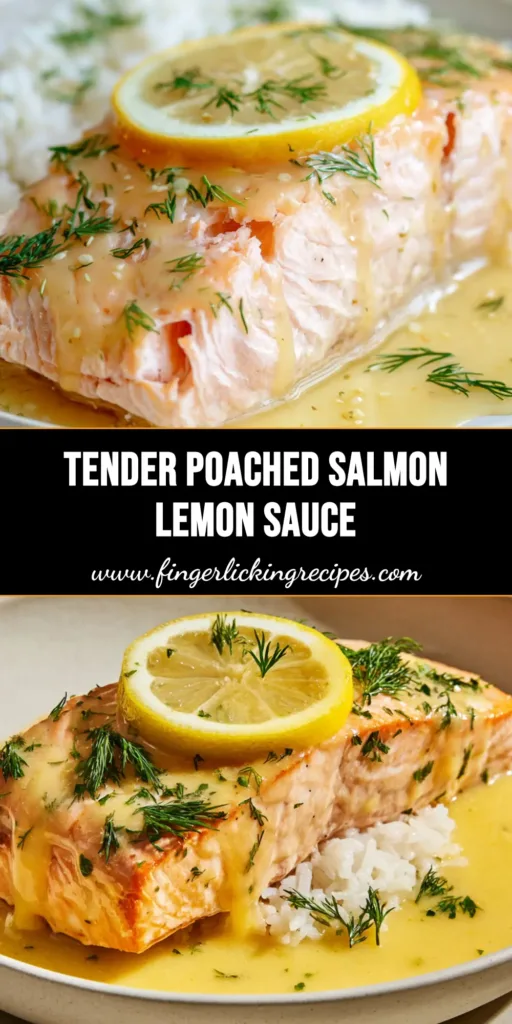
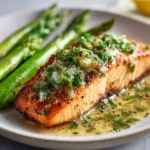
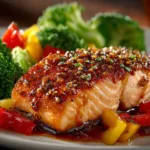
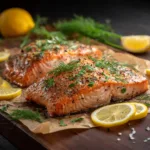
There is nothing quite as elegant and satisfying as a perfectly executed Poached Salmon Recipe. When prepared correctly, the result is a thick, flaky light pink salmon fillet that is perfectly opaque, incredibly moist, and melts in your mouth. Poaching is a gentle cooking method that ensures your seafood never dries out.
This dish is elevated by a vibrant, translucent yellow lemon sauce that generously drizzles over the fish. The beautiful glossy texture of the sauce captures the soft natural daylight, making your dining plate look like it came from a five-star restaurant. A small bed of fluffy white rice sits visibly underneath the bottom edge of the salmon, ready to soak up every drop of that incredible citrus glaze.
To finish, the dish is garnished with a thin round slice of fresh yellow lemon resting perfectly on the top center. Small scattered sprigs of vibrant green fresh dill add an herbaceous pop of color against the neutral light beige background of the plate. It is a visually stunning and incredibly delicious meal you can make in under 30 minutes.
Why You’ll Love This Recipe
Perfect Texture: The gentle poaching technique guarantees a perfectly opaque and moist interior, so you never have to worry about dry fish again.
Glossy and Bright: The translucent yellow lemon sauce is perfectly thickened to lightly coat the salmon without being heavy or creamy.
Aromatic Touches: Small scattered sprigs of fresh green dill sprigs cut through the richness of the fish with a vibrant, fresh flavor.
Complete Meal: Resting on a bed of fluffy white rice, this recipe offers satisfying, comforting carbohydrates to balance the lean protein.
Ingredients & Substitutions
Thick Salmon Fillets: You will need 2 center-cut fillets, about 6 oz (170g) each. Center-cut pieces ensure an even, thick, flaky light pink poached salmon fillet. Keep your poaching liquid at a gentle simmer to ensure the salmon cooks gently and remains incredibly moist.
Fresh Lemon: Grab 1 large, fresh yellow lemon to provide juice for the sauce and a beautiful thin round slice for the garnish. The natural acidity balances the entire dish.
Fresh Dill: You need 2 tbsp (5g) of fresh green dill sprigs. This delicate herb provides an earthy, aromatic finish that pairs flawlessly with seafood.
White Rice: Use 1 cup (200g) of long-grain white rice. Once cooked, it creates the essential small bed of fluffy white rice visible underneath the fish.
Dry White Wine & Aromatics: Combine 1/2 cup (120ml) of dry white wine with 1/2 tsp (1g) whole black peppercorns and 1 tsp (5g) kosher salt. This creates the foundational, invisible flavor bath for the salmon.
Vegetable Broth & Honey: Use 1/2 cup (120ml) vegetable broth and 1 tbsp (15ml) honey for the sauce base. The honey adds a subtle sweetness that makes the yellow lemon sauce beautifully glossy.
Cornstarch: A crucial 1 tsp (3g) of cornstarch mixed with cold water acts as a structural thickener. It ensures the sauce becomes translucent and glossy rather than cloudy.
Equipment Needed
Large skillet with a tight-fitting lid for poaching the fish.
Small saucepan for simmering the glossy lemon glaze.
Whisk to ensure the cornstarch slurry blends smoothly.
Slotted fish spatula for gently lifting the delicate fillets.
Step-by-Step Instructions
1. Prepare the Fluffy White Rice
In a medium saucepan, combine 1 cup (200g) of long-grain white rice with 2 cups (480ml) of water and a pinch of salt. Bring the water to a rolling boil over high heat.
Once boiling, reduce the heat to the lowest setting, cover tightly, and simmer for 15-18 minutes. Fluff with a fork to ensure a perfectly soft, airy texture.
2. Create the Poaching Liquid
In your large skillet, combine 2 cups (480ml) of water, 1/2 cup (120ml) dry white wine, 1 tsp (5g) kosher salt, and the whole black peppercorns. Bring the liquid to a very gentle simmer over medium heat. Thick, center-cut salmon fillets are essential for achieving a moist, perfectly opaque final dish.
Do not let the liquid reach a rapid boil. A gentle, bubbling simmer is scientifically required to cook the fish evenly without destroying its delicate protein structure.
3. Poach the Salmon
Carefully lower the thick salmon fillets into the simmering liquid. Cover the skillet tightly with the lid and let the fish poach undisturbed for 8 to 10 minutes.
Watch for the crucial visual cue: the flesh should turn perfectly opaque and light pink. Once cooked, use a slotted spatula to gently transfer the fish to a clean plate.
4. Whisk the Translucent Lemon Sauce
While the fish poaches, whisk together the vegetable broth, fresh lemon juice, and honey in a small saucepan over medium heat. Bring the mixture to a light simmer.
In a small bowl, whisk 1 tsp (3g) of cornstarch with 1 tbsp (15ml) of cold water. Pour this slurry into the simmering lemon mixture, whisking constantly until it thickens into a glossy, translucent yellow lemon sauce.
5. Plate and Garnish
Spoon a small bed of fluffy white rice onto a simple white ceramic dining plate. Gently place the warm, moist salmon fillet directly on top, allowing the rice to peek out underneath the bottom edge.
Generously drizzle the glossy yellow lemon sauce over the top of the fillet. Garnish by placing a thin round slice of fresh yellow lemon on the top center, and scatter the small sprigs of vibrant green fresh dill around the plate.
Expert Tips for Success
Mind the Simmer: Never rapid-boil your poaching liquid. A violent boil will cause the fish to seize up, squeeze out its moisture, and become tough.
Check the Internal Temp: For perfectly opaque and moist salmon, use a meat thermometer. Pull the fish from the liquid the moment it hits 140°F (60°C).
Slurry Science: Always mix your cornstarch with cold water before adding it to the hot sauce. Adding dry powder directly to hot liquid will cause permanent, unsightly lumps.
Fresh is Best: Do not substitute dried dill for fresh in this recipe. The visual vibrancy and aromatic oils of fresh green dill sprigs are essential to the final dish.
Storage & Reheating Instructions
Store any leftover poached salmon in an airtight container in the refrigerator for up to 3 days. Keep the rice and the glossy lemon sauce in separate containers to prevent the rice from becoming soggy.
To reheat, sprinkle a few drops of water over the fish and microwave on 50% power in 30-second bursts. Gentle reheating prevents the light pink salmon from overcooking and drying out.
What to Serve With This
While this recipe features a beautiful bed of fluffy white rice, you can easily switch up your carbohydrates. For a richer alternative, serve the flaky fish alongside a generous scoop of creamy mashed potatoes.
For a lighter lunch option, serve the cold poached salmon over a crunchy asian cabbage salad. The glossy yellow lemon sauce doubles beautifully as a sweet and tangy salad dressing!
The white stuff is a harmless protein called albumin. To prevent it from seeping out, ensure your poaching liquid is kept at a gentle, barely bubbling simmer rather than a rolling boil. Gentle heat prevents the muscle fibers from contracting too quickly.
Yes, but you must thaw the salmon fillets completely in the refrigerator overnight before poaching. Poaching frozen salmon directly can result in an unevenly cooked, mushy texture rather than a flaky, perfectly opaque fillet.
A cloudy sauce usually happens if you boil the liquid too vigorously or use flour instead of cornstarch. Cornstarch is the ideal thickener for achieving a beautifully glossy, translucent yellow glaze.
For a perfectly moist and light pink interior, remove the salmon from the poaching liquid when a meat thermometer inserted into the thickest part reads 140°F (60°C). It will continue to cook slightly as it rests.
While some recipes use poaching liquid for sauce, it can sometimes make the glaze taste overly fishy or cloudy. Using fresh vegetable broth and lemon juice ensures a bright, perfectly translucent yellow sauce.
Ready to Master Seafood?
If you loved this Poached Salmon Recipe, please leave a 5-star rating in the recipe card below and share your thoughts in the comments! We love hearing how your glossy lemon sauce and perfectly opaque fillets turned out.
Don’t forget to subscribe to our daily newsletter for more easy, restaurant-quality dinners sent straight to your inbox. Pin this recipe to your favorite seafood board on Pinterest to save it for later! A thick, flaky poached salmon fillet, perfectly opaque and moist, drizzled with a glossy, translucent yellow lemon sauce.
Recipe Card
FL Recipes
Perfect Poached Salmon Recipe with Glossy Lemon Sauce
Master this Poached Salmon Recipe featuring a thick, flaky salmon fillet drizzled with a glossy translucent yellow lemon sauce, served perfectly over fluffy white rice with fresh dill.
2filletsthick center-cut salmon filletsabout 6 oz (170g) each
1wholefresh yellow lemonjuiced, with one thin round slice reserved for garnish
2tbspfresh green dill sprigsabout 5g
1cuplong-grain white riceabout 200g
2cupswater480ml, for rice
2cupswater480ml, for poaching liquid
0.5cupdry white wine120ml
1tspkosher salt5g
0.5tspwhole black peppercorns1g
0.5cupvegetable broth120ml
1tbsphoney15ml
1tspcornstarch3g, mixed with 1 tbsp (15ml) cold water
Equipment
1 Large skillet with tight-fitting lid Essential for poaching the salmon gently.
1 Small Saucepan For simmering the glossy lemon sauce.
1 Whisk To ensure a smooth cornstarch slurry.
Method
Step-by-Step Cooking Instructions
In a medium saucepan, combine 1 cup (200g) of long-grain white rice with 2 cups (480ml) of water and a pinch of salt. Bring to a rolling boil over high heat. Reduce heat to low, cover, and simmer for 15-18 minutes. Fluff with a fork.
In a large skillet, combine 2 cups (480ml) water, 1/2 cup (120ml) dry white wine, 1 tsp (5g) kosher salt, and whole black peppercorns. Bring to a gentle simmer over medium heat. Do not let it boil rapidly.
Carefully lower the thick salmon fillets into the gently simmering liquid. Cover the skillet tightly with a lid and poach for 8 to 10 minutes until the flesh turns perfectly opaque and light pink. Transfer the fish gently to a plate.
In a small saucepan over medium heat, whisk the vegetable broth, fresh lemon juice, and honey until simmering. Whisk the cornstarch and cold water slurry into the saucepan. Whisk constantly until it thickens into a glossy, translucent yellow sauce.
Spoon a bed of fluffy white rice onto a plate. Place the warm salmon fillet on top. Drizzle generously with the glossy yellow lemon sauce. Garnish with a thin round slice of fresh lemon on top and scatter fresh green dill sprigs around the plate.
Nutrition
Calories: 485kcalProtein: 38gFat: 14gFiber: 2g
Notes
Gentle Simmer: Never rapid-boil your poaching liquid. A violent boil will cause the fish to squeeze out its moisture and become tough. Check Temp: Pull the fish from the liquid the moment it hits 140°F (60°C) for a moist interior.
Hi, I’m Emily Carter, and welcome to FL Recipes! I share simple, healthy recipes that make cooking easy, fun, and delicious for everyone. more about me »