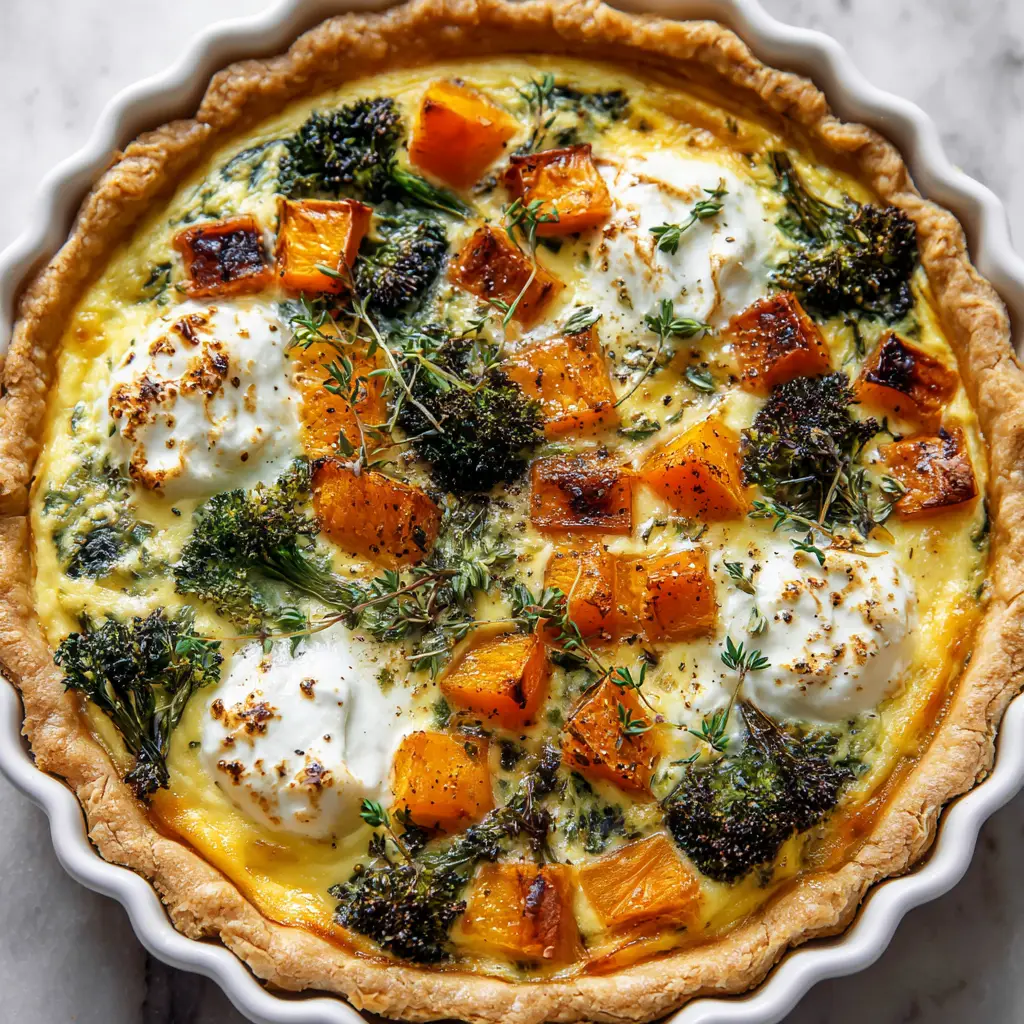
There is something undeniably comforting about a beautifully crafted Winter Vegetable Quiche making its way to the center of your table. This magnificent savory tart captures the essence of the season, marrying rich, hearty vegetables with a luxurious, melt-in-your-mouth custard. Every slice offers a symphony of textures, from the thick, golden brown, flaky butter crust to the creamy white ricotta dollops resting on top.
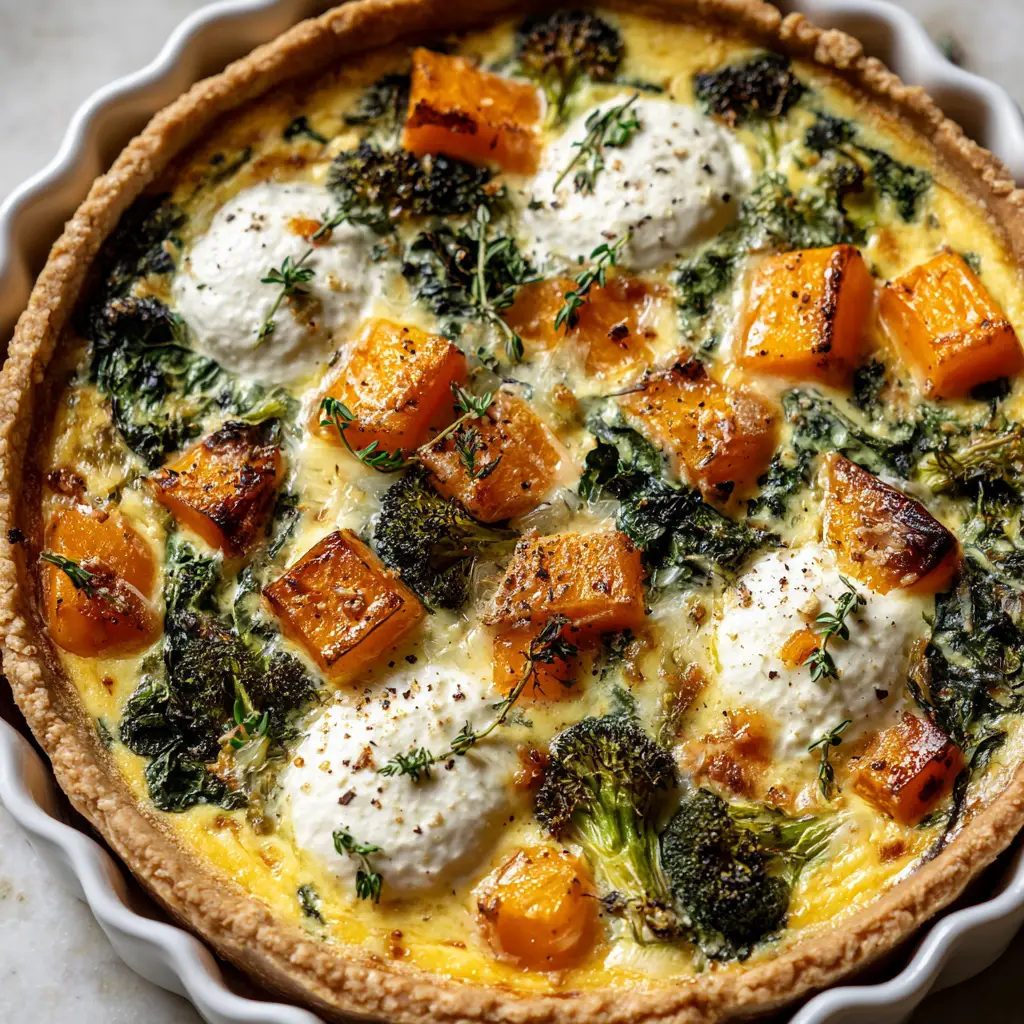
When you take the time to build a quiche step-by-step, you elevate a simple egg dish into a culinary centerpiece. The vibrant roasted orange butternut squash cubes provide a touch of natural sweetness, beautifully balanced by the savory depth of dark green creamed kale. Generous dollops of creamy white ricotta and cracked black pepper elevate this savory tart.
Why This Winter Vegetable Quiche Will Transform Your Brunch Menu
Unmatched Textural Contrast: The foundation features a thick, golden brown, flaky butter crust with beautifully crimped edges that shatters slightly upon the first bite.
Visually Stunning Presentation: A pale yellow baked egg custard perfectly set is marbled with dark green creamed kale, creating an awe-inspiring slice.
Caramelized Depths of Flavor: Vibrant roasted orange butternut squash cubes with slightly charred edges and small roasted broccoli florets offer deep, complex roasted notes.
Luxurious Finishing Touches: Generous, creamy white dollops of smooth ricotta cheese sit on the surface, accented perfectly by tiny green fresh thyme leaves and coarse cracked black pepper.
Essential Components for Building Your Savory Masterpiece
The Flaky Pastry Foundation: You will need 1 1/2 cups (180g) of all-purpose flour, 1/2 cup (113g) of ice-cold cubed unsalted butter, a pinch of salt, and 3-4 tbsp (45-60ml) of ice water. The extremely cold butter creates necessary steam pockets during baking, ensuring your base becomes a thick, golden brown, flaky butter crust.
The Luxurious Egg Custard: Gather 4 large whole eggs, 1 cup (240ml) of heavy whipping cream, and 1/2 cup (120ml) of whole milk. This precise ratio of fat to protein is scientifically required to achieve a pale yellow baked egg custard that is perfectly set and never rubbery.
Vibrant Roasted Root Vegetables: Prepare 1 cup (150g) of diced butternut squash cubes and 1 cup (100g) of small broccoli florets, tossed in 1 tbsp (15ml) of extra virgin olive oil. Roasting these at a high temperature guarantees slightly charred edges on the squash and deeply flavorful broccoli florets.
Rich Creamed Kale: You need 2 cups (60g) of chopped fresh kale, sautéed in 1 tbsp (15g) of unsalted butter with 1 clove of minced garlic and a splash of heavy cream. This process wilts the tough greens into a dark green creamed kale that folds beautifully into the filling.
Garnishes and Seasoning: Secure 1/2 cup (120g) of whole-milk ricotta cheese, 1 tbsp (3g) of tiny green fresh thyme leaves, 1 tsp (5g) of Kosher salt, and 1/2 tsp (2g) of coarse cracked black pepper. The creamy white ricotta dollops melt slightly into the surface while the coarse pepper provides sharp, aromatic pops of flavor.
Crucial Equipment for Flawless Tart Baking
To achieve the stunning visual aesthetics of this dish, a white fluted ceramic tart dish is essential for those beautifully crimped edges. You will also need a standard rolling pin, parchment paper, and pie weights (or dried beans) to blind bake the pastry shell properly.
For the vegetables, a heavy-duty aluminum baking sheet is required to generate the high heat needed for charred edges. A standard whisk and a large glass mixing bowl will ensure your egg base is thoroughly homogenized. A perfectly set baked egg custard beautifully marbled with dark green creamed kale.
Step-by-Step Guide to Crafting the Ultimate Savory Custard
Forming and Blind Baking the Pastry Foundation
Begin by pulsing the 1 1/2 cups (180g) flour, 1/2 cup (113g) cold butter, and salt in a food processor until it resembles coarse meal. Drizzle in 3-4 tbsp (45-60ml) of ice water until the dough just holds together, then chill for 30 minutes. Roll the dough out and press it gently into your white fluted ceramic tart dish, creating neatly crimped edges.
Line the chilled dough with parchment paper and fill it entirely with pie weights. Bake at 400°F (200°C) for 15 minutes, remove the weights, and bake for another 5-10 minutes. Look for a visually dry, thick, golden brown, flaky butter crust as your sensory cue to remove it from the oven.
Roasting the Vegetables to Caramelized Perfection
Lower the oven temperature to 375°F (190°C). Toss the 1 cup (150g) butternut squash cubes and 1 cup (100g) small broccoli florets with 1 tbsp (15ml) of olive oil and a pinch of salt.
Spread them in an even layer on your baking sheet and roast for 20-25 minutes. Listen for a gentle sizzling sound and look for vibrant roasted orange butternut squash cubes with slightly charred edges before pulling them out.
Preparing the Dark Green Creamed Kale
In a skillet over medium heat, melt 1 tbsp (15g) of butter and sauté 1 minced garlic clove until fragrant. Add the 2 cups (60g) of chopped kale and cook until significantly wilted.
Stir in 2 tbsp (30ml) of heavy cream and simmer for 2 minutes until the liquid thickens. The result should be a deeply aromatic, dark green creamed kale.
Whisking the Custard Base
In a large mixing bowl, vigorously whisk the 4 large eggs, 1 cup (240ml) heavy cream, 1/2 cup (120ml) whole milk, 1 tsp (5g) Kosher salt, and a pinch of nutmeg. The mixture should appear smooth and homogenous.
Gently fold the cooled creamed kale into this liquid. This ensures your final product will feature a pale yellow baked egg custard marbled with dark green creamed kale.
Assembling and Baking the Masterpiece
Pour the egg and kale mixture into your pre-baked tart shell. Evenly embed the small roasted broccoli florets and vibrant roasted orange butternut squash cubes into the top of the filling.
Carefully spoon generous, creamy white dollops of smooth ricotta cheese across the surface. Bake at 375°F (190°C) for 35-40 minutes until the center is perfectly set with just a slight jiggle. Immediately sprinkle the entire dish with tiny green fresh thyme leaves and coarse cracked black pepper.
Pro Culinary Secrets for a Flawless Bake
Avoid a Soggy Bottom: Always blind bake your crust. This seals the dough and guarantees a thick, golden brown, flaky butter crust.
Room Temperature Eggs: Cold eggs can shock the melted fat in your cream. Let your eggs sit on the counter for 20 minutes for a perfectly emulsified pale yellow baked egg custard.
Dry Your Greens: Ensure your creamed kale isn’t overly watery before adding it to the custard, or your filling will split and fail to set properly.
Watch the Edges: If your crimped edges brown too quickly during the final bake, protect them with a ring of aluminum foil.
Preserving the Freshness of Your Savory Tart
Allow the quiche to cool completely to room temperature before attempting to store it, as this allows the custard to properly set. Wrap the ceramic dish tightly in plastic wrap or transfer slices to an airtight container.
It will keep in the refrigerator for up to 4 days. To reheat, place slices in a 350°F (175°C) oven for 10-15 minutes to revive the flaky texture of the crust.
Perfect Pairings for Your Culinary Centerpiece
This rich and deeply savory dish demands a bright, acidic side salad dressed in a light lemon vinaigrette to cut through the heavy cream and ricotta. A fresh fruit platter or a light soup also works wonders for a complete brunch spread.
Yes. Blind baking the pastry dough before adding the liquid custard is essential. It prevents the filling from soaking into the raw dough, ensuring your foundation remains a thick, golden brown, flaky butter crust.
Watery quiche is usually caused by excess moisture from the vegetables or overbaking. Ensure you thoroughly cook down your creamed kale to remove excess liquid, and pull the quiche from the oven when the center still has a slight jiggle.
Absolutely. You can bake the entire quiche a day in advance. Store it covered in the refrigerator and gently reheat slices in a 350°F (175°C) oven to revive the flaky texture of the crust.
Using a combination of heavy cream and whole milk provides the exact fat-to-protein ratio required to yield a rich, pale yellow baked egg custard that is luxurious and velvety, rather than rubbery or dense.
Complete Winter Vegetable Quiche Recipe
FL Recipes
Winter Vegetable Quiche with Ricotta and Roasted Greens
Master this visually stunning Winter Vegetable Quiche featuring a golden flaky crust, creamy baked egg custard, roasted butternut squash, broccoli florets, and ricotta dollops. Perfect for an impressive seasonal brunch or dinner.
1 White Fluted Ceramic Tart Dish Essential for creating the beautifully crimped edges.
1 Heavy-Duty Baking Sheet Used for roasting the vegetables at high heat.
Method
Making the Quiche
Pulse flour, butter, and salt in a food processor. Add ice water until it forms a dough. Chill for 30 minutes, then roll out and press into a tart dish. Blind bake with pie weights at 400°F (200°C) for 15 minutes, remove weights, and bake 5-10 more minutes until golden brown.
Toss butternut squash cubes and broccoli florets in olive oil. Roast at 375°F (190°C) for 20-25 minutes until the squash has slightly charred edges.
Sauté chopped kale and minced garlic in butter until wilted. Add a splash of heavy cream and cook until thickened.
Whisk eggs, heavy cream, milk, salt, and a pinch of nutmeg until smooth. Fold in the creamed kale.
Pour the custard into the baked crust. Embed roasted squash and broccoli into the filling. Add dollops of ricotta on top. Bake at 375°F (190°C) for 35-40 minutes until perfectly set. Garnish with fresh thyme and coarse cracked black pepper.
Nutrition
Calories: 385kcalProtein: 10gFat: 28gFiber: 3g
Notes
Tip 1: Always blind bake the crust to prevent a soggy bottom. Tip 2: Allow the quiche to cool slightly before slicing so the custard can fully set.
Save this stunning Winter Vegetable Quiche recipe for your next brunch!
Share Your Culinary Triumph
Creating this stunning, multi-layered quiche is a deeply rewarding culinary experience that will leave your guests asking for the recipe. The intricate balance of the flaky crust, creamy custard, and charred winter vegetables makes every minute of preparation worthwhile.
If you loved making this dish, please leave a comment below and let us know how your vibrant roasted vegetables turned out. Don’t forget to sign up for our newsletter for more seasonal inspiration, and be sure to pin this recipe to your boards on Pinterest!
Hi, I’m Emily Carter, and welcome to FL Recipes! I share simple, healthy recipes that make cooking easy, fun, and delicious for everyone. more about me »