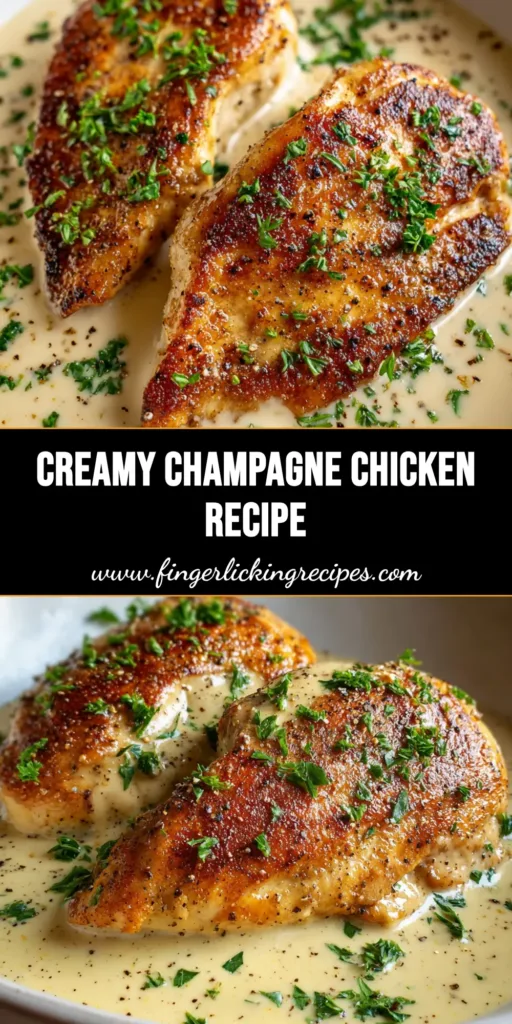
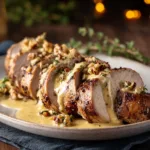
This Champagne Chicken Recipe brings five-star restaurant elegance right to your dining room table. Imagine slicing into juicy, tender meat perfectly contrasted by a thick, velvety pale ivory champagne cream sauce. This visually stunning dish uses foundational culinary techniques to transform everyday poultry into a masterpiece.
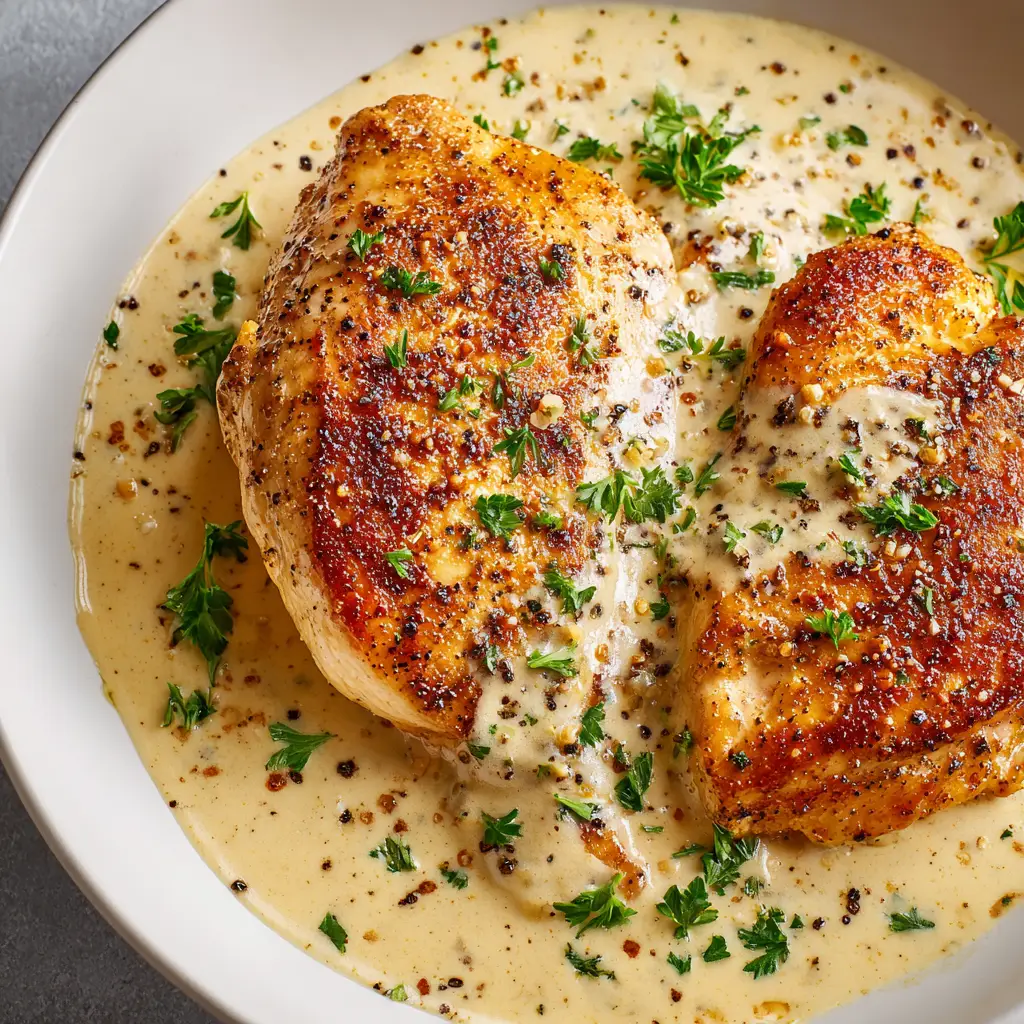
There is nothing quite as inviting as a rich sauce forming a creamy pool around the base of perfectly cooked chicken. The dish is beautifully brightened by finely chopped fresh green parsley flakes, cutting through the richness. Soft natural daylight always illuminates the glossy sheen of this sauce, proving just how luxurious a simple pan reduction can be.
If you enjoy crafting visually striking, deeply flavorful meals at home, this recipe will quickly become your date-night staple. Grab your favorite skillet, and let’s build an unforgettable flavor profile.
Why This Pan-Seared Chicken Masterpiece Works
Unmatched Textural Contrast: The golden-brown caramelized crust on the chicken gives way to an incredibly tender center.
Luxurious Viscosity: The thick, pale ivory champagne cream sauce is heavily reduced, resulting in a glossy, velvety sheen that naturally clings to the meat.
Balanced Acidity and Richness: Dry champagne perfectly cuts through the heavy cream, preventing the sauce from becoming cloying.
Aromatic Garnishes: Coarsely cracked black pepper and finely chopped fresh green parsley flakes add vibrant color and sharp, earthy tasting notes.
The rich sauce forms a creamy pool around the base of the chicken, ready to be soaked up.
Essential Ingredients for a Velvety Ivory Sauce
Boneless Skinless Chicken Breasts: You will need 2 large breasts, approximately 1 lb (450g) in total. Pounding them to an even thickness ensures a uniform, golden-brown caramelized crust.
All-Purpose Flour: Just 1/4 cup (30g) is needed for a light dredge. This invisible step absorbs surface moisture for a better sear and helps thicken the pan sauce later.
Olive Oil and Unsalted Butter: A blend of 1 tbsp (15ml) olive oil and 2 tbsp (30g) butter is crucial. The oil raises the smoke point, while the butter provides the milk solids needed for browning.
Minced Shallots: Use 1 small shallot, yielding about 2 tbsp (20g). Shallots provide a delicate, slightly sweet allium base that pairs flawlessly with sparkling wine.
Dry Champagne: Measure out 1/2 cup (120ml) of a dry champagne or sparkling wine (like Brut). This acts as the acidic deglazing agent that lifts the savory browned bits from the pan.
Low-Sodium Chicken Broth: Add 1/4 cup (60ml) of high-quality broth. This stretches the sauce and adds deep, savory poultry notes.
Heavy Cream: You will need 1/2 cup (120ml) of heavy cream (at least 36% butterfat). This is the secret to achieving that thick, pale ivory champagne cream sauce without it breaking.
Fresh Green Parsley: Roughly 1 tbsp (4g) of finely chopped fresh green parsley flakes is required. This garnish brings a crucial pop of color and fresh herbaceousness.
Kosher Salt and Cracked Black Pepper: Use 1 tsp (5g) of kosher salt and 1/2 tsp (1g) of coarsely cracked black pepper. Seasoning at every stage builds layers of complex flavor.
Specialized Equipment for the Perfect Crust
To achieve the visual perfection of this dish, a heavy-bottomed skillet is absolutely non-negotiable. A 10-inch or 12-inch stainless steel or cast-iron pan provides the even heat distribution necessary for a deep golden sear. Avoid non-stick pans, as they prohibit the formation of “fond”—the caramelized drippings essential for a flavorful sauce.
You will also need a meat mallet or heavy rolling pin to pound the chicken to an even thickness. Finally, a flat-edged wooden spoon or silicone whisk is highly recommended for scraping the bottom of the pan while deglazing.
A perfect golden-brown caramelized crust guarantees maximum flavor in this dish.
Step-by-Step Culinary Techniques to Master this Dish
Prepping and Searing the Poultry
Begin by placing the chicken breasts between two sheets of plastic wrap and gently pounding them to an even 1/2-inch (1.25cm) thickness. Pat the meat completely dry with paper towels. Season both sides evenly with the kosher salt and half of your cracked black pepper.
Dredge the seasoned breasts lightly in the all-purpose flour, shaking off any excess. Heat the olive oil and 1 tbsp (15g) of butter in your skillet over medium-high heat. Wait until the butter foams and begins to subside before adding the meat.
Sear the chicken undisturbed for 4-5 minutes until a deep golden-brown caramelized crust forms. Flip and cook for an additional 4-5 minutes until the internal temperature reaches 165°F (74°C). Remove to a plate and tent with foil.
Deglazing and Building the Champagne Base
Lower the heat to medium and add the remaining 1 tbsp (15g) of butter to the skillet. Toss in the minced shallots, sautéing for 1-2 minutes until they soften and turn translucent. Listen for a gentle sizzle, ensuring the garlic and shallots do not burn.
Pour in the dry champagne to deglaze the pan. Use your wooden spoon to aggressively scrape up all the savory browned bits stuck to the bottom. Let the liquid bubble and reduce by half, which concentrates the wine’s acidity and flavor.
Simmering the Thick Cream Sauce
Pour in the chicken broth and heavy cream, stirring continuously to incorporate the liquids into a uniform pale ivory base. Bring the mixture to a gentle simmer, never a rolling boil, to prevent the dairy from separating.
Allow the sauce to reduce for 3-4 minutes until it thickens into a velvety consistency. You will know it is ready when it easily coats the back of a spoon and leaves a clean trail when you swipe your finger through it.
Garnishing and Serving the Masterpiece
Return the rested chicken breasts, along with any accumulated juices, back into the creamy pool in the skillet. Simmer for 1 minute just to heat through. Transfer the chicken to a shallow white ceramic serving dish.
Spoon the glossy sauce generously over the meat. Finish the dish by generously garnishing with your finely chopped fresh green parsley flakes and a final dusting of coarsely cracked black pepper on top.
Professional Troubleshooting for a Flawless Cream Sauce
Sauce is Too Thin: Ensure you are using heavy cream, not half-and-half. If it’s still thin, let it simmer for another 1-2 minutes to evaporate more water.
Sauce Looks Broken or Curdled: This happens if the heat is too high. Always reduce the heat to medium-low before adding your dairy, and never let it boil aggressively.
Lack of Caramelization: Moisture is the enemy of browning. Ensure your chicken is thoroughly dried with a paper towel before dredging in flour.
Overcooked Chicken: Pounding the meat to an even thickness guarantees the thin tail ends don’t dry out before the thick centers are cooked through.
Proper Storage and Reheating Protocols
Store any leftover chicken and cream sauce in an airtight container in the refrigerator for up to 3 days. Because of the heavy dairy content, freezing this dish is not recommended, as the sauce will break and become grainy upon thawing.
To reheat, place the leftovers in a skillet over medium-low heat. Add a splash of fresh chicken broth or a tablespoon of water to loosen the thick pale ivory sauce. Cover and heat gently until warmed through, avoiding the microwave to maintain the velvety texture.
What to Serve With This Exquisite Poultry Dish
This rich and elegant meal demands sides that can soak up the glorious pan sauce. A bed of garlic mashed potatoes, buttery egg noodles, or roasted asparagus makes for a complete restaurant-quality experience.
If you love creamy, comforting poultry dishes, you should absolutely explore our recipe for creamy spinach chicken. For an Italian-inspired twist on date night, try serving this alongside our mushroom and spinach lasagna. Alternatively, if you want another decadent dinner option, our garlic steak tortellini never fails to impress a crowd. Lastly, fans of rich, peppery sauces will fall in love with our cacio e pepe chicken.
Yes, while dry champagne provides the signature flavor, you can substitute the alcohol with an equal amount of white wine vinegar mixed with chicken broth, or a splash of apple cider vinegar for acidity.
Always opt for a ‘Dry’ or ‘Brut’ champagne or sparkling wine. Sweet or demi-sec varieties will make the cream sauce overly sugary, which clashes with the savory poultry.
Dairy can separate if it hits high heat too quickly or if it boils rapidly. Always lower your heat to a gentle simmer before adding the heavy cream, and never let it boil.
Absolutely. Boneless, skinless chicken thighs work beautifully. Keep in mind that thighs may take slightly longer to sear and reach a safe internal temperature of 165°F (74°C).
Heavy cream is strongly recommended for this recipe because its high fat content prevents the sauce from breaking when mixed with the acidic champagne. Half-and-half is much thinner and more prone to curdling.
Champagne Chicken Recipe Card
FL Recipes
The Ultimate Champagne Chicken Recipe for an Elegant Dinner
Master this elegant Champagne Chicken Recipe featuring pan-seared, golden-brown chicken breasts smothered in a thick, velvety pale ivory cream sauce. Perfectly garnished for a five-star date night dinner at home.
1lbBoneless Skinless Chicken BreastsAbout 450g, pounded to an even thickness.
1/4cupAll-Purpose Flour30g, for dredging.
1tbspOlive Oil15ml.
2tbspUnsalted Butter30g, divided.
1tspKosher Salt5g.
1/2tspCracked Black Pepper1g, plus extra for garnish.
2tbspMinced ShallotsAbout 1 small shallot, 20g.
1/2cupDry Champagne120ml, or dry sparkling wine.
1/4cupLow-Sodium Chicken Broth60ml.
1/2cupHeavy Cream120ml.
1tbspFresh Green Parsley4g, finely chopped.
Equipment
1 Heavy-bottomed Skillet Stainless steel or cast iron preferred for the best caramelized crust.
1 Meat Mallet Used to pound the chicken to an even thickness.
Method
Cooking Instructions
Pound the chicken breasts to an even 1/2-inch (1.25cm) thickness. Pat completely dry and season with kosher salt and half of the cracked black pepper. Dredge lightly in the all-purpose flour.
Heat the olive oil and 1 tbsp (15g) of butter in a skillet over medium-high heat. Sear the chicken for 4-5 minutes per side until a deep golden-brown caramelized crust forms and the internal temperature reaches 165°F (74°C). Remove and set aside.
Lower heat to medium. Add the remaining 1 tbsp (15g) of butter and the minced shallots. Sauté for 1-2 minutes until translucent.
Pour in the dry champagne, scraping up the browned bits from the pan. Allow the liquid to reduce by half.
Stir in the chicken broth and heavy cream. Simmer gently for 3-4 minutes until the sauce reduces into a thick, velvety pale ivory consistency that coats the back of a spoon.
Return the chicken to the skillet to warm through for 1 minute. Serve in a shallow dish, smothered in the creamy pool of sauce. Garnish generously with finely chopped fresh green parsley and coarsely cracked black pepper.
Nutrition
Calories: 520kcalProtein: 28gFat: 38gFiber: 1g
Notes
Use a heavy-bottomed skillet for the best sear. Never allow the heavy cream to come to a rolling boil, or it may separate.
Keyword Champagne Chicken Recipe,creamy chicken,date night dinner
Save this stunning Champagne Chicken Recipe to your favorite dinner board for your next date night!
Share Your Culinary Masterpiece
Did this Champagne Chicken Recipe turn out as beautiful as a painting? We want to see your golden crusts and creamy ivory sauces! Leave a rating and review below to let us know how your date night dinner turned out.
Don’t forget to save this recipe for your next special occasion. Pin it now and share your handheld smartphone photos with us over on Pinterest!
Hi, I’m Emily Carter, and welcome to FL Recipes! I share simple, healthy recipes that make cooking easy, fun, and delicious for everyone. more about me »