There is a specific culinary magic that happens when high-heat searing meets a syrupy, translucent glaze, and this Chicken in Garlic Sauce captures that essence perfectly. Forget the watered-down versions from plastic containers; we are recreating the dark, glossy, and deeply savory experience you see in professional food photography right in your own kitchen. This dish is defined by its reflective brown sauce that clings to every crevice of tender chicken breast, punctuated by the vibrant snap of red bell peppers and the pungent aroma of freshly minced ginger and garlic.
If you have ever marveled at the way a high-end stir fry glistens under soft natural light, you are about to master the technique behind it. Much like my popular high-protein honey garlic shrimp (coming soon), this recipe relies on a precise balance of aromatics and thickeners to achieve a restaurant-quality finish. By the time you finish this guide, you will be able to produce a dark, syrupy glaze that is as visually stunning as it is delicious, all while using a simple cast iron skillet.
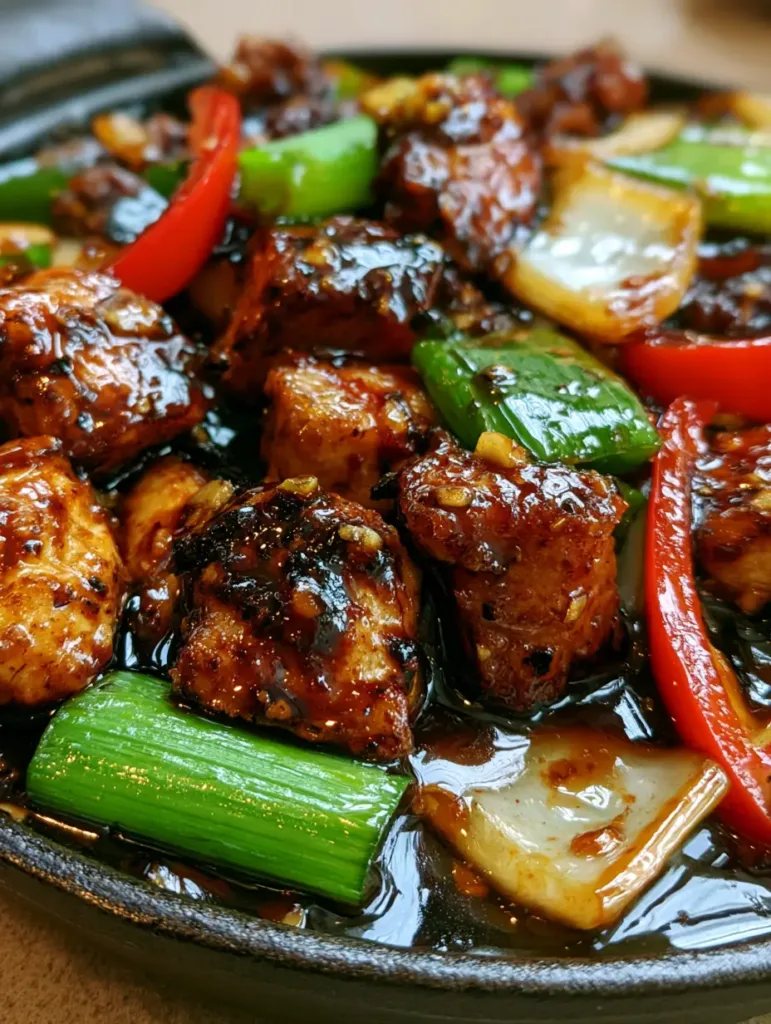
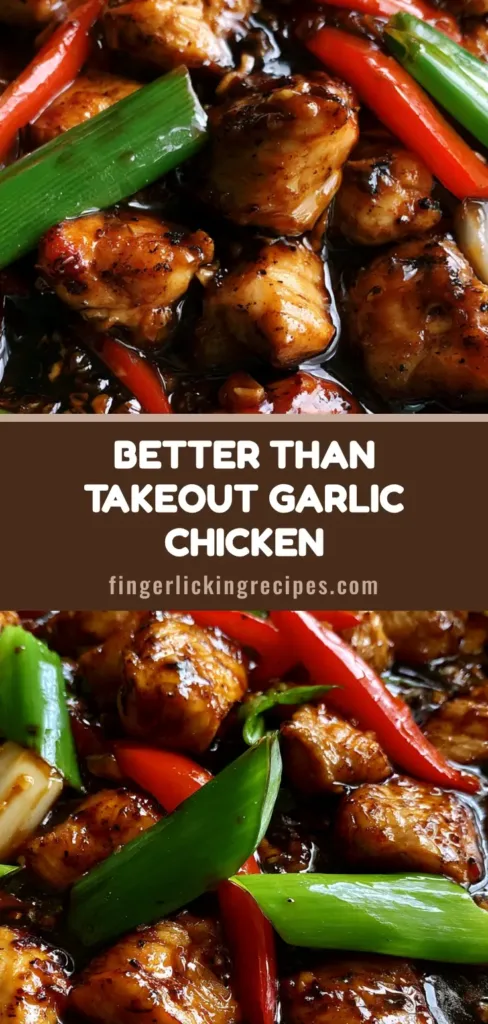
Fresh out of the skillet: vibrant colors and bold textures defined this easy weeknight dinner.
The Visual and Textural Appeal of a Masterful Stir Fry
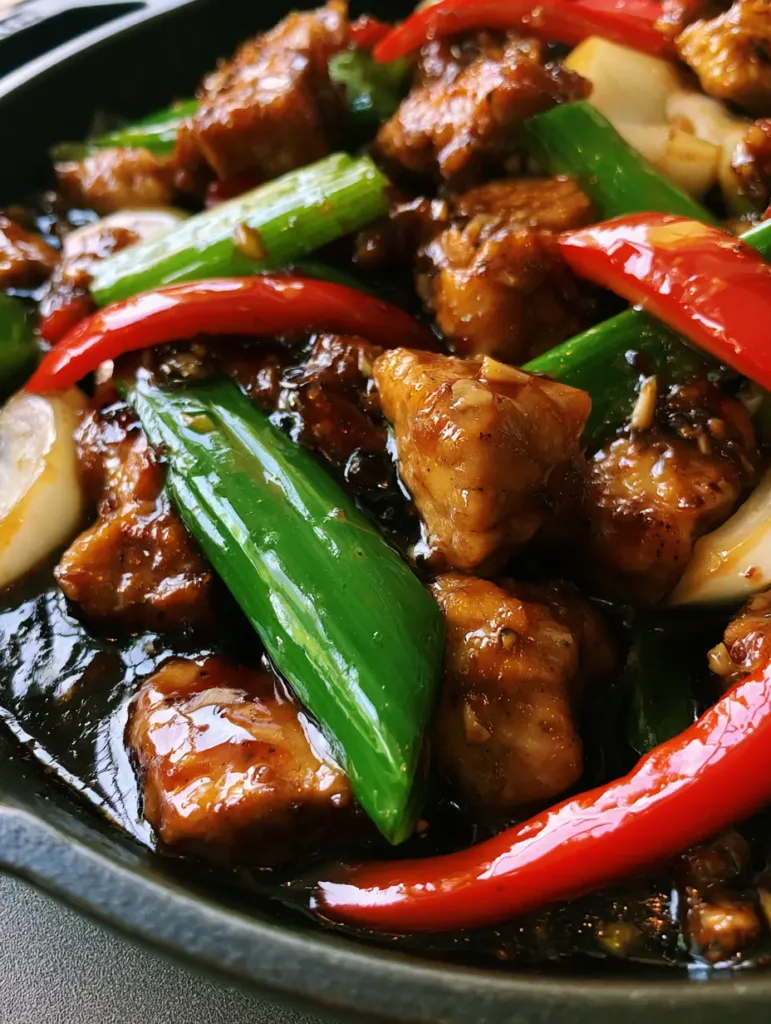
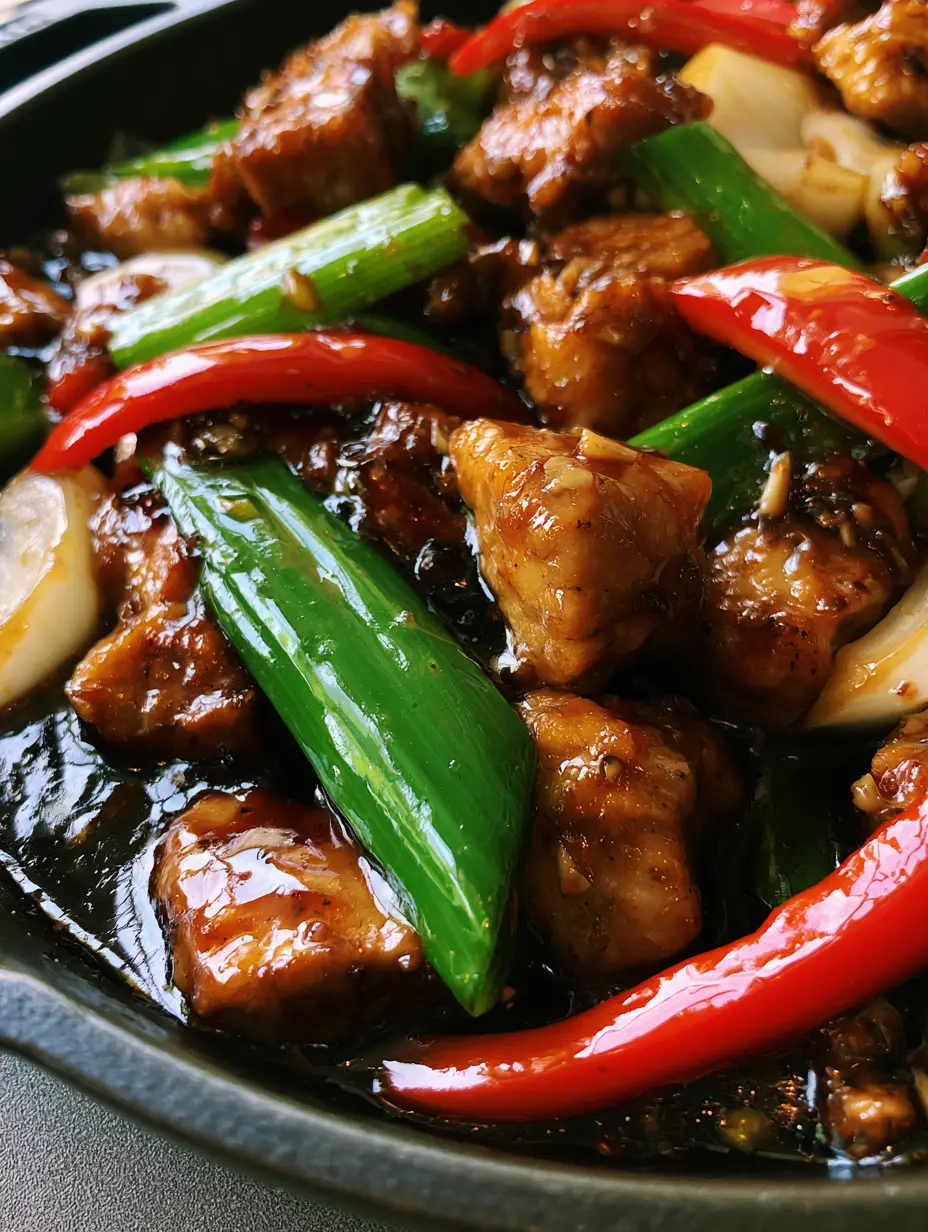
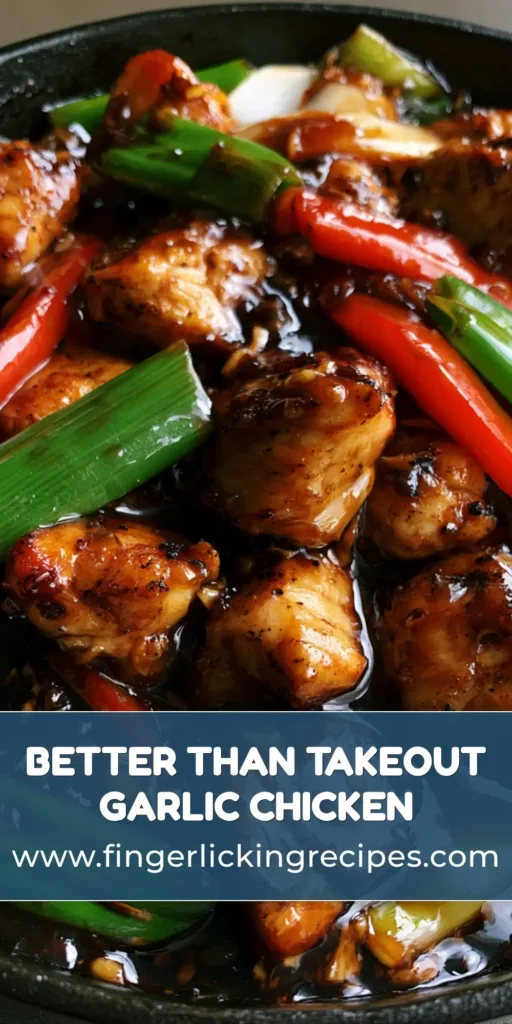
The Reflective Glaze: A thick, glossy brown sauce that is translucent yet dark, providing a syrupy coating that catches the light.
The Perfect Sear: Bite-sized chicken breast chunks with golden-brown edges that provide a structural contrast to the silky sauce.
Vibrant Color Contrast: Bright red bell pepper strips and large, deep green scallion pieces that stay crisp-tender.
Aromatic Depth: Visible specks of minced garlic and ginger bits that signify a punchy, bold flavor profile in every bite.
Structural Integrity: Softened wedges of white onion that add a mellow sweetness and a bulky, satisfying texture to the skillet.
The Essential Pantry Checklist for a Glossy Garlic Glaze
To achieve the specific “reflective” look described in our visual blueprint, we need a combination of foundational ingredients and specific aromatics. We aren’t just making a sauce; we are building a translucent emulsion that holds its shape without becoming cloudy.
Boneless Skinless Chicken Breast: 1.5 lbs (680g). We use breast meat cut into uniform 1-inch (2.5cm) chunks to ensure a quick, even sear that keeps the interior juicy while the exterior browns.
The Aromatic Duo (Garlic and Ginger): 3 tbsp (45g) minced garlic and 1 tbsp (15g) grated ginger. These are the backbone of the dish, providing the tiny “bits” visible in the sauce that signal homemade quality.
Red Bell Peppers: 2 medium peppers, sliced into thin strips. These provide the “vibrant red” visual anchor and a necessary sweetness to balance the salty soy base.
White Onion Wedges: 1 large onion (approx. 200g). Cutting the onion into thick wedges rather than a dice allows them to soften while maintaining a “meaty” presence in the cast iron skillet.
Large Green Scallions: 1 bunch, cut into 2-inch (5cm) pieces. Using large sections instead of small rings ensures they stand out against the dark sauce, just like in professional food styling.
The “Gloss” Factor (Cornstarch): 2 tbsp (16g). This is non-negotiable for achieving that translucent, syrupy consistency that makes the sauce look “reflective” rather than muddy.
Dark and Light Soy Sauce: 1/4 cup (60ml) total. The dark soy provides the “dark brown” hue, while the light soy provides the seasoning and saltiness without over-coloring the chicken.
Chicken Broth: 1 cup (240ml). This creates the volume of the sauce, allowing it to coat the chicken and vegetables generously.
Foundational Searing Oil: 2 tbsp (30ml) neutral oil (like avocado or vegetable oil). A high smoke point oil is required to achieve the seared edges on the chicken breast without burning the garlic.
Must-Have Equipment for the Ultimate Chicken in Garlic Sauce
To replicate the “handheld smartphone photo” look of a rustic yet refined meal, the choice of vessel is paramount. While a wok is traditional, a 12-inch (30cm) dark cast iron skillet is the secret to getting those perfectly seared chicken chunks and a sauce that bubbles and thickens evenly.
The heavy bottom of the cast iron retains heat better than thin pans, which is essential when you add the cold vegetables. If you enjoy the depth of flavor that a well-seasoned pan provides, you might also enjoy making my lemon garlic butter salmon (coming soon) in the same skillet for a different protein profile. Additionally, a sharp chef’s knife is required to get those clean, professional edges on your bell pepper strips and onion wedges.
Notice how the light reflects off the syrupy glaze, a sign of a perfectly executed cornstarch slurry.
Mastering the Skillet Sear: A Step-By-Step Guide
Phase 1: Prepping the Signature Garlic Sauce
In a medium bowl, whisk together 1 cup (240ml) chicken broth, 1/4 cup (60ml) soy sauce, 1 tbsp (15g) brown sugar, and 2 tbsp (16g) cornstarch. It is vital to whisk until the cornstarch is completely dissolved; this ensures the final sauce is translucent and glossy rather than lumpy or opaque.
Phase 2: Achieving the Perfect Chicken Crust
Heat 1 tbsp (15ml) of oil in your cast iron skillet over medium-high heat until it begins to shimmer. Add the 1.5 lbs (680g) of chicken chunks in a single layer, seasoned lightly with salt and pepper. Let them sit undisturbed for 3 minutes until a deep golden-brown crust forms, then flip and sear the other side for 2 minutes before removing them from the pan.
Phase 3: Sautéing the Vibrant Aromatics and Vegetables
Add the remaining 1 tbsp (15ml) of oil to the skillet. Toss in the white onion wedges and red bell pepper strips, stirring frequently for 3-4 minutes until the onions are softened but still hold their shape. In the last 60 seconds, add the 3 tbsp (45g) minced garlic and 1 tbsp (15g) ginger bits, stirring constantly to release their fragrance without letting them burn.
Phase 4: The Syrupy Finish
Pour the sauce mixture into the skillet with the vegetables. As the liquid hits the hot iron, it will begin to bubble and thicken almost instantly. Return the seared chicken to the pan along with the large green scallion pieces. Toss everything together for 2 minutes until the sauce transforms into a thick, glossy brown glaze that reflects the light and heavily coats every ingredient.
Expert Tips for a Reflective, Restaurant-Quality Glaze
Temperature Control: If the sauce thickens too quickly and looks “gloopy” rather than syrupy, add a tablespoon of water or broth to thin it back to a translucent state.
The “Wedge” Cut: When prepping the white onion, cut it into 8 large wedges. This prevents the onion from disappearing into the sauce and provides that beautiful visual structure seen in the blueprint.
Garlic Timing: Never add the minced garlic at the start of the vegetable sauté. Garlic burns easily at high stir-fry temperatures; adding it at the end ensures those “visible specks” remain sweet and aromatic.
Cornstarch Slurry Science: Always re-whisk your sauce right before pouring it into the pan. Cornstarch settles at the bottom of the bowl quickly, and an uneven distribution will ruin the “glossy” finish.
Preserving the Gloss: Storage and Reheating
This Chicken in Garlic Sauce is best enjoyed immediately while the glaze is at its most reflective. However, leftovers can be stored in an airtight container in the refrigerator for up to 3 days. The sauce will naturally thicken and “set” as it cools due to the cornstarch.
To reheat, place the mixture back in a skillet over medium heat with a splash of water. Stir gently as it warms; the water will help the sauce return to its original syrupy, translucent state. Avoid the microwave if possible, as it can cause the chicken to become rubbery and the sauce to lose its characteristic sheen.
What to Serve with Your Skillet Masterpiece
While this dish is a complete meal on its own, it pairs beautifully with other textured sides. For a low-carb feast that rivals any takeout menu, consider serving this alongside my egg roll in a bowl (coming soon) or a side of spicy indian roasted cabbage (coming soon) for an extra kick of heat.
If you are looking for more high-protein inspirations to round out your weekly meal prep, this chicken goes surprisingly well with a fresh chicken street corn salad if you want to mix culinary cultures for a fusion dinner experience.
The secret is the cornstarch slurry. When heated with liquid and sugar, the cornstarch granules swell and become translucent, creating a thick, syrupy glaze that reflects light.
Yes! Chicken thighs are more forgiving and stay juicy at high temperatures. However, chicken breast provides the clean, bite-sized look seen in traditional garlic sauce dishes.
Add a teaspoon of Dark Soy Sauce. It is thicker and more concentrated in color than regular soy sauce, providing that iconic deep brown hue without adding too much extra salt.
Cloudy sauce usually happens if the cornstarch wasn’t fully dissolved in cold liquid first, or if you added too much flour or cold stock midway through the cooking process.
Traditionally, it is savory and pungent from the garlic and ginger rather than spicy. You can easily add red pepper flakes or sriracha if you prefer a heat kick.
The Ultimate Chicken in Garlic Sauce Recipe Card
FL Recipes
Chicken in Garlic Sauce: A Better-Than-Takeout Skillet Masterpiece
A high-protein Chicken in Garlic Sauce featuring tender seared chicken breast and vibrant vegetables in a dark, glossy, syrupy glaze. Perfectly optimized for a cast iron skillet and better than restaurant takeout.
1.5lbsBoneless Skinless Chicken BreastCut into 1-inch (2.5cm) chunks
2mediumRed Bell PeppersSliced into strips
1largeWhite OnionCut into thick wedges
1bunchGreen ScallionsCut into 2-inch (5cm) pieces
3tbspMinced GarlicApproximately 6-8 cloves
1tbspGrated GingerFresh ginger bits
1cupChicken Broth(240ml)
1/4cupSoy Sauce(60ml) Use a mix of light and dark for color
2tbspCornstarch(16g) For the glossy finish
1tbspBrown Sugar(12g) For syrupy texture
Equipment
1 12-inch Cast Iron Skillet Ensures even heat and a perfect sear.
1 Chef's Knife For precise vegetable cuts.
Method
Preparation
In a small bowl, whisk together chicken broth, soy sauce, cornstarch, and brown sugar until the cornstarch is completely dissolved.
Heat 1 tbsp oil in a cast iron skillet over medium-high heat. Add chicken chunks in a single layer and sear for 3 minutes until golden brown. Flip and cook for 2 more minutes, then remove from pan.
Add remaining oil to the pan. Sauté onion wedges and red bell peppers for 3-4 minutes. Add garlic and ginger and cook for 1 minute until fragrant.
Pour the sauce mixture into the skillet. Stir constantly as it bubbles and thickens. Return chicken to the pan along with scallions, tossing for 2 minutes until everything is coated in a glossy dark glaze.
Nutrition
Calories: 345kcalProtein: 38gFat: 12gFiber: 3g
Notes
Ensure the pan is very hot before adding chicken for the best sear. Use Dark Soy Sauce if you want a deeper brown color for the glaze.
Keyword Chicken in Garlic Sauce,garlic chicken,stir fry
The ultimate restaurant-style Chicken in Garlic Sauce made at home in 30 minutes.
Join the Conversation and Share Your Skillet Success!
Whether you’re a seasoned home cook or just starting your culinary journey, this Chicken in Garlic Sauce is a guaranteed crowd-pleaser that looks as good as it tastes. The combination of the dark, syrupy glaze and the vibrant vegetables makes it a perfect candidate for your next dinner party or a simple weeknight win. We’d love to hear how yours turned out!
Did you achieve that perfect “reflective” sauce? Did the cast iron skillet make a difference in your sear? Let us know in the comments below! Don’t forget to follow us on Pinterest for more visually-driven, high-flavor recipes. If you loved this, please share it with your friends and help us grow our community of enthusiastic home cooks.
The ultimate restaurant-style Chicken in Garlic Sauce made at home in 30 minutes.The ultimate restaurant-style Chicken in Garlic Sauce made at home in 30 minutes.
Hi, I’m Emily Carter, and welcome to FL Recipes! I share simple, healthy recipes that make cooking easy, fun, and delicious for everyone. more about me »