When you crave a meal that is as visually stunning as it is delicious, nothing competes with a classic Vietnamese Noodle Salad. This dish, often referred to as Bún, is a masterclass in contrasting textures—the soft bite of rice vermicelli paired with the aggressive crunch of raw, colorful vegetables. It is the kind of recipe that makes you feel energized and nourished, capturing the essence of Southeast Asian street food in a single ceramic bowl.
The beauty of this Vietnamese Noodle Salad lies in its “un-cooked” nature, making it the perfect handheld smartphone-photo-worthy meal for hot afternoons. We aren’t just tossing ingredients together; we are building a structured foundation of flavor. From the golden-brown crust of seared tofu to the spicy, garlic-heavy amber dipping sauce, every element serves a specific purpose in this culinary architecture.
If you have ever scrolled through social media and stopped at a photo of a vibrant, multi-colored bowl with perfectly julienned carrots and glistening herbs, you have seen this dish’s potential. Today, we are going to recreate that exact professional aesthetic right in your own kitchen. Let’s dive into the science of the perfect sear and the art of the nuoc cham.
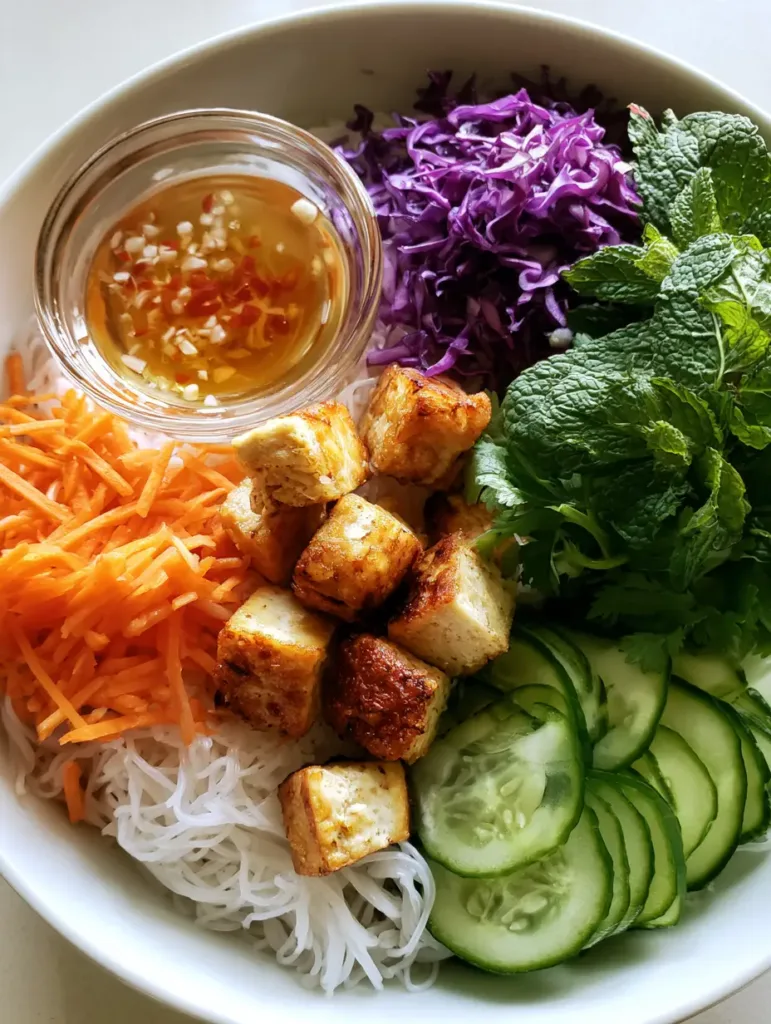
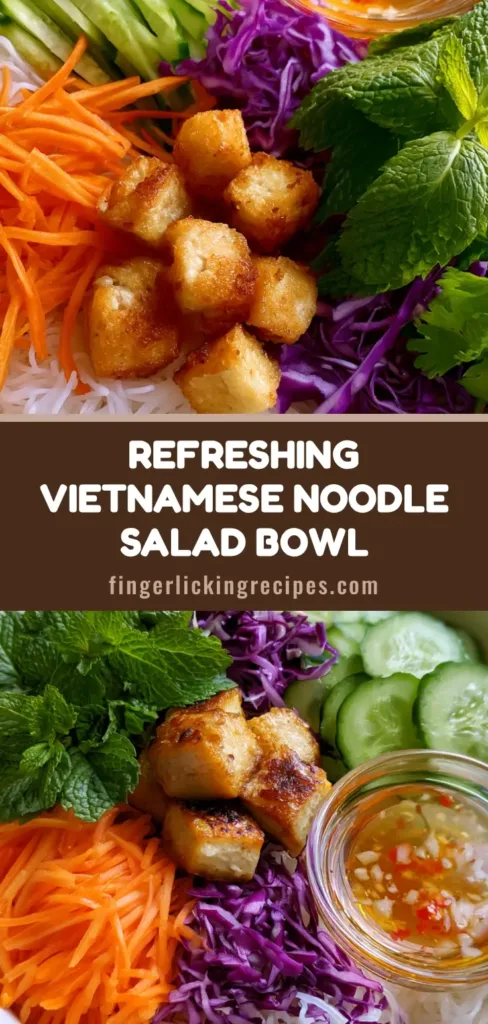
The golden-brown tofu cubes provide the perfect savory protein for this dish.
Why This Crunchy Vietnamese Noodle Salad Is a Game-Changer
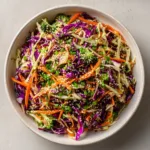
Textural Harmony: Experience the satisfying transition from the silky, cool rice vermicelli to the crisp, raw purple cabbage and cucumber.
Protein Perfection: The tofu isn’t just a meat substitute; it’s a star, seared until golden and savory to provide a warm, salty contrast to the cool salad.
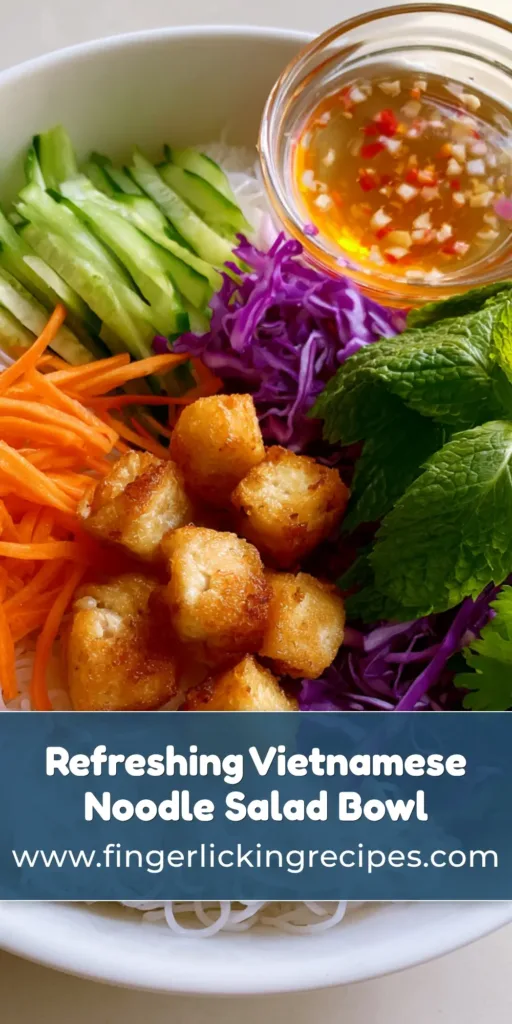
The Umami Bridge: Our amber-colored dipping sauce, flecked with red chili and garlic, ties the entire bowl together with a balance of sweet, sour, and spicy notes.
Visual Vibrancy: With deep purple, bright orange, and vivid green, this dish is a nutritional powerhouse that looks as good as it tastes.
The Anatomy of a Perfect Vietnamese Noodle Salad
To achieve the result seen in high-end culinary photography, we must select our ingredients with precision. Each component in this Vietnamese Noodle Salad must be prepared to maximize its natural color and structural integrity.
Thin Rice Vermicelli Noodles: These are the delicate white base of our bowl. Unlike wheat pasta, these noodles are made from rice flour and water, providing a gluten-free foundation that absorbs the dressing without becoming soggy.
Extra Firm Tofu: For that “golden-brown” visual cue, extra firm tofu is mandatory. It holds its shape during the searing process, allowing us to create a crispy exterior while maintaining a soft, pillowy interior.
Julienned Carrots: We want bright orange matchsticks. This specific cut ensures the carrots offer a snap in every bite without being too tough to chew alongside the soft noodles.
Sliced Raw Cucumber: Use English or Persian cucumbers for their thin skin and minimal seeds. These provide a refreshing, watery crunch that cleanses the palate between spicy bites.
Shredded Purple Cabbage: This is our primary source of “pop.” The deep purple hue adds incredible visual depth, while the dense structure of the cabbage provides the most significant crunch in the bowl.
The Herb Duo (Mint & Cilantro): Never underestimate the power of fresh herbs. The mint offers a cooling sensation, while the cilantro provides a citrusy, earthy note that is synonymous with Vietnamese cuisine.
The Amber Dipping Sauce (Nuoc Cham Chay): This clear, amber liquid is the soul of the dish. It must contain visible flecks of minced red chili and white garlic to provide both heat and a pungent aromatic finish.
Foundational Searing Oil: You will need 2 tbsp (30ml) of a high-smoke-point oil, such as grapeseed or avocado oil. This allows us to get that deep golden-brown color on the tofu without the oil smoking or breaking down.
Tools You’ll Need for Professional Results
To get those distinct sections and clean cuts, a few basic tools are essential. First, a high-quality chef’s knife or a mandoline slicer is vital for the julienned carrots and shredded cabbage. Consistency in your vegetable cuts is the secret to a professional-looking Vietnamese Noodle Salad.
You will also need a heavy-bottomed non-stick skillet or a cast-iron pan for the tofu. To achieve the “golden-brown, lightly seared” look described in our blueprint, the pan must distribute heat evenly. Finally, a small transparent glass ramekin is used for serving the sauce on the side, allowing your guests to control the level of moisture and spice.
Mastering the Golden-Brown Tofu Sear
The most common mistake people make with tofu is failing to remove enough moisture. For this Vietnamese Noodle Salad, we want the tofu cubes to be “golden-brown” and “lightly seared.” This requires a dry surface.
Start by pressing your tofu for at least 20 minutes. Wrap the block in a clean kitchen towel and place a heavy skillet on top. Once pressed, cut the tofu into 1-inch (2.5cm) cubes. Pat them dry one last time with a paper towel before they hit the hot oil.
Heat your 2 tbsp (30ml) of oil over medium-high heat. When the oil shimmers, add the tofu cubes in a single layer. Do not crowd the pan! Crowding causes the tofu to steam rather than sear. Listen for the sizzle; that is the sound of moisture evaporating and the Maillard reaction beginning. Let them sit undisturbed for 3-4 minutes until the bottom is a rich amber-gold before flipping.
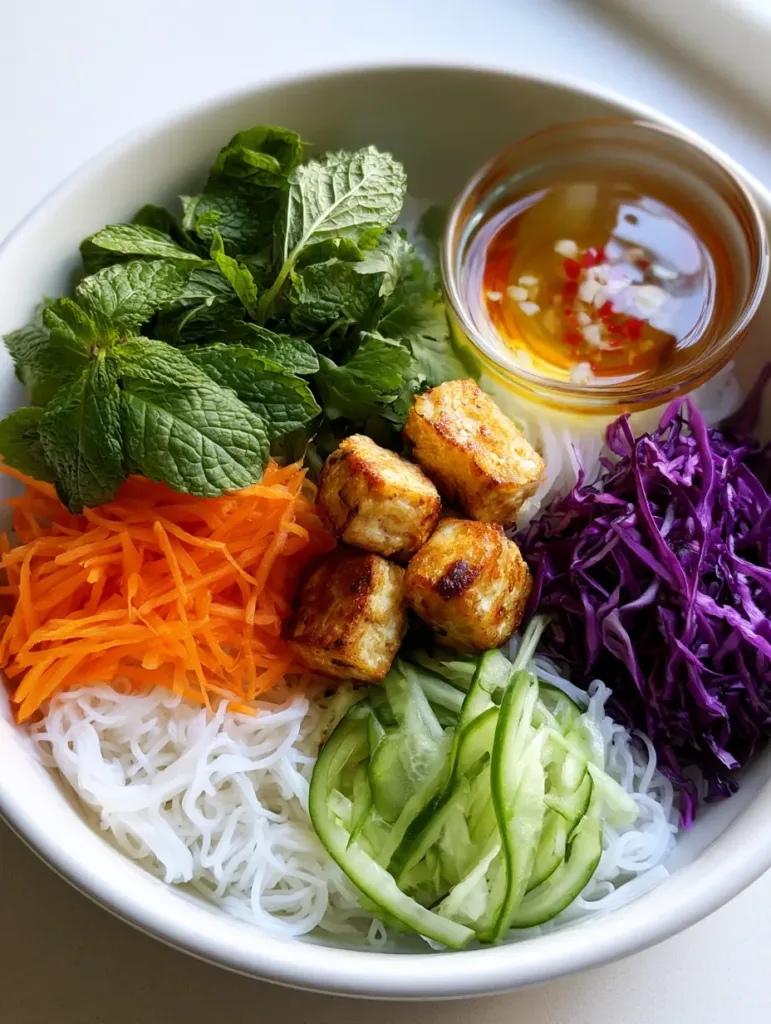
A realistic and unedited look at our completed vermicelli bowl.
Step-by-Step: Assembling Your Vibrant Bowl
1. Preparing the Vermicelli Foundation
Bring a large pot of water to a boil. Add 8 oz (225g) of thin rice vermicelli. Boil for exactly 2-3 minutes, or according to package directions, until they are soft but still have a slight “spring.” Immediately drain and rinse under cold running water for 60 seconds. This stops the cooking process and removes excess starch, preventing the noodles from clumping together in your Vietnamese Noodle Salad.
2. The Art of the Vegetable Prep
While the noodles drain, prep your vegetables. Use a julienne peeler for 1 cup (150g) of carrots to get those perfect matchsticks. Thinly slice 1 cup (150g) of cucumber on a bias for an elegant look. Shred 1 cup (100g) of purple cabbage into fine ribbons. Keep these in separate piles; the visual appeal of this dish comes from the distinct sections of color.
3. Whisking the Amber Dipping Sauce
In a small bowl, combine 1/2 cup (120ml) warm water, 3 tbsp (45ml) fresh lime juice, 2 tbsp (30ml) light soy sauce (or vegan fish sauce), and 2 tbsp (25g) sugar. Stir until the sugar is completely dissolved. Add 1 tsp (5g) of minced red chili and 2 cloves (6g) of minced garlic. The sauce should be a beautiful clear amber with the aromatics floating throughout.
4. Plating for Maximum Impact
Place a generous mound of the cooled rice vermicelli in a clean white ceramic dish. Arrange the carrots, cucumber, and shredded cabbage in distinct sections around the perimeter of the bowl. Place the golden-brown tofu cubes right in the center. Nest some fresh mint and cilantro leaves to the side, and serve with the glass ramekin of sauce adjacent to the bowl.
Expert Tips for the Best Texture and Flavor
The Noodle Trick: If your noodles start to stick before you plate them, toss them with 1 tsp (5ml) of neutral oil or a splash of water to loosen them up.
Chili Control: For less heat in your Vietnamese Noodle Salad, remove the seeds and white membranes from the red chili before mincing.
Herb Freshness: Only tear your mint and cilantro at the very last second. This prevents the edges from bruising and browning, keeping that vibrant green look.
The Searing Secret: Add a pinch of salt to the tofu while it’s in the pan. This draws out more moisture and seasons the protein from the outside in.
How to Prep This Vietnamese Noodle Salad Ahead of Time
This Vietnamese Noodle Salad is an excellent candidate for meal prep, provided you store the components correctly. Keep the cooked vermicelli in an airtight container with a damp paper towel on top to keep them moist. The chopped vegetables can be stored together, but keep the seared tofu and the dipping sauce in separate containers.
When you are ready to eat, simply assemble the bowl as described. This ensures the cabbage stays crunchy and the tofu doesn’t become soggy from the vegetable moisture. If you enjoy this type of bowl-based meal, you might also like our Egg Roll in a Bowl (coming soon) for a warmer, savory alternative.
Delicious Pairings for Your Noodle Feast
While this bowl is a complete meal on its own, it pairs beautifully with other vibrant dishes. If you are looking to increase the protein content, consider serving this alongside our high-protein honey garlic shrimp (coming soon). The sweetness of the shrimp complements the tang of the amber sauce perfectly.
For a multi-course dinner, start with some Mexican street corn dip (coming soon) as a fusion appetizer, or keep the refreshing vibes going with cold BBQ side dishes during a summer gathering. The versatility of the Vietnamese Noodle Salad makes it a staple for any warm-weather menu.
The secret is to rinse them under cold running water immediately after boiling for at least 60 seconds. This removes the excess surface starch that causes clumping.
Absolutely! Grilled shrimp, sliced pork, or even rotisserie chicken work well. However, to maintain the visual blueprint of this recipe, seared tofu cubes provide the best texture.
Known as Nuoc Cham, it is a blend of water, lime juice, sugar, and soy sauce (or fish sauce) infused with minced garlic and red chilies for a sweet and spicy kick.
Yes, as long as you use a gluten-free tamari or liquid aminos in place of standard soy sauce in the dipping sauce. Rice vermicelli is naturally gluten-free.
The components stay fresh for up to 3 days when stored separately. Once the sauce is added, the noodles and vegetables will begin to soften quickly.
The Complete Vietnamese Noodle Salad Recipe
Ready to create this masterpiece? Follow the detailed recipe card below to bring the flavors of Vietnam into your home. This recipe is designed to be healthy, visually stunning, and incredibly satisfying for home cooks of all levels.
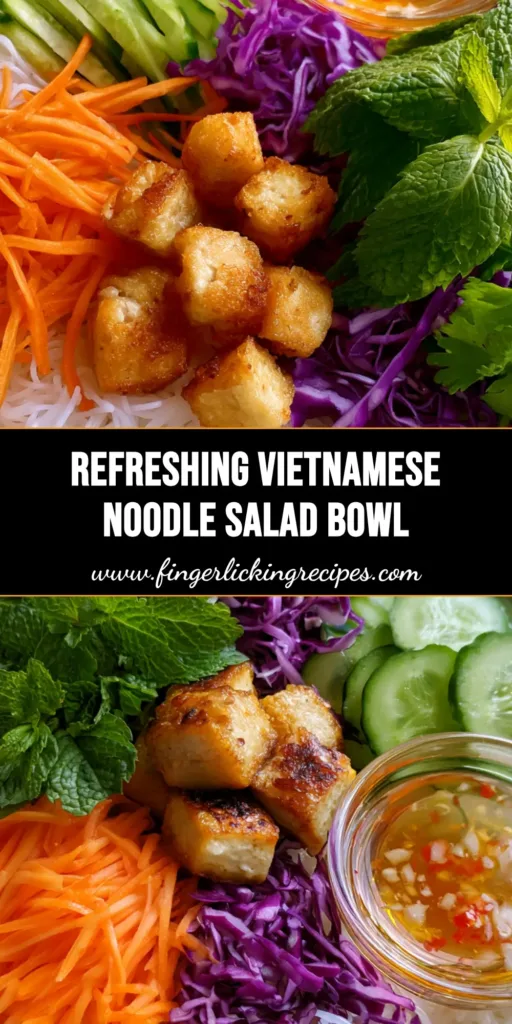
The perfect Vietnamese Noodle Salad for a healthy and fresh dinner.
FL Recipes
Vietnamese Noodle Salad: The Ultimate Fresh and Vibrant Summer Bowl
A vibrant Vietnamese Noodle Salad featuring cool rice vermicelli, crunchy raw vegetables, and golden-brown seared tofu, all served with a spicy amber dipping sauce. Perfect for a healthy, visually stunning summer meal.
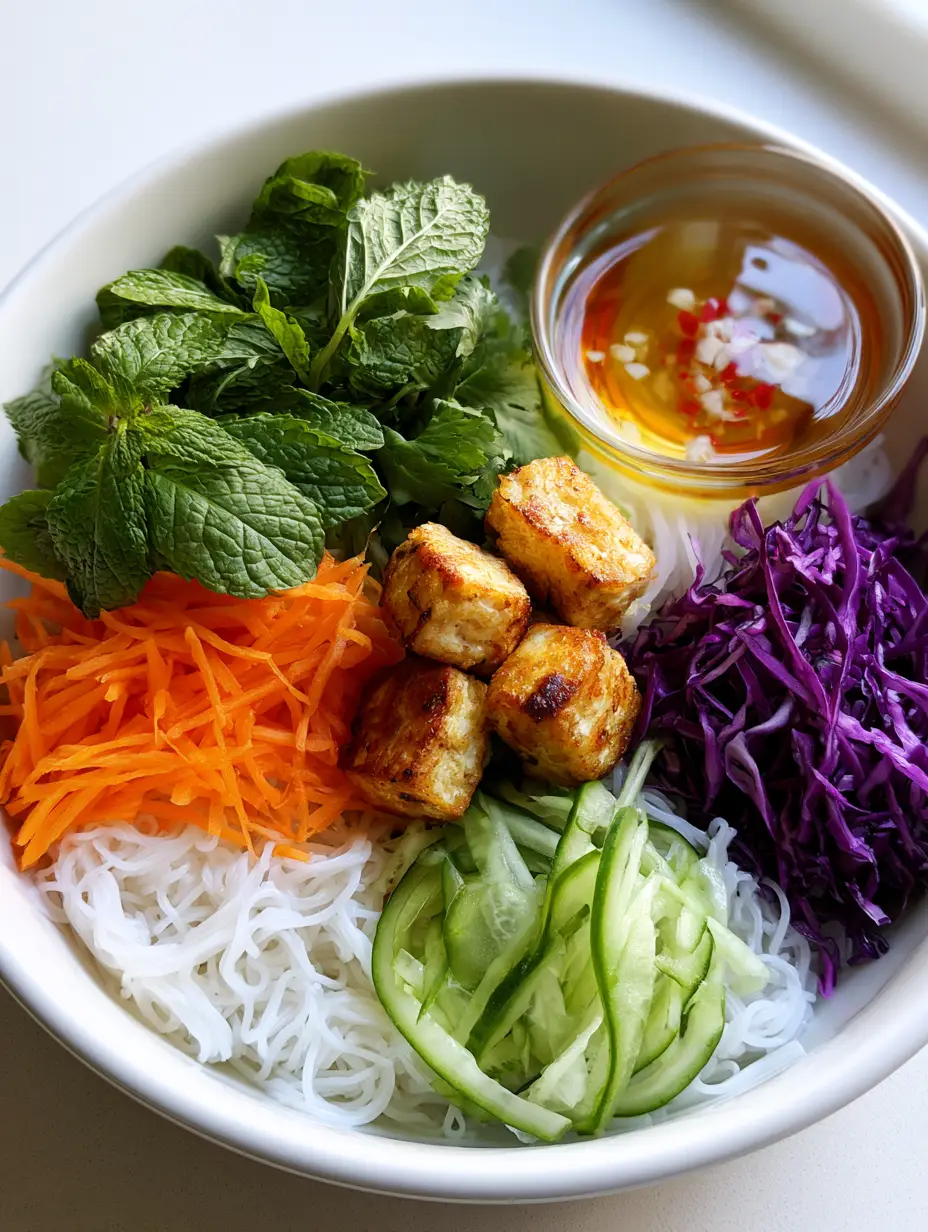
The perfect Vietnamese Noodle Salad for a healthy and fresh dinner.
Closing & Call to Action
This Vietnamese Noodle Salad is more than just a meal; it’s a sensory experience that brings color and health to your dinner table. Whether you are making it for a quick lunch or a beautiful dinner for guests, it is sure to impress. Don’t forget to snap a photo of your creation—those golden tofu cubes and vibrant veggies are meant to be shared!
If you loved this recipe, please leave a comment below and tell us how yours turned out! For more visually inspired recipes, follow us on Pinterest and sign up for our newsletter to get new recipes delivered straight to your inbox.
The perfect Vietnamese Noodle Salad for a healthy and fresh dinner.
Hi, I’m Emily Carter, and welcome to FL Recipes! I share simple, healthy recipes that make cooking easy, fun, and delicious for everyone. more about me »