Mastering the art of gourmet seafood at home begins with this phenomenal Baked Cod with Lemon Dill Sauce. There is something truly mesmerizing about a perfectly baked flaky white cod fillet that practically melts in your mouth. This dish delivers a restaurant-quality experience straight to your own dining room, complete with a beautifully golden roasted edge.
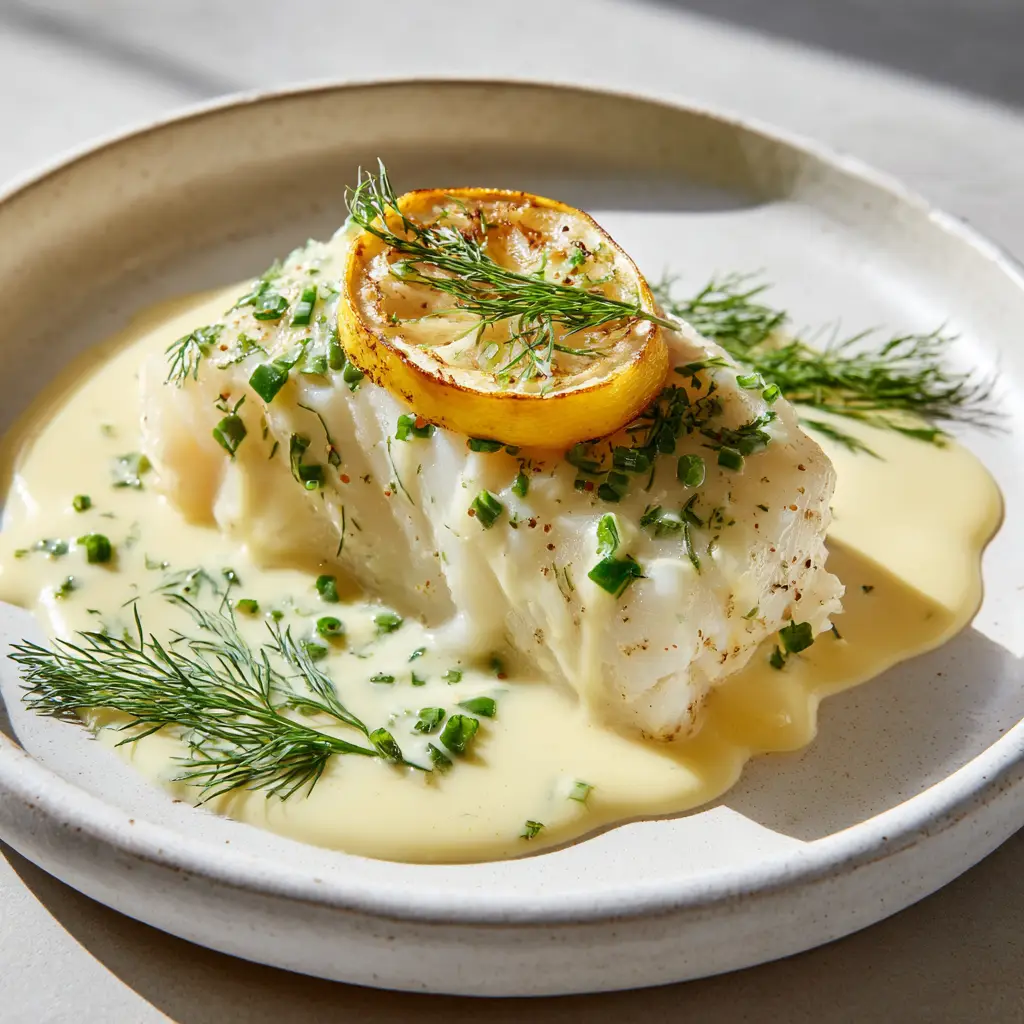
The true star of this recipe is the generously coated creamy pale yellow lemon dill sauce that drips slightly down the sides of the fish. Combined with finely chopped fresh green dill leaves and a stunning caramelized lemon wheel resting off center, this Baked Cod with Lemon Dill Sauce is a feast for both the eyes and the palate. If you love a bright, citrus-forward meal similar to a classic Greek lemon chicken, this seafood masterpiece will quickly become a weekly staple.
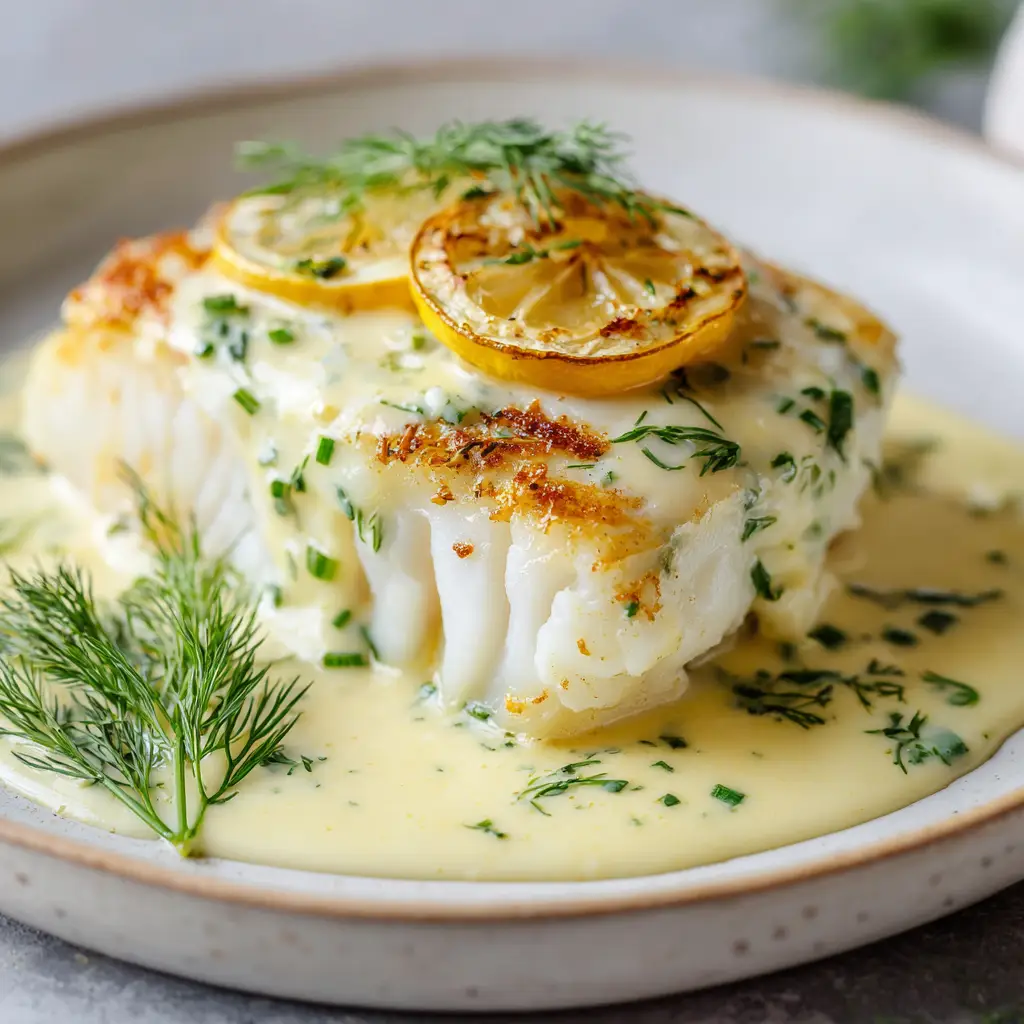
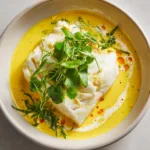
The luxuriously creamy pale yellow lemon dill sauce is generously coated over the baked fish.
Why You Will Crave This Flaky White Fish Masterpiece
Unmatched Texture: The high-heat oven method ensures a perfectly baked flaky white cod fillet with a subtle golden roasted edge.
Decadent Creaminess: The creamy pale yellow lemon dill sauce offers a luxurious, velvety mouthfeel that perfectly balances the lean fish.
Aesthetic Brilliance: A thin, slightly caramelized lemon wheel resting off center makes this dish look like it came from a fine-dining kitchen.
Aromatic Freshness: Scattered finely chopped fresh green dill leaves provide a burst of herbaceous flavor in every single bite.
Essential Components for a Golden Seafood Dinner
Fresh Atlantic Cod Fillets: You will need 4 thick cod fillets (6 oz / 170g each) to ensure a juicy center. Look for bright, translucent white flesh that smells like the clean ocean.
Extra Virgin Olive Oil & Sea Salt: Using 1 tbsp (15ml) of quality olive oil and 1 tsp (5g) of kosher salt helps develop that coveted slightly golden roasted edge. The oil conducts heat evenly across the surface of the fish.
Heavy Cream & Unsalted Butter: The base of our sauce requires 1/2 cup (120ml) of heavy cream and 2 tbsp (28g) of unsalted butter. These fats emulsify together to create a luxuriously thick texture.
Fresh Lemon Juice & Dijon Mustard: Incorporating 2 tbsp (30ml) of freshly squeezed lemon juice and 1 tsp (5g) of smooth Dijon mustard cuts through the richness. The mustard is the secret ingredient that gives the sauce its signature creamy pale yellow color.
Fresh Dill: You will need 2 tbsp (5g) of finely chopped fresh green dill leaves for the sauce, plus extra sprigs for the plate. Dried dill simply cannot replicate this vibrant, earthy flavor.
Fresh Lemon Slices: Reserve 4 thin lemon wheels to caramelize in a skillet. This adds a gorgeous visual element and a deeper, sweeter citrus note to the final plate.
Kitchen Tools Required for the Perfect Sear and Sauce
A heavy-duty ceramic or glass baking dish is essential for cooking the fish evenly without drying out the bottom. You will also need a small stainless steel saucepan to simmer and reduce your creamy pale yellow lemon dill sauce. To achieve the beautiful caramelized lemon wheel slice, a small non-stick skillet or cast-iron pan is highly recommended. Finally, a sharp chef’s knife is crucial for achieving cleanly chopped fresh green dill leaves without bruising the delicate herbs.
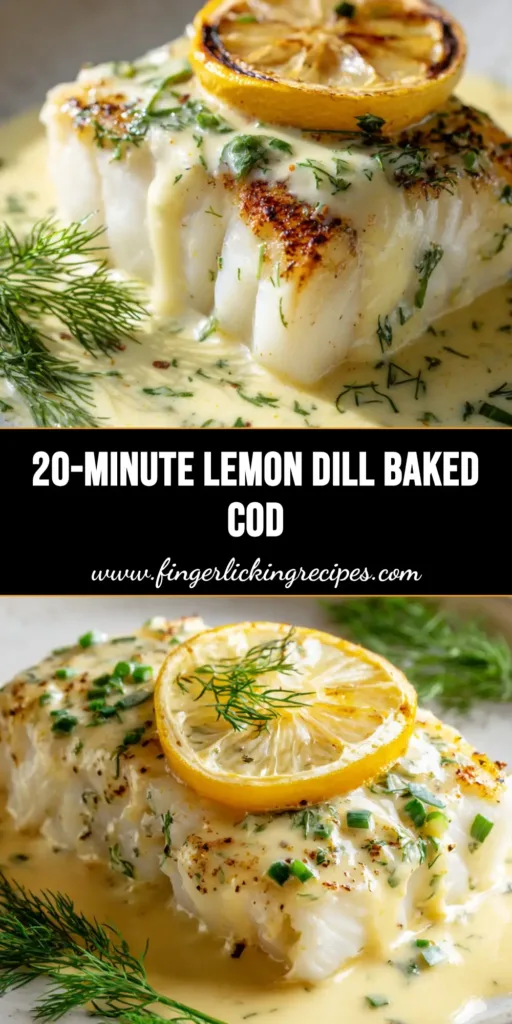
A perfectly baked flaky white cod fillet with a stunning golden roasted edge.
How to Achieve a Perfectly Baked Fillet and Velvety Citrus Drizzle
Preparing and Roasting the White Fish
Preheat your oven to 400°F (200°C). Pat the 4 cod fillets (6 oz / 170g each) completely dry using paper towels to ensure they roast rather than steam. Brush the fillets generously with 1 tbsp (15ml) of olive oil and season with 1 tsp (5g) of kosher salt and 1/2 tsp (1g) of black pepper.
Place the fish on a simple white ceramic plate or baking tray lined with parchment paper. Bake for 12-14 minutes until the flesh turns an opaque white and flakes easily with a fork. You are looking for a slightly golden roasted edge to indicate the perfect level of doneness.
Simmering the Luxurious Citrus Cream
While the fish bakes, melt 2 tbsp (28g) of butter in a small saucepan over medium-low heat. Whisk in 1/2 cup (120ml) of heavy cream, 2 tbsp (30ml) of lemon juice, and 1 tsp (5g) of Dijon mustard. Allow the mixture to gently simmer for 3-4 minutes until it thickens enough to coat the back of a spoon.
Remove the saucepan from the heat to prevent separation. Gently fold in the 2 tbsp (5g) of finely chopped fresh green dill leaves, letting the residual heat release the herb’s essential oils. Set the creamy pale yellow lemon dill sauce aside in a warm spot.
Crafting the Caramelized Citrus Garnish
Heat a small non-stick skillet over medium-high heat with a tiny drop of olive oil. Place the 4 thin lemon wheels flat into the hot pan. Sear them for 1-2 minutes per side until the natural sugars brown and you achieve a slightly caramelized lemon wheel.
To plate, place the hot cod on a simple white ceramic plate. Generously coat the fish, allowing the sauce to drip slightly down the sides. Top with the caramelized lemon wheel, scatter a pinch of extra chopped dill, and rest a sprig of fresh dill on the plate next to the fish.
Pro Tips for Restaurant-Quality Fish at Home
Dry the Fish: Moisture is the enemy of a golden crust. Press the cod fillets firmly with paper towels to extract excess water before seasoning.
Mind the Heat: When making your creamy sauce, do not let the heavy cream boil rapidly. A gentle simmer prevents the dairy from splitting.
Mustard Magic: Do not skip the Dijon mustard! It acts as an emulsifier to bind the lemon juice and cream, while providing the gorgeous pale yellow tint.
Watch the Caramelization: Lemons can go from beautifully caramelized to burnt very quickly. Watch them closely and remove them from the pan the second they turn a deep amber.
Keeping Your Leftover Seafood Fresh and Delicious
Store any leftover Baked Cod with Lemon Dill Sauce in an airtight container in the refrigerator for up to 2 days. It is highly recommended to store the creamy pale yellow lemon dill sauce in a separate small container. When you are ready to enjoy it again, reheat the fish gently in a 300°F (150°C) oven to prevent it from becoming rubbery.
Warm the sauce separately on the stove over low heat, adding a splash of water or milk if it has thickened too much in the fridge. Freezing this specific dish is not recommended, as the delicate flaky white cod fillet can become mushy, and the cream-based sauce may split upon thawing.
Perfect Pairings to Complete Your Elegant Dinner
This dish demands side dishes that can soak up the glorious citrus cream without overpowering the delicate fish. Serve this alongside a hearty winter vegetable casserole for a comforting, vegetable-forward feast. If you want a more indulgent menu, consider preceding the meal with a rich garlic butter shrimp rice bake for an ultimate seafood lover’s night.
For a beautiful textural contrast, serve some warm, crusty bread to mop up every last drop of the sauce. Finish off your elegant dinner party with a slice of bright, zesty lemon zucchini bundt cake to carry the beautiful citrus theme all the way through to dessert.
Common Inquiries About Crafting the Ultimate Seafood Dish
Yes, but you must thaw it completely in the refrigerator overnight and pat it exceptionally dry with paper towels before baking. Excess moisture will prevent the cod from getting that signature golden roasted edge.
Curdling usually happens if the heavy cream boils too vigorously or if the lemon juice is added over high heat. Keep the heat on a gentle simmer and use the Dijon mustard as an emulsifier to bind the sauce perfectly.
For the thickest, pale yellow cream sauce, heavy cream is best. However, you can substitute half-and-half or whole milk mixed with a teaspoon of cornstarch, though the final texture will be slightly less velvety.
Cod is done when the internal temperature reaches 145°F (62°C). Visually, the flesh should turn from translucent to an opaque, bright white and it will flake apart easily with a gentle twist of a fork.
While fresh green dill leaves provide the best aromatic flavor and visual appeal, you can use dried dill in a pinch. Use 1 teaspoon of dried dill for every tablespoon of fresh dill called for in the recipe.
The Complete Baked Cod with Lemon Dill Sauce Recipe
FL Recipes
The Ultimate Baked Cod with Lemon Dill Sauce
This perfectly Baked Cod with Lemon Dill Sauce features a flaky white cod fillet with a golden roasted edge, generously coated in a luxurious, creamy pale yellow lemon dill sauce and topped with caramelized lemon wheels.
24ozAtlantic cod filletsDivided into four 6 oz (170g) portions
1tbspOlive oil(15ml)
1tspKosher salt(5g)
0.5tspBlack pepper(1g)
4slicesThin lemon wheelsFor caramelizing as a garnish
Lemon Dill Sauce
2tbspUnsalted butter(28g)
0.5cupHeavy cream(120ml)
2tbspFresh lemon juice(30ml)
1tspDijon mustard(5g)
2tbspFresh dill(5g) Finely chopped, plus extra sprigs for serving
Equipment
1 Baking Dish Ceramic or glass preferred.
1 Small Saucepan For the lemon dill sauce.
1 Small Non-stick Skillet For caramelizing the lemon wheels.
Method
Baking the Fish
Preheat your oven to 400°F (200°C). Pat the 4 cod fillets completely dry using paper towels to ensure they roast properly.
Brush the fillets evenly with 1 tbsp (15ml) of olive oil and season with salt and pepper. Place on a parchment-lined tray and bake for 12-14 minutes until the flesh flakes easily and edges are slightly golden.
Making the Sauce and Garnish
Melt 2 tbsp (28g) of butter in a saucepan over medium-low heat. Whisk in the heavy cream, lemon juice, and Dijon mustard. Simmer for 3-4 minutes until it thickens.
Remove the saucepan from the heat and fold in the 2 tbsp (5g) of finely chopped fresh dill.
In a separate small skillet, heat a drop of oil over medium-high heat. Sear the thin lemon wheels for 1-2 minutes per side until beautifully caramelized.
Plate the hot cod, generously coat with the creamy pale yellow lemon dill sauce, and top with the caramelized lemon wheel and a fresh dill sprig.
Nutrition
Calories: 310kcalProtein: 25gFat: 22g
Notes
Tip 1: Make sure to thoroughly dry the cod fillets before roasting to achieve that beautiful golden edge. Tip 2: Do not boil the heavy cream rapidly or the acidic lemon juice may cause the sauce to separate.
Keyword Baked Cod with Lemon Dill Sauce,baked fish recipe,flaky white cod fillet,lemon dill sauce
Enjoy this restaurant-quality Baked Cod with Lemon Dill Sauce! A flaky white cod fillet drenched in a rich, citrus-herb cream sauce.
Share Your Culinary Masterpiece With Us
We hope this Baked Cod with Lemon Dill Sauce brings an elegant, restaurant-quality experience to your home dining table! The combination of the perfectly flaky fish and that luxurious citrus cream is truly unforgettable. If you loved the rich, coastal flavors of this dish, you might also enjoy experimenting with our famous flavorful seafood boil sauce for your next gathering.
Did you achieve that perfect caramelized lemon wheel and gorgeous pale yellow sauce? We want to see it! Leave a 5-star rating in the recipe card above, and be sure to share your photos and pin this recipe to your favorite boards over on Pinterest.
Hi, I’m Emily Carter, and welcome to FL Recipes! I share simple, healthy recipes that make cooking easy, fun, and delicious for everyone. more about me »