There is nothing quite as deeply satisfying as a perfectly executed Cacio e Pepe Chicken sizzling in a rustic black cast iron skillet. This dish marries the classic Roman pasta flavors of sharp cheese and bold black pepper with succulent, protein-rich poultry. It transforms a humble weeknight dinner into an elevated, sensory dining experience.
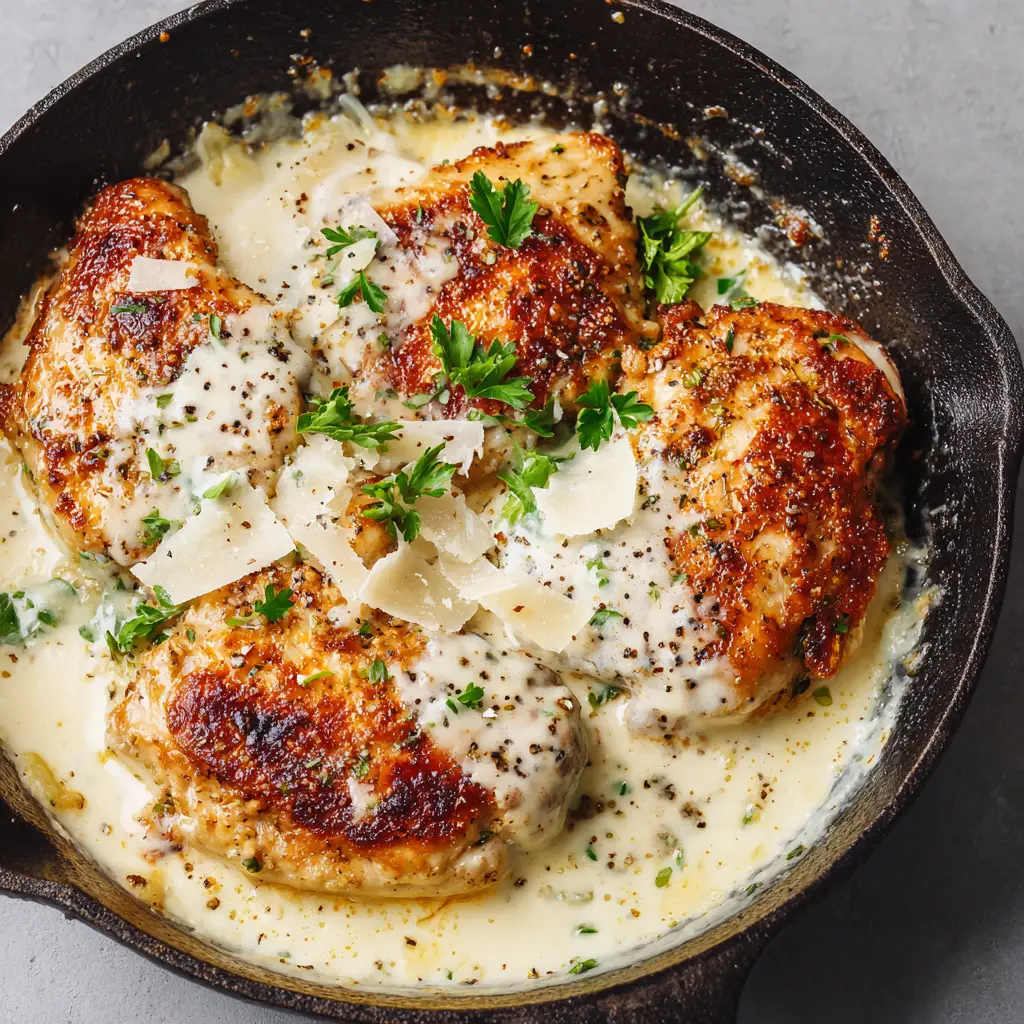
Every element of this recipe is designed to captivate your palate and your eyes. The thick, golden-brown pan-seared chicken breasts are generously coated in a glossy, thick, creamy white Pecorino Romano cheese sauce. The sauce pools slightly at the base of the pan, just waiting to be mopped up by crusty bread or pasta.
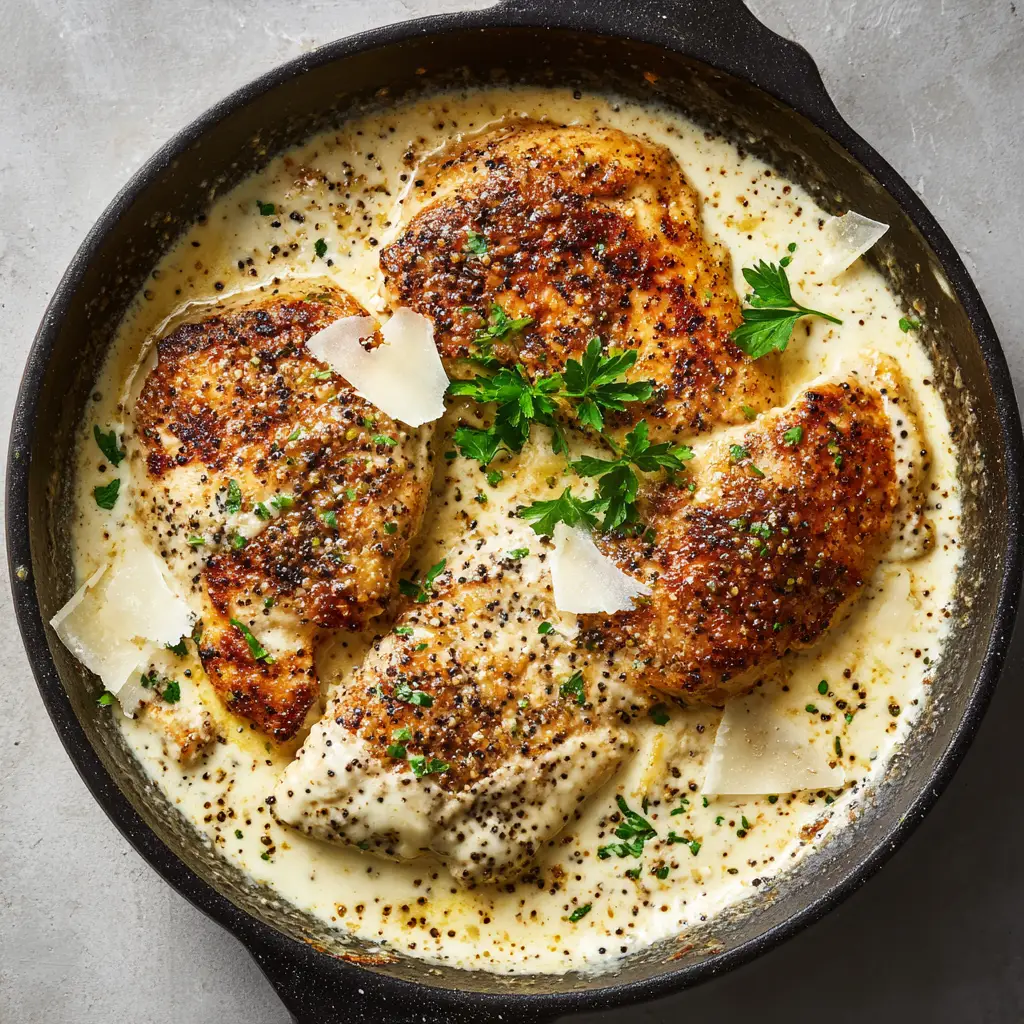
Visually, the surface of the creamy sauce is heavily speckled with coarse, freshly cracked black pepper. A few scattered rustic shavings of aged hard cheese and a tiny sprig of fresh green parsley rest on the very top for a pop of fresh color against a neutral gray countertop. Let’s dive into creating this stunning, soft natural daylight-worthy masterpiece.
Garnish with rustic aged cheese shavings and a tiny sprig of fresh green parsley for a restaurant-quality presentation.
Why You Will Obsess Over This Cacio e Pepe Chicken Creation
Unforgettable Textures: The deep, golden-brown crust of the chicken provides a satisfying bite that contrasts perfectly with the silky, glossy sauce.
Bold, Peppery Warmth: Toasting the coarsely cracked black pepper blooms its essential oils, delivering a robust warmth rather than a sharp bite.
Restaurant-Quality Visuals: With rustic shavings of aged hard cheese and a delicate sprig of fresh green parsley, this dish looks like it belongs on the cover of a culinary magazine.
One-Pan Simplicity: The entire process takes place in a single cast iron skillet, meaning all the flavor fond stays in the dish while minimizing your cleanup.
The Foundation: Secret Components for a Glossy Cheese Sauce
Boneless, Skinless Chicken Breasts
We use 2 large, thick chicken breasts weighing about 1 lb (450g) in total. Searing them at high heat ensures a beautiful golden-brown exterior while maintaining a tender, juicy center.
Coarse Black Peppercorns
You will need 1 tbsp (6g) of whole black peppercorns, freshly and coarsely cracked. Pre-ground pepper will not work here; the coarse texture is crucial for the heavy speckling and robust flavor.
Pecorino Romano Cheese
Grab 1.5 cups (150g) of freshly grated Pecorino Romano, plus extra rustic shavings for the final garnish. This aged hard cheese is the backbone of the glossy, thick, creamy white sauce, offering a signature salty and sharp tang.
Heavy Cream and Chicken Broth
Use 1 cup (240ml) of heavy cream and 0.5 cups (120ml) of high-quality chicken broth. These foundational liquids reduce in the hot skillet to form the rich, pooling base of our luxurious pan sauce.
Unsalted Butter and Olive Oil
You will need 2 tbsp (30g) of unsalted butter and 1 tbsp (15ml) of olive oil. The oil prevents the butter from burning during the high-heat sear, ensuring the chicken achieves that perfect crust.
Fresh Green Parsley
A single tiny sprig of fresh green parsley per plate is required for garnish. This simple addition introduces a vibrant pop of color against the creamy white sauce.
The glossy Pecorino Romano cheese sauce pools perfectly around the crispy pan-seared chicken.
Essential Kitchen Tools for a Rustic Pan-Seared Finish
To replicate the authentic aesthetic, you must use a rustic black cast iron skillet. Cast iron conducts heat exceptionally well, ensuring an even, golden-brown crust on the poultry. It also retains heat to keep the glossy cheese sauce warm and fluid at the table.
You will also need a sturdy pepper grinder or a mortar and pestle to achieve the coarsely cracked black pepper. Finally, a microplane or fine box grater is essential for grating the cheese, while a vegetable peeler is perfect for creating the rustic, aged hard cheese shavings for the garnish.
Master the Skillet: Step-by-Step Cooking Techniques
Searing the Chicken to a Deep Golden-Brown
Begin by patting the 1 lb (450g) of chicken breasts completely dry with paper towels, then season them lightly with sea salt. Heat the 1 tbsp (15ml) of olive oil and 1 tbsp (15g) of unsalted butter in your rustic cast iron skillet over medium-high heat until the butter begins to foam.
Carefully place the chicken in the hot skillet and leave it undisturbed for 5 to 7 minutes. You are looking for a thick, golden-brown pan-seared crust to form on the bottom before flipping and cooking for an additional 5 minutes until the internal temperature reaches 165°F (74°C). Remove the poultry and set it aside to rest.
Toasting the Pepper and Building the Creamy Base
Reduce the skillet heat to medium-low and add the remaining 1 tbsp (15g) of butter along with the 1 tbsp (6g) of coarsely cracked black pepper. Toast the pepper in the residual chicken fat and melting butter for about 60 seconds until it becomes highly fragrant.
Slowly pour in the 0.5 cups (120ml) of chicken broth to deglaze the pan, scraping up all the golden browned bits from the bottom. Pour in the 1 cup (240ml) of heavy cream, stirring continuously, and let the liquid simmer gently for 2 to 3 minutes until it slightly thickens.
Simmering the Sauce and Adding Fresh Garnish
Turn off the heat entirely—this is the secret to a smooth sauce—and gradually whisk in the 1.5 cups (150g) of finely grated Pecorino Romano cheese until you have a glossy, thick, creamy white sauce. If the pan is too hot, the cheese will clump, so patience is essential.
Return the seared chicken to the skillet, spooning the luxurious sauce generously over the top so it pools slightly at the base. Finish by garnishing with scattered rustic shavings of aged hard cheese and placing a tiny sprig of fresh green parsley right on top.
Expert Troubleshooting for a Silky, Never-Gritty Result
Never Boil the Cheese: The biggest mistake in making a cheese sauce is adding the Pecorino while the pan is bubbling. Always remove the skillet from the heat before whisking in the dairy.
Grate Your Own Cheese: Pre-shredded bagged cheeses are coated in anti-caking powders like cellulose. These starches will ruin the glossy finish of your sauce, leaving it grainy.
Control Your Pan Heat: If your golden-brown crust is developing too quickly but the interior of the meat is raw, lower the heat. A heavy cast iron retains heat longer than aluminum.
Adjusting Consistency: If the thick, creamy white sauce becomes too tight as it cools, splash in an extra tablespoon of warm chicken broth to restore its fluid, glossy nature.
Maximizing Leftovers: Safe Storage and Gentle Reheating
If you have any leftovers, allow the skillet to cool to room temperature before transferring the meat and sauce into an airtight container. Store it in the refrigerator for up to 3 days. Freezing is not recommended, as the delicate dairy-based sauce will split and become grainy when thawed.
To reheat, the stovetop is your best option. Place the meat and the congealed sauce in a skillet over low heat, adding 1-2 tablespoons (15-30ml) of milk or broth. Cover with a lid and heat gently until the sauce regains its creamy texture and pools beautifully once more.
Perfect Pairings: What to Serve With Your Skillet Masterpiece
Because this recipe features a remarkably rich and glossy cheese sauce, you need complementary sides to soak up every drop. We highly recommend serving this over a bed of freshly boiled linguine, creamy mashed potatoes, or alongside a thick slice of toasted sourdough bread.
Yes, but Pecorino Romano is traditional and offers a sharper, saltier bite. If you substitute Parmesan, the sauce will be slightly sweeter and milder, though still creamy and delicious.
A grainy sauce usually happens if the skillet is too hot when the cheese is added, causing the dairy proteins to curdle. Always turn the heat entirely off before whisking in freshly grated cheese.
Traditional pasta Cacio e Pepe uses only pasta water and cheese. However, for a thick pan sauce without starch from pasta, heavy cream helps stabilize the melted cheese and prevents splitting.
Pat the chicken completely dry with paper towels before cooking, and sear it undisturbed in a hot cast iron skillet using a mixture of olive oil and butter.
Since the glossy cheese sauce is incredibly rich, serve this dish over pasta, mashed potatoes, or alongside thick sourdough bread to soak up the luxurious sauce pooling in the pan.
The Ultimate Cacio e Pepe Chicken Recipe
FL Recipes
Cacio e Pepe Chicken: The Ultimate Skillet Comfort Food
Master the art of this Cacio e Pepe Chicken, featuring thick, golden-brown pan-seared breasts smothered in a glossy, heavily peppered Pecorino Romano cheese sauce. This one-pan cast iron wonder is the ultimate comfort food.
1tbspCoarse black peppercorns6g, freshly and coarsely cracked.
0.5cupsChicken broth120ml, for deglazing.
1cupHeavy cream240ml.
1.5cupsPecorino Romano cheese150g, finely grated, plus extra rustic shavings for garnish.
1sprigFresh green parsleyTiny sprig for garnish.
Equipment
1 Cast Iron Skillet A rustic black cast iron skillet is ideal for searing and retaining heat.
1 Cheese Grater Essential for freshly grating the Pecorino Romano to avoid a grainy sauce.
Method
Step-by-Step Cooking Instructions
Pat the chicken breasts dry and season lightly with salt. Heat the olive oil and 1 tbsp (15g) of butter in a cast iron skillet over medium-high heat. Sear the chicken undisturbed for 5-7 minutes until a deep golden-brown crust forms. Flip and cook for another 5 minutes until the internal temperature reaches 165°F (74°C). Remove and set aside.
Reduce the heat to medium-low. Add the remaining 1 tbsp (15g) of butter and the coarsely cracked black pepper. Toast for 60 seconds until highly fragrant.
Pour in the chicken broth to deglaze the pan, scraping up any browned bits. Stir in the heavy cream and let simmer gently for 2-3 minutes until slightly thickened.
Turn off the heat completely. Gradually whisk in the finely grated Pecorino Romano until the sauce is glossy and thick. Return the chicken to the skillet, spooning the sauce over top. Garnish with rustic cheese shavings and a tiny sprig of fresh green parsley.
Nutrition
Calories: 750kcalProtein: 58gFat: 55gFiber: 1g
Notes
Never boil the cheese sauce once the Pecorino is added, or it will separate. Always freshly grate block cheese to ensure a smooth, creamy finish.
Keyword Cacio e Pepe Chicken,creamy chicken recipe,skillet chicken
Thick, creamy, and loaded with cracked pepper—this Cacio e Pepe Chicken is your new favorite skillet dinner.
Bring This Italian-Inspired Classic to Your Table
This exquisite skillet meal proves that you don’t need a pantry full of complex ingredients to create a restaurant-quality dinner. The visual contrast of the dark, coarsely cracked black pepper against the glossy, thick creamy white cheese sauce is nothing short of culinary art. The crispy, golden-brown crust of the chicken seals the deal.
We hope this simple yet decadent recipe brings joy, warmth, and a touch of Roman elegance to your dining table. If you try it, please let us know how your rustic cast-iron cooking turned out! Don’t forget to save this recipe, leave a comment below, and share your beautiful creations with us on Pinterest.
Hi, I’m Emily Carter, and welcome to FL Recipes! I share simple, healthy recipes that make cooking easy, fun, and delicious for everyone. more about me »