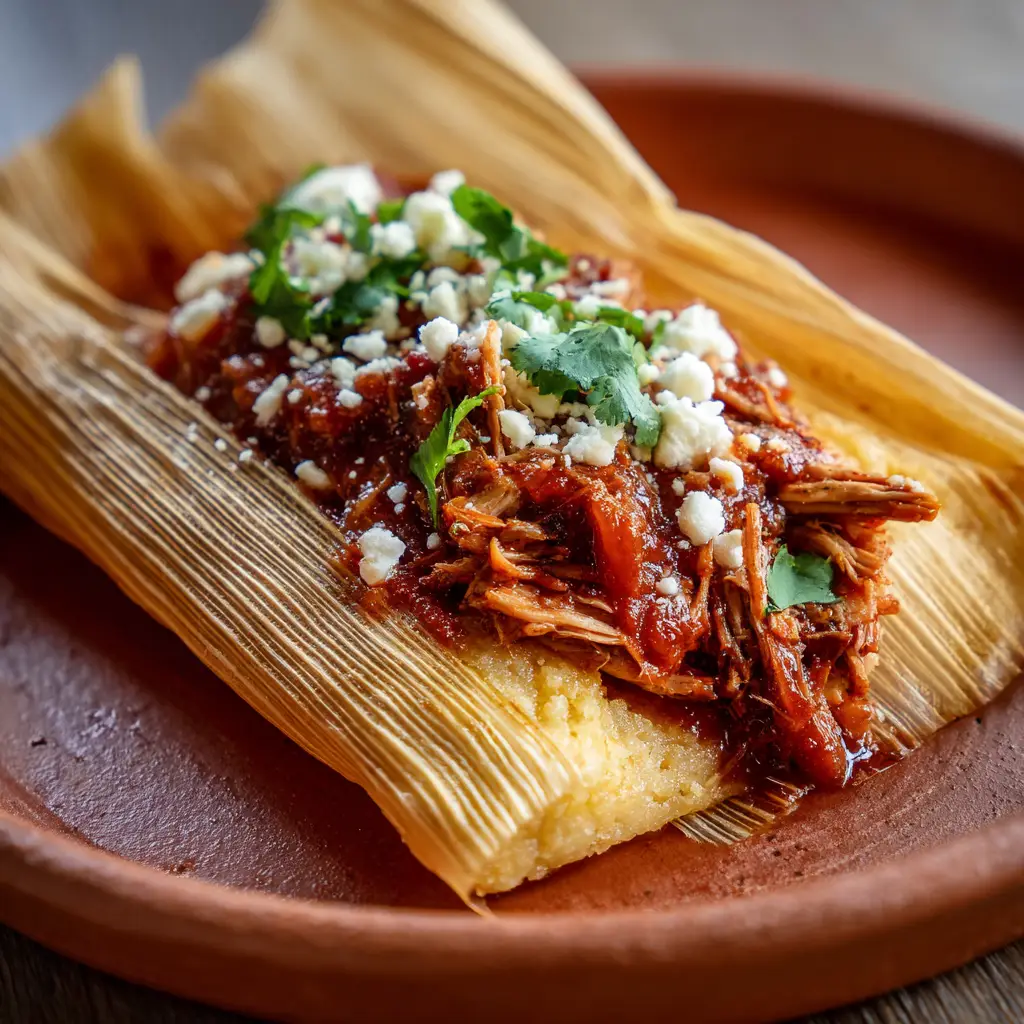
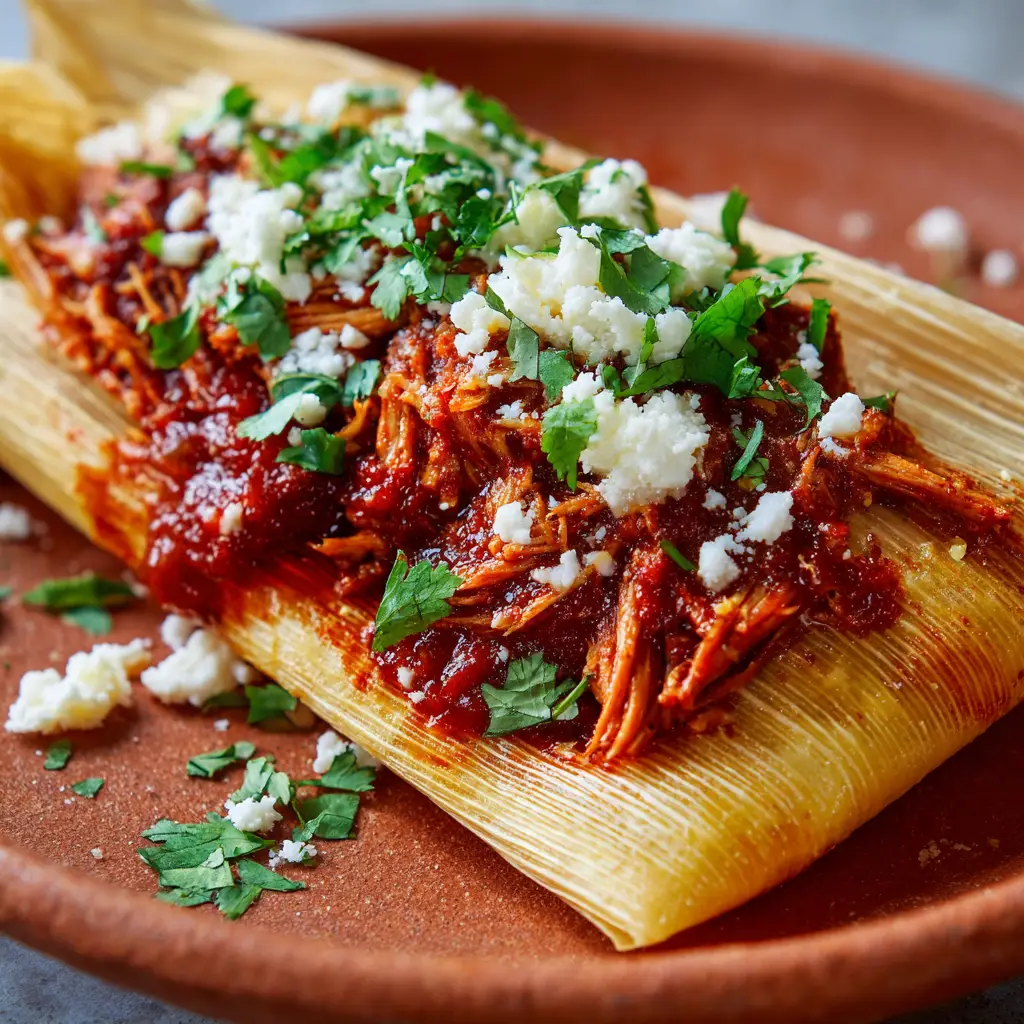
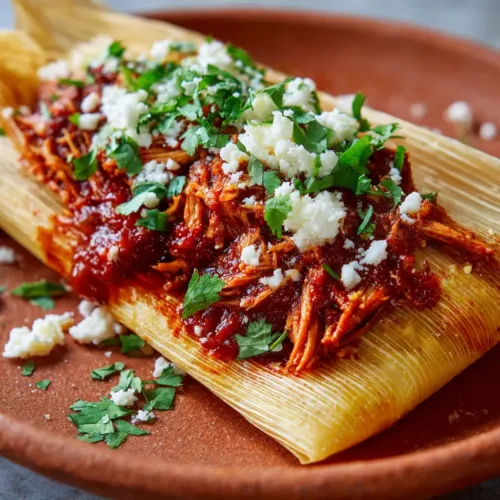
Homemade Tamales are a labor of love that rewards you with an unparalleled culinary experience. There is nothing quite like peeling back a slightly wet, textured tan corn husk to reveal a steaming, perfectly cooked masterpiece. The moment the soft, pale yellow masa dough splits open, it yields to a juicy, vibrant deep-red shredded pork filling.
Every bite of this traditional dish delivers a rich, earthy flavor profile that has been perfected over generations. The thick red chili sauce intimately coats the tender pork, creating a beautiful contrast against the fluffy dough. It is a sensory journey that honors authentic Mexican cooking techniques.
To finish the dish, a few flecks of bright green chopped fresh cilantro and crumbled white cotija cheese are scattered on top. Served on a rustic terracotta plate under soft natural daylight, these tamales are a true feast for the eyes and the stomach.
Finish your beautiful tamales with a sprinkle of fresh cilantro and crumbled white cotija cheese for an elevated flavor profile.
Why This Traditional Red Chile Pork Recipe Works
Perfect Dough Texture: Whipping the foundational fat and baking powder ensures the cooked masa dough remains incredibly soft and pale yellow, avoiding the dense texture common in rushed recipes.
Vibrant, Thick Sauce: By toasting and blending authentic dried chiles, the sauce achieves a thick, deep-red consistency that clings beautifully to every strand of the shredded pork.
Moisture Retention: Steaming the tamales in pre-soaked, slightly wet textured tan corn husks locks in essential moisture for a perfectly tender bite.
Sensory Garnish: The addition of bright green chopped fresh cilantro and crumbled white cotija cheese provides a necessary fresh and salty contrast to the rich, earthy filling.
Essential Components for Authentic Flavor and Texture
Dried Corn Husks You will need about 24 large dried corn husks (approx. 115g). These foundational wrappers must be soaked to become pliable, providing the slightly wet, textured tan encasement that protects the dough while steaming.
Pork Shoulder (Butt) Using 2 lbs (900g) of boneless pork shoulder provides the ideal fat-to-meat ratio. Once seared and slow-simmered, it easily transforms into the juicy, melt-in-your-mouth shredded pork filling.
Dried Guajillo and Ancho Chiles A blend of 4 guajillo chiles (20g) and 3 ancho chiles (15g) builds the flavor base. Toasting and blending these creates the signature thick deep-red chili sauce that coats the meat.
Masa Harina You need 4 cups (480g) of high-quality masa harina (corn flour) to form the structure of the tamale. This finely ground flour hydrates to create a savory, aromatic dough.
Pork Lard or Vegetable Shortening Incorporating 1 ¼ cups (285g) of whipped lard or shortening is a scientifically required step. The trapped air bubbles expand during steaming, ensuring the pale yellow cooked masa dough is soft and light.
Baking Powder & Kosher Salt Exactly 2 tsp (8g) of baking powder and 1 tbsp (18g) of kosher salt are critical invisible ingredients. The baking powder provides the essential rise, while the salt enhances the intrinsic corn flavor.
Chicken Broth Using 4 cups (960ml) of warm chicken broth hydrates the masa and thins the chili puree. The warmth of the liquid helps melt the fat slightly, making the dough easier to spread.
Fresh Cilantro & Cotija Cheese A handful of chopped fresh cilantro (about 15g) and ½ cup (50g) of crumbled white cotija cheese act as the final garnishes. They add bright green flecks and a salty, creamy finish to the plated dish.
The pale yellow cooked masa dough easily pulls away from the soaked corn husk, revealing the rich, savory filling inside.
Must-Have Tools for the Perfect Steam
To recreate this culinary blueprint, you need a large, heavy-bottomed stockpot equipped with a steamer basket insert to keep the tamales elevated above the boiling water. A high-speed blender is absolutely critical for pulverizing the soaked chiles into a silky, thick deep-red sauce. Finally, a stand mixer or electric hand mixer will save your arms when whipping the fat to achieve the required pale yellow, airy consistency for the masa.
Crafting the Ultimate Red Chile Pork Tamales
Preparing the Husks and Pork Filling
Begin by submerging the dried corn husks in a large bowl of very hot water. Weigh them down with a heavy plate and let them soak for at least 45 minutes until they are soft, pliable, and exhibit a slightly wet textured tan appearance.
Cut the 2 lbs (900g) of pork shoulder into large 2-inch chunks and season generously with salt. Heat 1 tbsp (15ml) of oil in a Dutch oven over medium-high heat, and sear the pork until a deep golden-brown crust forms on all sides.
Cover the seared pork with water, add a halved onion and two garlic cloves, and bring to a boil. Reduce the heat, cover, and simmer for 1.5 to 2 hours until the pork is incredibly tender and easily pulls apart with two forks.
Blending the Deep-Red Chili Sauce
While the pork simmers, remove the stems and seeds from the dried guajillo and ancho chiles. Heat a dry skillet over medium heat and toast the chiles for 30 seconds per side until fragrant, pressing them flat with a spatula.
Transfer the blistered chiles to a bowl of hot water and soak for 20 minutes until rehydrated. Place the softened chiles in a blender with ½ cup (120ml) of the soaking liquid, 2 cloves of garlic, 1 tsp (2g) of cumin, and a pinch of salt.
Blend the mixture on high until completely smooth, yielding a thick deep-red chili sauce. Fold this vibrant sauce into your shredded pork, ensuring every juicy piece is intimately coated, then simmer for an additional 10 minutes to marry the flavors.
Whipping the Pale Yellow Masa Dough
In the bowl of a stand mixer, beat the 1 ¼ cups (285g) of lard or shortening on medium-high speed for 3-4 minutes. You are looking for a visual shift; the fat should become incredibly airy and pale.
In a separate bowl, whisk together the 4 cups (480g) of masa harina, 2 tsp (8g) of baking powder, and 1 tbsp (18g) of kosher salt. Gradually alternate adding this dry mixture and the 4 cups (960ml) of warm chicken broth to the whipped fat.
Continue beating the mixture until you achieve a soft, pale yellow masa dough that resembles the texture of thick hummus. Chef’s Cue: Drop a ½ teaspoon of the dough into a cup of cold water; if it floats to the top, your masa has enough trapped air to be perfectly fluffy.
Assembling and Steaming the Masterpiece
Take a soaked, softened corn husk and pat it completely dry with a towel. Spread about ¼ cup (60g) of the pale yellow masa dough onto the smooth side of the husk, leaving a 2-inch border at the top and bottom.
Spoon 2 tablespoons (30g) of the juicy, vibrant deep-red shredded pork filling directly down the center of the masa. Fold one long side of the husk over the filling, then fold the other side over to overlap, finally folding the empty bottom tail up to seal the package.
Arrange the assembled tamales vertically, open end facing up, in a steamer basket set over boiling water. Cover with a tight-fitting lid and steam for 1 hour to 1 hour and 15 minutes, or until the soft masa easily pulls away from the husk.
Professional Culinary Troubleshooting
Preventing Dry Dough: If your pale yellow masa dough feels crumbly before spreading, slowly beat in additional warm chicken broth 1 tablespoon (15ml) at a time until it reaches a spreadable, hummus-like consistency.
Mastering the Float Test: If your dough sinks in the cold water test, you need to beat it for another 2-3 minutes. Trapped air is scientifically required to prevent dense, heavy tamales.
Securing the Steam: Always line the top of your tamales with leftover, unused wet corn husks before placing the lid on your steamer pot. This traps radiant heat and prevents the tops from drying out.
Resting is Crucial: Allow the steamed tamales to rest in the pot off the heat for 15 minutes before opening. This allows the hot dough to firm up, ensuring it splits open perfectly down the middle upon serving.
Maximizing Shelf Life and Reheating
Store leftover tamales in an airtight container in the refrigerator for up to 5 days. For long-term storage, leave them in their original corn husks, place them in a heavy-duty freezer bag, and freeze for up to 3 months.
The best way to reheat them is to steam them again for 15-20 minutes until heated through. If you are in a hurry, you can wrap a damp paper towel around the intact husk and microwave on high for 2-3 minutes, which mimics the steaming process and keeps the masa soft.
Creating a Complete Fiesta Menu
To elevate your Mexican-inspired dinner, pair these authentic tamales with vibrant side dishes. A hearty portion of street corn chicken casserole perfectly complements the earthy, red chile flavors of the pork.
If you’re hosting a large crowd, try serving these alongside some loaded taco potato bowls for a fun, interactive meal. Alternatively, a bubbling pan of cheesy beef enchilada tortellini offers a modern twist that pairs beautifully with the traditional flavors.
For those chilly evenings, the rich, slow-cooked savory notes of the tamale filling echo the comforting depth of a classic crockpot beef stew, making both excellent options for winter comfort food.
Yes, while pork lard provides the most authentic flavor and texture, you can successfully substitute it with vegetable shortening or even a neutral cooking oil. The key is to whip the fat extensively to trap enough air for a fluffy masa.
Dense tamales usually happen if the fat wasn’t whipped long enough, or if you skipped the baking powder. Always use the ‘float test’—drop a small piece of dough into cold water. If it floats, it’s ready; if it sinks, keep whipping.
Dried corn husks should be soaked in very hot water for at least 45 minutes to an hour. They must be completely pliable and slightly wet-textured before you attempt to spread the dough to prevent tearing.
Absolutely. Allow the steamed tamales to cool completely, keep them wrapped in their corn husks, and place them in a heavy-duty freezer bag. They can be frozen for up to 3 months and easily reheated by steaming.
Carefully remove one tamale from the steamer and let it rest for 5 minutes. If the corn husk peels away easily without the pale yellow masa dough sticking to it, the tamales are perfectly cooked.
The Ultimate Tamale Recipe Guide
FL Recipes
Homemade Tamales: Authentic Red Chile Pork Recipe
Master authentic Homemade Tamales with this step-by-step recipe. Features fluffy, pale yellow masa dough filled with juicy, vibrant deep-red shredded pork, all steamed to perfection in traditional corn husks and garnished with cilantro and cotija.
24largeDried Corn HusksApproximately 115g, soaked in hot water until soft.
2lbsPork Shoulder (Butt)900g, cut into 2-inch chunks.
1tbspVegetable Oil15ml, for searing the pork.
4wholeDried Guajillo Chiles20g, stemmed and seeded.
3wholeDried Ancho Chiles15g, stemmed and seeded.
2clovesGarlicPeeled, for the sauce.
1tspGround Cumin2g.
1 1/4cupsPork Lard or Vegetable Shortening285g, room temperature.
4cupsMasa Harina480g.
2tspBaking Powder8g.
1tbspKosher Salt18g, plus extra for seasoning pork.
4cupsWarm Chicken Broth960ml.
15gFresh CilantroChopped, for garnish.
1/2cupCotija Cheese50g, crumbled, for garnish.
Equipment
1 Large Stockpot with Steamer Insert Essential for steaming the tamales evenly.
1 High-Speed Blender Required to puree the dried chiles into a thick sauce.
1 Stand mixer or electric hand mixer Crucial for whipping the lard and masa to a fluffy consistency.
Method
Preparing the Tamales
Submerge the dried corn husks in a large bowl of hot water. Weigh them down and let them soak for at least 45 minutes until soft and pliable.
Heat oil in a Dutch oven. Season the pork chunks with salt and sear until golden-brown. Cover with water, add an onion half, and simmer for 1.5 to 2 hours until tender enough to shred.
Toast the dried chiles in a dry skillet for 30 seconds per side. Soak in hot water for 20 minutes. Blend the softened chiles with ½ cup of soaking liquid, garlic, cumin, and salt until it forms a thick, deep-red sauce.
Shred the cooked pork and fold in the thick red chili sauce until intimately coated. Simmer for 10 minutes to marry the flavors.
In a stand mixer, beat the lard or shortening on medium-high speed for 3-4 minutes until pale and incredibly airy.
Whisk the masa harina, baking powder, and salt. Alternating with the warm chicken broth, gradually add the dry mixture to the whipped fat. Beat until you achieve a soft, pale yellow dough that floats in cold water.
Pat a soaked corn husk dry. Spread ¼ cup of masa dough onto the smooth side. Spoon 2 tablespoons of the shredded pork filling down the center. Fold the sides over to enclose the filling, then fold the bottom tail up.
Arrange the tamales vertically in a steamer basket over boiling water. Cover and steam for 1 hour to 1 hour 15 minutes, or until the masa easily pulls away from the husk.
Let the tamales rest off the heat for 15 minutes. Serve split open, garnished with chopped fresh cilantro and crumbled white cotija cheese.
Nutrition
Calories: 280kcalProtein: 12gFat: 16gFiber: 3g
Notes
Tip 1: Always perform the float test with your masa dough. If a small piece sinks in cold water, keep whipping to trap more air. Tip 2: Line the top of your steaming tamales with leftover wet husks to lock in the radiant heat.
Perfectly steamed Homemade Tamales featuring a juicy red chile pork filling and fluffy masa dough. The ultimate authentic Mexican recipe!
Join Our Culinary Community
Creating these authentic Homemade Tamales is an incredibly rewarding culinary project that yields stunning, flavorful results. Once you master the soft, pale yellow masa and the vibrant deep-red pork filling, you will never want store-bought again.
If you enjoyed this visually stunning recipe, please leave a comment below and rate the recipe card! Don’t forget to subscribe to our newsletter for more culinary deep-dives, and pin this recipe to your favorite boards on Pinterest to share with fellow enthusiastic home cooks!
Hi, I’m Emily Carter, and welcome to FL Recipes! I share simple, healthy recipes that make cooking easy, fun, and delicious for everyone. more about me »