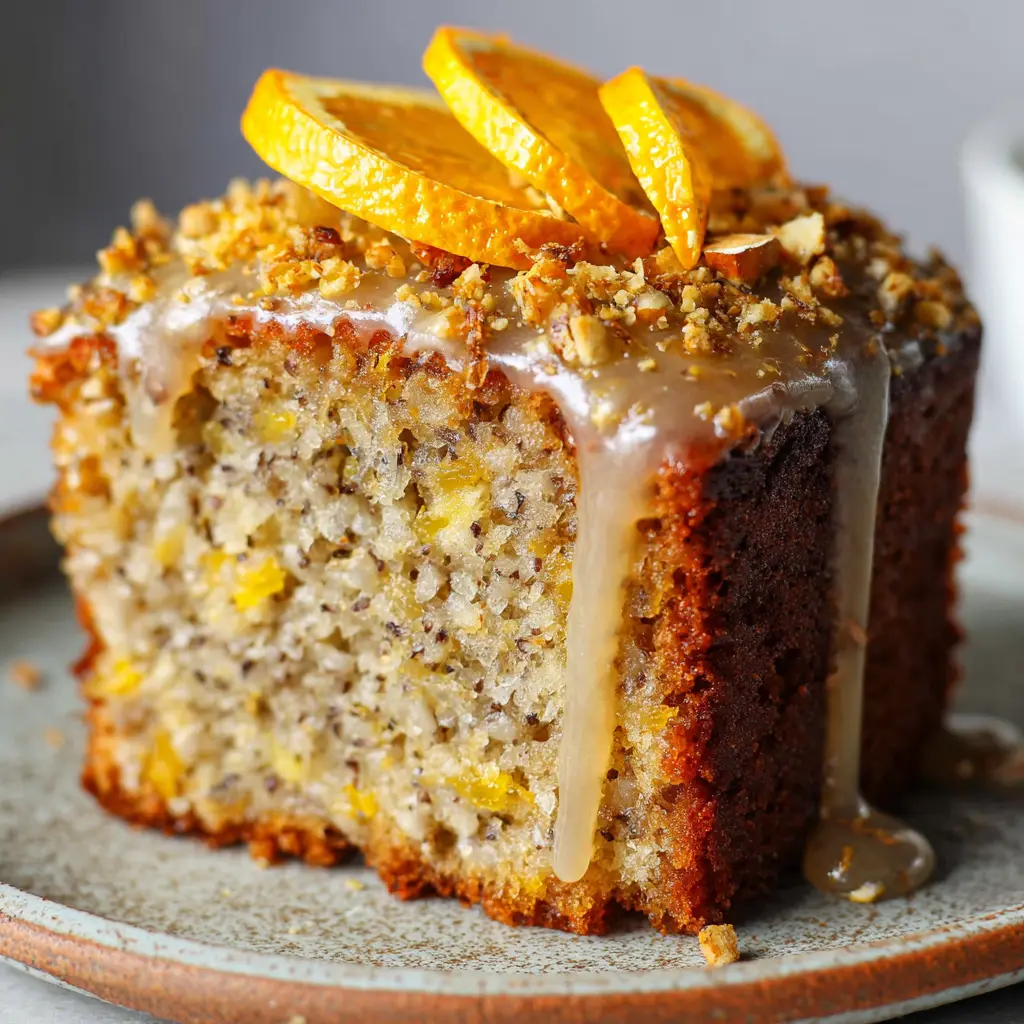
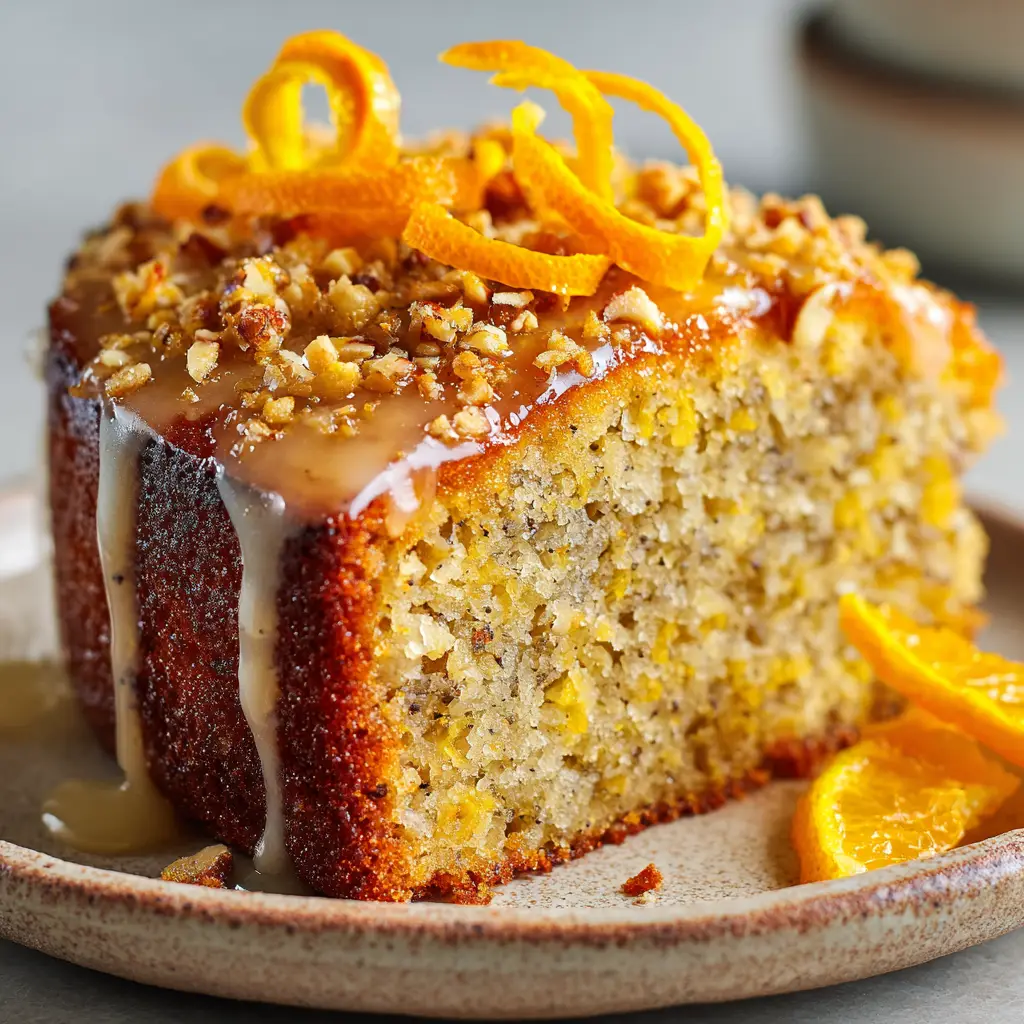
There is something uniquely comforting about a freshly baked Orange Hazelnut Cake resting on a rustic round ceramic plate. This recipe delivers a thick, spongy crumb foundation featuring highly visible ground hazelnuts and bright orange zest flecks scattered throughout every bite. The natural daylight catching the thin layer of translucent glossy orange citrus glaze dripping slightly down the sides is a feast for the eyes before you even take a bite.
Every slice of this Orange Hazelnut Cake is masterfully crowned with twisted strips of candied orange peel and a delicate sprinkle of crushed roasted hazelnuts. We have engineered this recipe to perfectly replicate that bakery-window aesthetic in your own home kitchen. Whether you are hosting a formal brunch or enjoying a quiet afternoon tea, this vibrant citrus bake is guaranteed to impress.
Why This Orange Hazelnut Cake Will Become Your Signature Bake
Beautifully garnished with three twisted strips of candied orange peel and crushed roasted nuts.
Unmatched Visual Appeal: The glossy translucent citrus glaze beautifully catches the light, giving the cake a professional, mouth-watering finish.
Incredible Texture Contrast: A moist, thick spongy crumb perfectly balances the slight crunch of the crushed roasted hazelnuts sprinkled on top.
Vibrant Flavor Profile: The generous incorporation of bright orange zest flecks guarantees a burst of fresh citrus in every single bite.
Elegant Artisanal Garnish: Exactly three twisted strips of candied orange peel elevate the presentation to a boutique bakery level.
The Essential Ingredients for a Spongy, Nutty Crumb
Ground Hazelnuts (Hazelnut Meal): 1 cup (120g) of finely ground roasted hazelnuts is the foundational secret to the thick spongy crumb. This ingredient provides essential healthy fats that keep the bake incredibly moist.
Fresh Oranges: You will need 2 large oranges to yield 2 tbsp (12g) of freshly grated orange zest and 2 tbsp (30ml) of fresh juice for the glaze. The zest releases essential oils that perfume the entire cake.
All-Purpose Flour: 1 1/2 cups (180g) of all-purpose flour provides the vital structural framework. It ensures the batter is strong enough to suspend the ground nuts without collapsing.
Granulated Sugar: 1 cup (200g) of granulated sugar sweetens the cake and aids in creaming the butter for a lighter crumb. You will need an additional 1/2 cup (100g) for candying the orange peel.
Unsalted Butter: 1/2 cup (113g) of softened unsalted butter acts as the primary fat, offering richness and a tender mouthfeel. Always ensure it is at room temperature to trap air during the creaming process.
Eggs: 3 large eggs act as the binding agent and provide lift. Room-temperature eggs emulsify perfectly with the butter and sugar.
Buttermilk: 3/4 cup (180ml) of full-fat buttermilk brings a subtle tang that balances the sweetness. The acidity also reacts with the leavening agents to create a fluffier texture.
Baking Powder & Salt: 1 tbsp (15g) of baking powder gives the cake its necessary rise, while 1/2 tsp (3g) of kosher salt enhances the nutty and citrus notes.
Powdered Sugar: 1 cup (120g) of sifted powdered sugar is required for the translucent glossy orange citrus glaze. Sifting prevents lumps and ensures a mirror-like finish.
Essential Kitchen Tools for the Perfect Citrus Bake
9-Inch Round Cake Pan: A light-colored metal pan prevents the edges from over-browning while ensuring the center bakes evenly.
Microplane Zester: Crucial for extracting only the brightly colored orange zest flecks without the bitter white pith.
Food Processor: Perfect for pulsing the roasted hazelnuts into a fine, consistent ground texture.
Small Saucepan: Necessary for simmering the simple syrup to create the twisted candied orange peels.
Step-by-Step Instructions: Crafting the Perfect Orange Hazelnut Cake
Visible ground hazelnuts and bright orange zest create the ultimate thick, spongy crumb.
Toasting and Grinding the Hazelnuts
Preheat your oven to 350°F (175°C). Spread 1 1/4 cups (150g) of whole hazelnuts onto a baking sheet and roast for 10-12 minutes until fragrant and the skins begin to blister.
Transfer the warm nuts to a clean kitchen towel and rub them vigorously to remove the loose skins. Once completely cooled, pulse 1 cup (120g) of the nuts in a food processor until finely ground, reserving the rest for the crushed garnish.
Preparing the Candied Orange Peel Garnish
Using a sharp peeler, carve three long strips of peel from an orange, avoiding the white pith. In a small saucepan, bring 1/2 cup (120ml) of water and 1/2 cup (100g) of granulated sugar to a gentle simmer until the sugar dissolves completely.
Drop the orange strips into the syrup and simmer for 15 minutes until they become slightly translucent. Remove them carefully, twist each strip into a delicate spiral, and set them on parchment paper to harden.
Mixing the Spongy Hazelnut Batter
In a medium bowl, whisk together the 1 1/2 cups (180g) of all-purpose flour, 1 cup (120g) of ground hazelnuts, 1 tbsp (15g) of baking powder, and 1/2 tsp (3g) of salt. In a separate large bowl, use an electric mixer to cream the 1/2 cup (113g) of softened butter with the 1 cup (200g) of granulated sugar and 2 tbsp (12g) of bright orange zest.
Beat the mixture on medium-high for 3 minutes until pale and fluffy, ensuring the citrus oils are fully released. Add the 3 large eggs one at a time, mixing well after each addition to maintain a stable emulsion.
Baking for the Perfect Thick Crumb
Gently fold in the dry flour and nut mixture in three additions, alternating with the 3/4 cup (180ml) of buttermilk. Begin and end with the dry ingredients, mixing just until no flour streaks remain to keep the cake tender.
Pour the batter into a greased and parchment-lined 9-inch round cake pan, smoothing the top with a spatula. Bake at 350°F (175°C) for 40-45 minutes, or until a toothpick inserted into the center comes out clean. Let the cake cool in the pan for 15 minutes before transferring to a wire rack.
Whisking the Glossy Translucent Citrus Glaze
While the cake cools completely, prepare the icing. In a small bowl, combine the 1 cup (120g) of sifted powdered sugar with 2 tbsp (30ml) of fresh orange juice.
Whisk vigorously until smooth. The consistency should be thick but pourable; add a few extra drops of juice if necessary to achieve that perfect glossy translucence.
Glazing and Garnishing the Cake
Once the cake is cool to the touch, slowly pour the glaze over the center, using a spoon to gently nudge it so it’s dripping slightly down the sides. Work quickly before the icing begins to set.
Immediately garnish exactly on top with your three twisted strips of candied orange peel. Finally, add a generous sprinkle of the reserved crushed roasted hazelnuts over the wet glaze so they adhere perfectly.
Pro-Level Troubleshooting for a Flawless Citrus Nut Cake
Preventing a Dry Cake: Do not overmix the batter once the flour is added. Overmixing develops gluten, which destroys the thick spongy crumb foundation.
Achieving the Perfect Glaze Consistency: If your glaze is too thin, it will soak into the cake rather than sitting on top. Always sift your powdered sugar and add the orange juice gradually.
Nut Grinding Warning: When processing your hazelnuts, pulse them in short bursts. Blending them constantly will release their oils and turn them into hazelnut butter.
Room Temperature Ingredients: Your butter, eggs, and buttermilk must be at room temperature. Cold ingredients will cause the batter to curdle and bake unevenly.
Keeping Your Orange Hazelnut Cake Moist: Storage & Freezing
To preserve the moisture and the delicate glossy finish, store your Orange Hazelnut Cake at room temperature in an airtight cake dome for up to 3 days. Refrigeration is not recommended as it will dry out the spongy crumb foundation prematurely.
If you wish to freeze the cake, it is best to do so before applying the citrus glaze. Wrap the completely cooled, unglazed cake tightly in two layers of plastic wrap and one layer of aluminum foil, freezing for up to 2 months. Thaw overnight at room temperature before glazing and garnishing.
Perfect Pairings: What to Serve With Your Citrus Dessert
This beautiful centerpiece dessert pairs wonderfully with a hot cup of tea or a robust dark roast coffee. If you love bright citrus flavors, you should also check out these delightful zesty lemon sugar cookies for your next baking session.
Fans of beautifully layered, nutty desserts will also deeply appreciate this stunning layered pistachio raspberry cake. Alternatively, if you are looking for a morning treat with similar fruit profiles, a sweet raspberry cheesecake danish is a fantastic choice.
For those times when you are craving a wildly rich and decadent dessert to follow your citrus bake, try our velvety creamy chocolate custard cake. It offers a wonderful chocolatey contrast to the bright orange flavors.
Yes, you can substitute store-bought hazelnut flour or hazelnut meal for ground hazelnuts. However, freshly roasting and grinding your own nuts provides a deeper, more pronounced flavor and better moisture retention.
A dry cake is usually the result of overbaking or overmixing the batter. Measure your flour correctly using the spoon-and-level method, and mix the wet and dry ingredients just until combined to prevent dense, dry gluten formation.
Ensure your cake is completely cool before applying the glaze. If the cake is warm, the glaze will melt and soak into the spongy crumb. Additionally, use sifted powdered sugar to ensure a thick, pourable consistency.
If you don’t have buttermilk, you can make a quick substitute by adding 1 tablespoon of fresh lemon juice or white vinegar to a liquid measuring cup, then filling it to the 3/4 cup mark with whole milk. Let it sit for 5 minutes before using.
After twisting the simmered orange peels into spirals, they typically need 30 to 60 minutes to harden on parchment paper. For the best shape, twist them while they are still slightly warm and pliable.
The Orange Hazelnut Cake Recipe Card
FL Recipes
The Ultimate Moist Orange Hazelnut Cake
This breathtaking Orange Hazelnut Cake features a thick spongy crumb loaded with ground nuts and bright orange zest, all finished with a glossy translucent citrus glaze and twisted candied orange peels.
1/2cupunsalted butter(113g) softened to room temperature
2tbsporange zest(12g) freshly grated
3largeeggsroom temperature
3/4cupbuttermilk(180ml) room temperature
1cuppowdered sugar(120g) sifted
2tbspfresh orange juice(30ml)
1largeorange peelcarved into 3 strips
1/2cupgranulated sugar(100g) for simple syrup
1/2cupwater(120ml) for simple syrup
2tbspcrushed roasted hazelnutsfor sprinkling on top
Equipment
1 9-inch round cake pan Light-colored metal preferred.
1 Microplane Zester For fine orange zest.
1 Food processor For grinding hazelnuts.
Method
Step-by-Step Instructions
Preheat oven to 350°F (175°C). Roast 1 1/4 cups (150g) of hazelnuts for 10-12 minutes. Remove skins with a towel, cool, and pulse 1 cup (120g) in a food processor until finely ground. Reserve the rest for garnish.
Simmer 1/2 cup (120ml) water and 1/2 cup (100g) granulated sugar in a saucepan. Drop in 3 orange peel strips and simmer for 15 minutes. Remove, twist into spirals, and let harden on parchment paper.
Whisk together 1 1/2 cups (180g) all-purpose flour, 1 cup (120g) ground hazelnuts, 1 tbsp (15g) baking powder, and 1/2 tsp (3g) salt in a medium bowl.
Beat 1/2 cup (113g) softened butter, 1 cup (200g) granulated sugar, and 2 tbsp (12g) orange zest for 3 minutes until pale and fluffy. Beat in the 3 large eggs one at a time.
Fold the dry flour mixture into the butter mixture in three additions, alternating with the 3/4 cup (180ml) buttermilk. Mix just until no flour streaks remain.
Pour into a greased and parchment-lined 9-inch round pan. Bake at 350°F (175°C) for 40-45 minutes until a toothpick comes out clean. Cool for 15 minutes in the pan, then transfer to a wire rack to cool completely.
Whisk 1 cup (120g) sifted powdered sugar with 2 tbsp (30ml) fresh orange juice until smooth and translucent.
Pour the glaze over the cooled cake, letting it drip down the sides. Immediately top with the 3 twisted candied orange peels and sprinkle with reserved crushed roasted hazelnuts.
Nutrition
Calories: 395kcalProtein: 6gFat: 21gFiber: 3g
Notes
Do not overmix the batter to ensure the spongy crumb stays tender. Ensure butter, eggs, and buttermilk are at room temperature to avoid a curdled batter.
This stunning Orange Hazelnut Cake features a moist, spongy crumb and a vibrant translucent citrus glaze.
Share Your Baking Success!
We hope this Orange Hazelnut Cake brings a burst of bright, citrusy joy to your table! The combination of the thick spongy crumb and the glossy translucent orange citrus glaze is truly a baking triumph.
If you achieved the perfect bake, please leave a star rating and comment below to let us know how it turned out. Don’t forget to subscribe to our newsletter for more inspiring seasonal recipes, and be sure to pin this recipe to Pinterest to share it with your fellow baking enthusiasts!
Hi, I’m Emily Carter, and welcome to FL Recipes! I share simple, healthy recipes that make cooking easy, fun, and delicious for everyone. more about me »