Welcome to the last pie crust recipe you will ever need. Forget the store-bought versions that lack flavor and crumble at first sight. We’re diving into the simple art of creating a homemade, all-butter pie crust that is unbelievably flaky, perfectly tender, and rich with buttery flavor. This guide is designed for the enthusiastic home cook, breaking down each step with clear, simple instructions. Whether you’re making a sweet tart or a savory quiche, this crust is the perfect foundation.
Why This is the Only Pie Crust Recipe You’ll Ever Need
This recipe focuses on one thing: success. By using simple, high-quality ingredients and a technique that is easy to master, you get a consistently delicious result. The all-butter approach guarantees superior flavor that you just can’t get from shortening. We will walk you through the process, ensuring you understand not just what to do, but why you’re doing it.
The Science of a Perfect, Flaky Crust
Understanding a little bit of the science behind dough makes the process intuitive. A great pie crust isn’t magic; it’s just food science at its most delicious.
It’s All About Cold Ingredients
The single most important rule in this pie crust recipe is to keep everything cold. Cold butter, ice-cold water, and even cold hands! When small pieces of solid butter are left in the dough, they melt in the oven and create steam. This steam pushes layers of dough apart, creating those irresistible flaky pockets.
The Role of Flour, Fat, and Water
Flour provides the structure, fat (butter) provides the flavor and flakiness, and water binds it all together. The goal is to coat the flour with fat just enough to create a barrier, which prevents too much gluten from developing. This is the key to a tender crust.
Why Overworking is the Enemy
When you mix flour and water, you develop gluten. A little gluten is good for structure, but too much makes the dough tough and elastic. That’s why we handle the dough as little as possible and let it rest in the fridge. Chilling allows the gluten to relax, making the dough tender and easy to roll out.
Essential Ingredients
You only need a few pantry staples for this recipe. Quality ingredients make a huge difference, so use the best you can.
All-Purpose Flour: Provides the perfect balance of protein for structure without becoming too tough.
Unsalted Butter: The star of the show! Make sure it’s very cold, cubed into small pieces.
Ice Water: Helps bind the dough while keeping the butter cold.
Salt: Enhances the buttery flavor.
Sugar: Just a touch to help with browning and add a hint of flavor, even for savory pies.
Step-by-Step Guide to Homemade Pie Crust
Follow these steps closely for a flawless result. Remember, work quickly to keep the dough as cold as possible.
Combine Dry Ingredients: In a large bowl, whisk together the flour, salt, and sugar.
Cut in the Butter: Add the cold, cubed butter to the flour mixture. Using a pastry blender or your fingertips, quickly cut the butter into the flour until the mixture resembles coarse crumbs with some pea-sized pieces of butter remaining.
Add the Water: Sprinkle 4 tablespoons of ice water over the mixture. Gently toss with a fork until the dough begins to come together. Add more water, one teaspoon at a time, only if needed. The dough should be shaggy, not wet.
Form the Disk: Turn the dough out onto a clean surface and gently press it together into a cohesive ball. Do not knead it. Flatten the ball into a 1-inch thick disk, wrap it tightly in plastic wrap, and refrigerate for at least 1 hour (or up to 2 days).
Roll Out the Dough: On a lightly floured surface, roll the chilled dough from the center out into a 12-inch circle.
Transfer to Pie Plate: Carefully transfer the dough to a 9-inch pie plate. Gently press it into the bottom and up the sides. Trim the overhang to about 1 inch, then tuck it under and crimp the edges as desired.
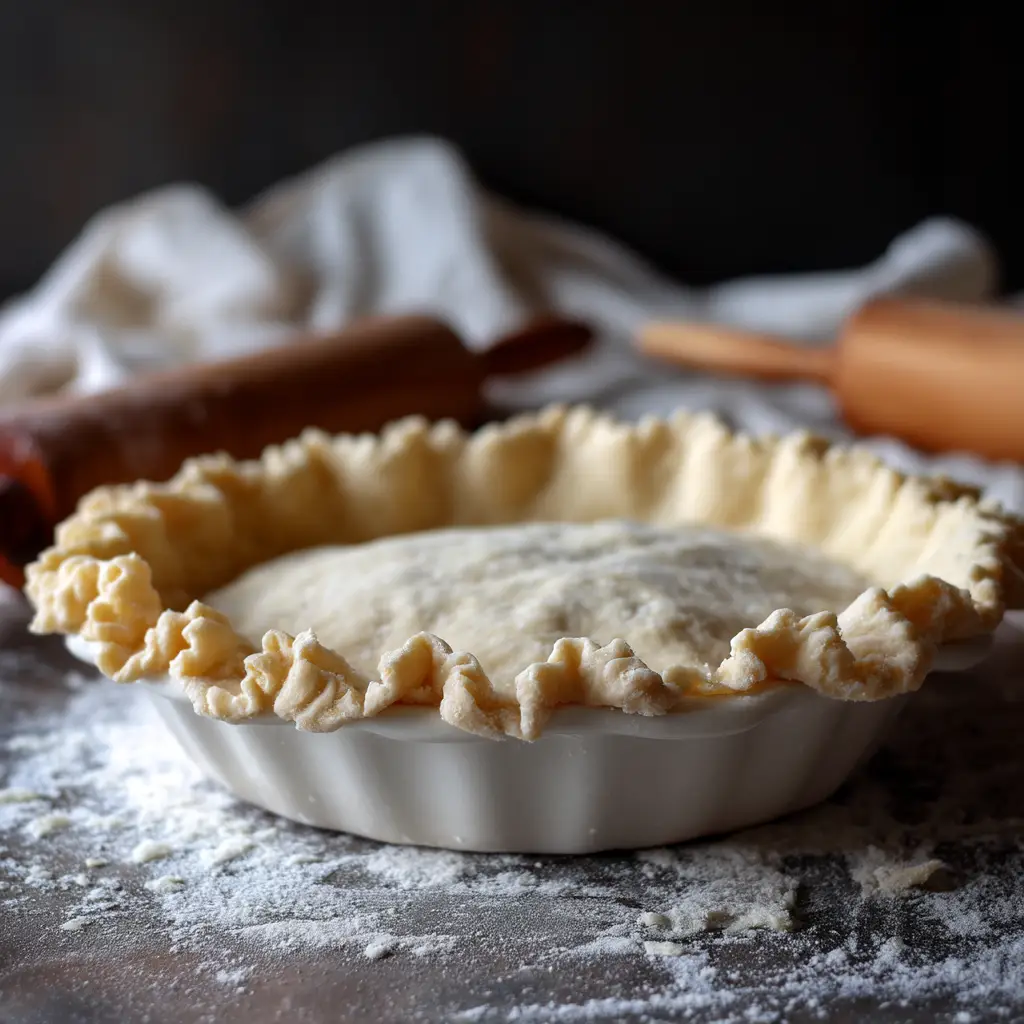
A beautiful crimp is the finishing touch on a homemade pie.
Pro Tips for Pie Crust Success
Here are a few extra tips to ensure your homemade pie crust is perfect every single time.
Use a Food Processor: To speed things up, you can pulse the dry ingredients and butter in a food processor until it reaches the coarse crumb stage. Then, stream in the ice water while pulsing just until the dough comes together.
Don’t Skip the Chill: Chilling the dough is a non-negotiable step. It lets the gluten relax and ensures the butter is firm, which is critical for flakiness.
Chill Again: For extra insurance against shrinking, place the formed pie shell in the freezer for 15 minutes before baking.
Patching is Okay: If your dough tears while rolling or transferring, don’t panic! Simply patch it with a small piece of excess dough and a dab of cold water.
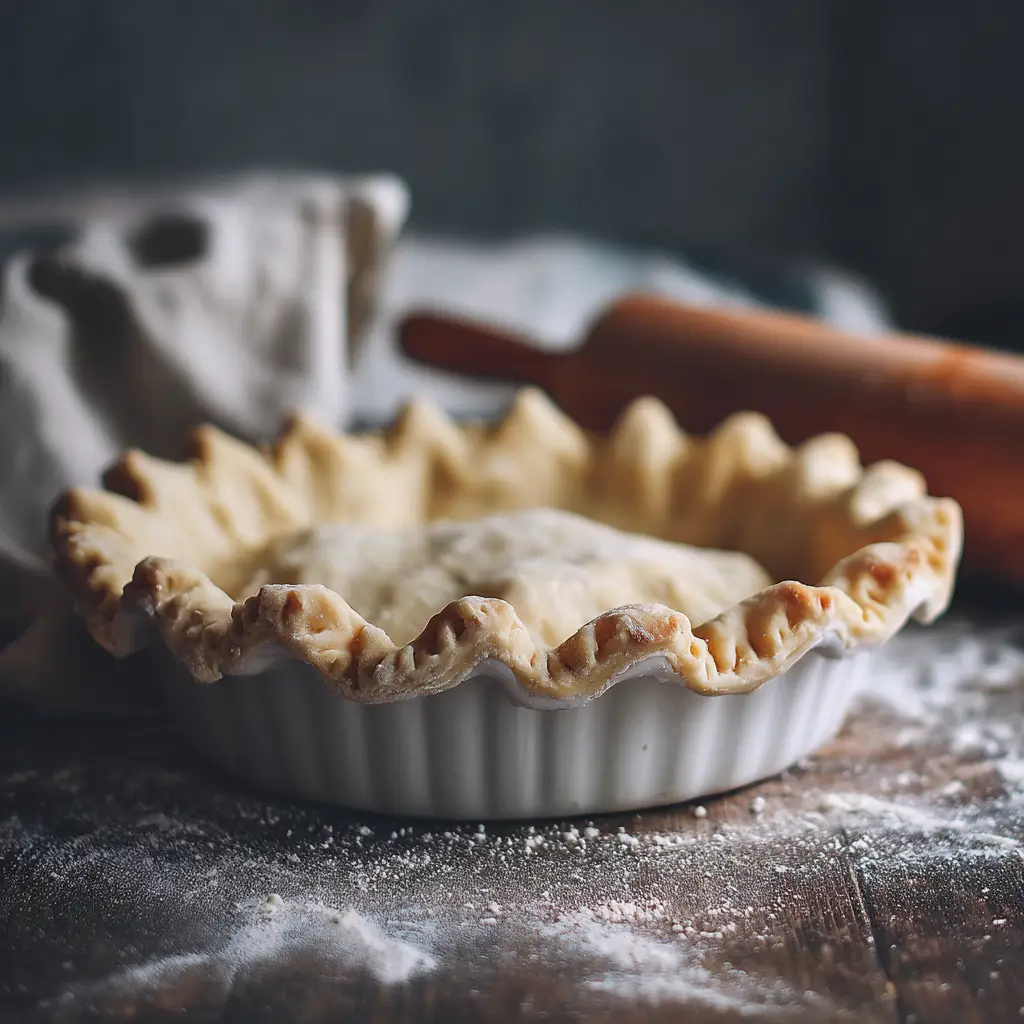
Getting the dough perfectly into the pan is the first step to a beautiful pie.
How to Blind Bake a Pie Crust
Blind baking (or pre-baking) is essential for pies with wet, unbaked fillings like custards or cream pies. It ensures the bottom of your crust is crisp and golden, not soggy.
Prep the Crust: Prepare the pie crust in the pie plate and chill it in the freezer for 15 minutes. While it chills, preheat your oven to 400°F (200°C).
Dock and Line: Prick the bottom and sides of the crust with a fork. Line the crust with parchment paper and fill it with pie weights or dried beans.
First Bake: Bake for 15 minutes. The edges should be lightly golden.
Second Bake: Carefully remove the parchment paper and weights. Return the crust to the oven and bake for another 5-7 minutes, or until the bottom is pale golden brown. Let it cool completely before filling.
Troubleshooting Common Pie Crust Problems
Even seasoned bakers run into issues. Here’s a quick guide to fixing common problems.
Problem
Solution
Shrunken Crust
The dough was likely overworked or not chilled long enough. Allow the dough to rest in the fridge to relax the gluten. Also, make sure to leave a slight overhang when trimming the crust.
Tough Crust
This is a classic sign of too much gluten development from overworking the dough or adding too much water. Handle the dough minimally and use just enough water for it to come together.
Soggy Bottom
Always blind bake your crust for wet fillings. You can also brush the bottom of the blind-baked crust with a beaten egg white to create a moisture barrier.
Storing and Make-Ahead Instructions
This pie crust recipe is perfect for making ahead. Proper storage is key to maintaining its texture and flavor.
Refrigerating Dough
You can wrap the dough disk tightly in plastic wrap and store it in the refrigerator for up to 2 days before rolling it out. Let it sit on the counter for a few minutes to become pliable if it’s too firm.
Freezing Dough
For longer storage, wrap the dough disk in plastic wrap and then place it in a freezer-safe bag. It can be frozen for up to 3 months. Thaw overnight in the refrigerator before using. Looking for a great way to use frozen dough? Try this savory Savory Cabbage Pie.
Our Favorite Recipes Using This Crust
This versatile crust is the perfect base for countless dishes. Once you’ve mastered it, the possibilities are endless. It’s the ideal vessel for a rich and decadent Chocolate Raspberry Tart or a sophisticated appetizer like a Caramelized Onion Tart. It even works beautifully with a hearty and unexpected filling.
The secret is cold fat. Using ice-cold butter and water creates small pockets of fat in the dough. When baked, these pockets melt and release steam, separating the dough into distinct, flaky layers.
This recipe uses all butter for its superior flavor and crisp, flaky layers. Shortening can create a more tender, crumbly crust, but it lacks the rich taste of butter.
A tough pie crust is usually caused by overworking the dough, which develops too much gluten. Mix the dough just until it comes together and handle it as little as possible to keep it tender.
Absolutely. You can refrigerate the dough disk, tightly wrapped, for up to 2 days. You can also freeze it for up to 3 months. Thaw it in the refrigerator overnight before rolling it out.
The best way to prevent a soggy bottom is to blind bake the crust, especially for wet fillings like custard or pumpkin pie. Baking the crust first ensures it’s crisp and golden before the filling is added.
Share Your Creations!
Now that you have the ultimate pie crust recipe, it’s time to get baking! We can’t wait to see what you create. Share your beautiful pies with us on Pinterest and leave a comment below with your favorite fillings. Happy baking!
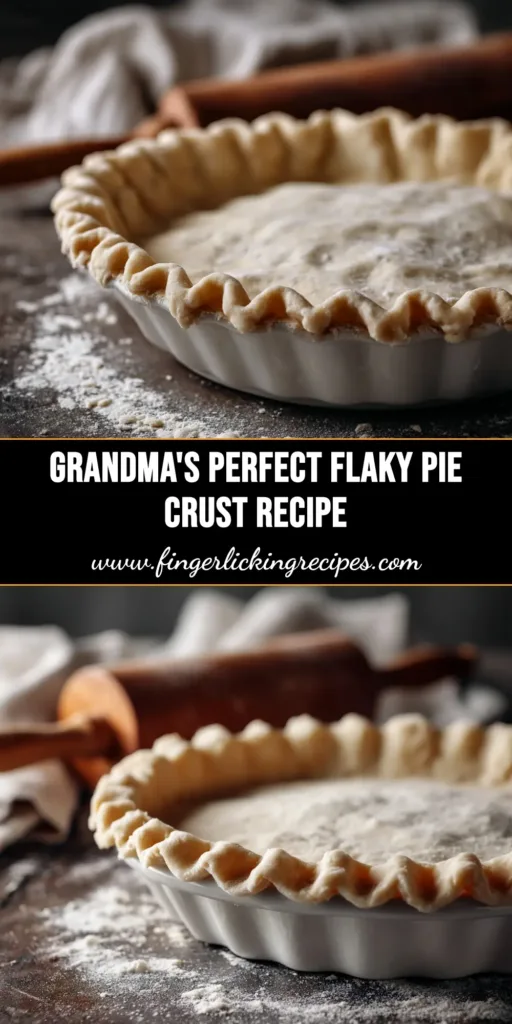
This could be the base of your next award-winning pie!
Pie Crust Recipe
FL Recipes
Perfect Flaky Pie Crust Recipe
This foolproof pie crust recipe yields a deliciously flaky, all-butter crust every time. With simple ingredients and step-by-step instructions, it's the perfect base for any sweet or savory pie.
In a large bowl, whisk together the flour, salt, and sugar.
Add the cold, cubed butter. Using a pastry blender or your fingertips, cut the butter into the flour until the mixture resembles coarse crumbs with pea-sized pieces of butter remaining.
Sprinkle 4 tablespoons of ice water over the mixture. Gently toss with a fork until the dough begins to form shaggy clumps. Add more water, 1 teaspoon at a time, only if it's too dry.
Turn the dough onto a clean surface, gather into a ball, and flatten into a 1-inch disk. Wrap tightly in plastic wrap and refrigerate for at least 1 hour.
Assembling the Crust
On a lightly floured surface, roll the chilled dough into a 12-inch circle.
Carefully transfer the dough to a 9-inch pie plate. Press it into the bottom and sides without stretching it.
Trim the overhang to 1 inch, tuck the edge under itself, and crimp decoratively. For best results, freeze the formed crust for 15 minutes before baking.
Nutrition
Calories: 1150kcalProtein: 14gFat: 76gFiber: 3g
Notes
For Blind Baking: Preheat oven to 400°F (200°C). Line the chilled crust with parchment, fill with pie weights, and bake for 15 minutes. Remove weights and parchment, then bake for another 5-7 minutes until golden. Make-Ahead: Dough can be refrigerated for up to 2 days or frozen for up to 3 months. Thaw frozen dough in the refrigerator overnight.
Keyword all butter pie crust,flaky pie crust,pie crust
Hi, I’m Emily Carter, and welcome to FL Recipes! I share simple, healthy recipes that make cooking easy, fun, and delicious for everyone. more about me »