Pineapple Lemonade Candy Apples are the vibrant, tangy, and sweet evolution of the classic carnival treat. Imagine a crisp, tart Granny Smith apple encased in a glass-like yellow shell that tastes exactly like a chilled glass of tropical lemonade. This isn’t just a snack; it’s a gourmet experience that captures the essence of summer in every translucent bite.
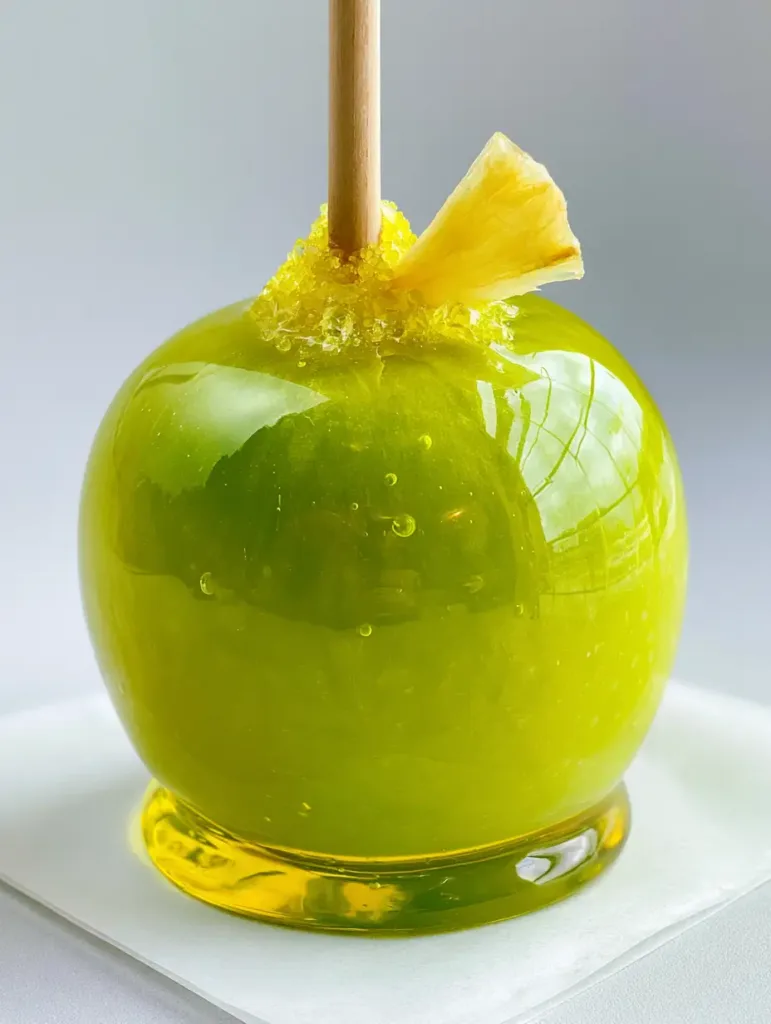
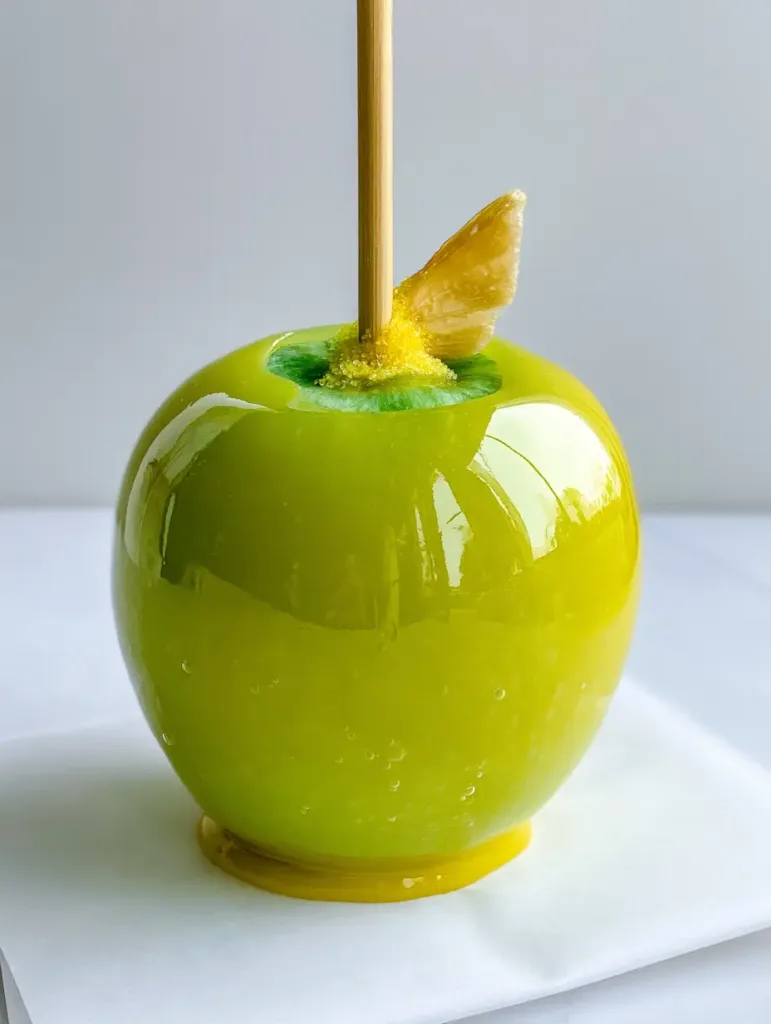
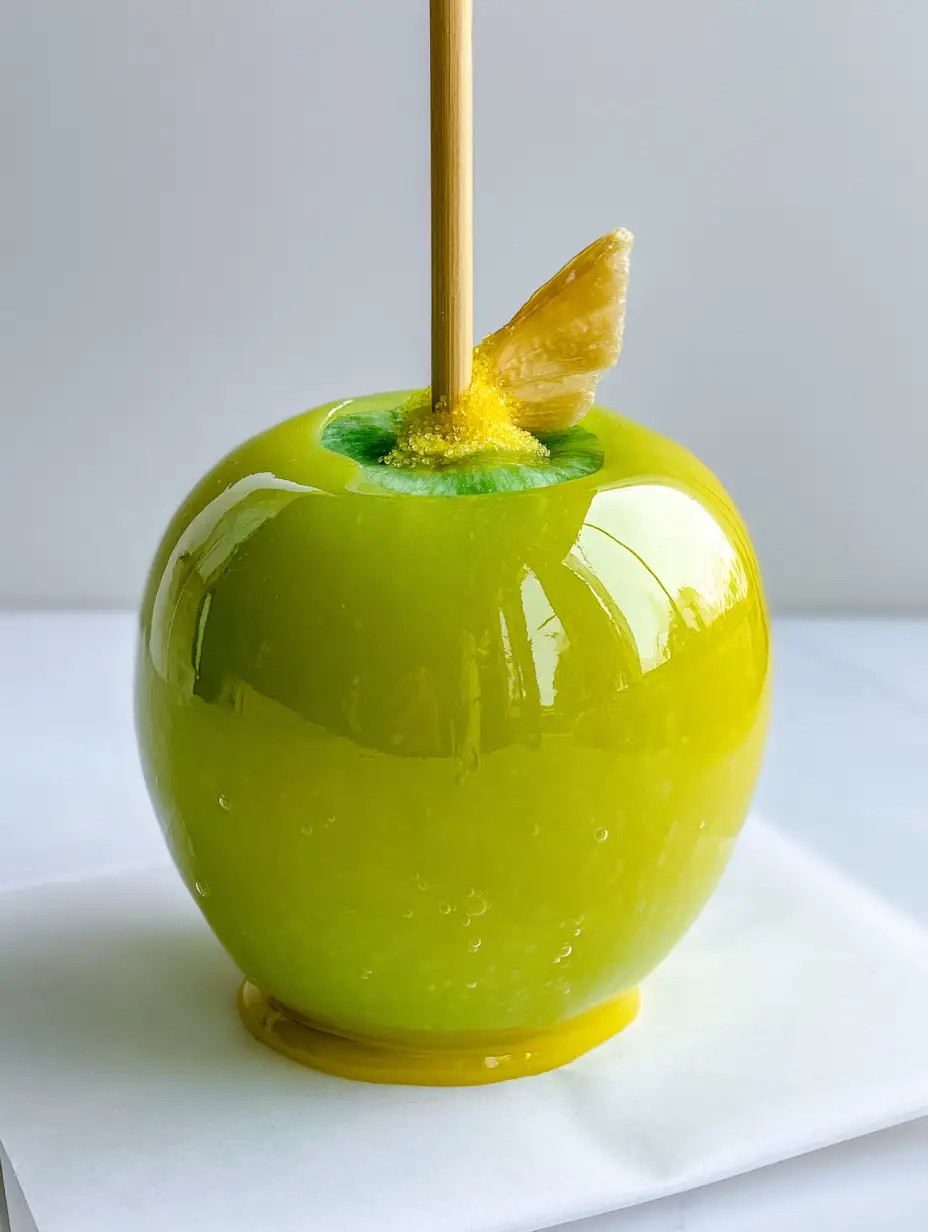
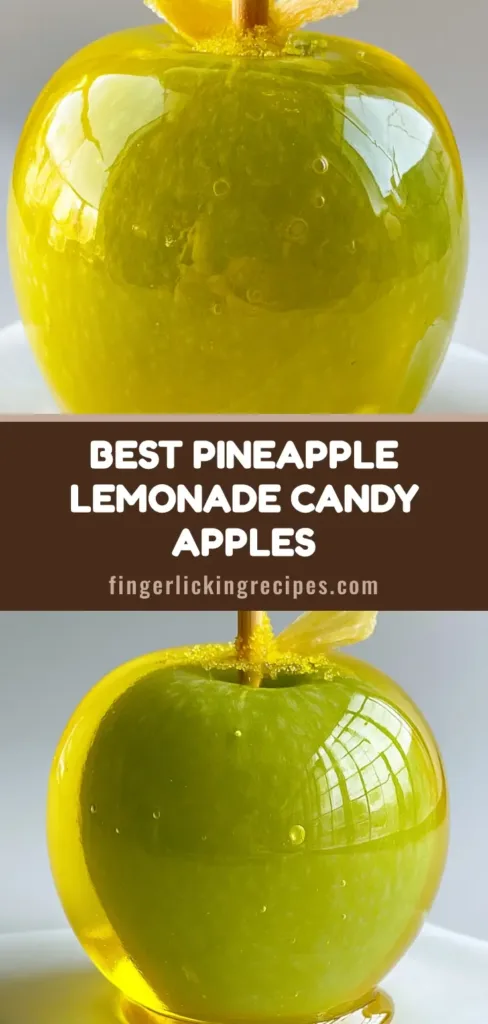
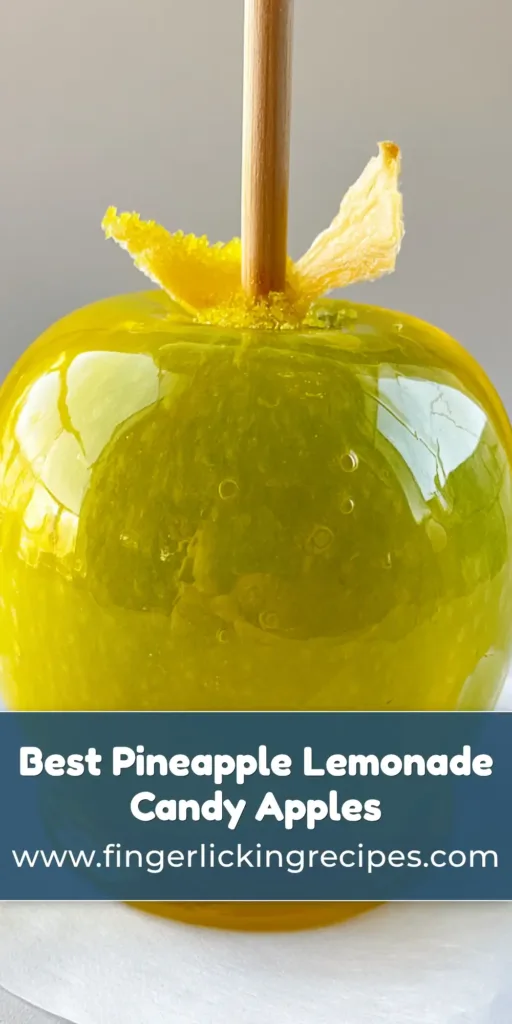
When you look at these Pineapple Lemonade Candy Apples, the first thing you notice is the stunning, ultra-glossy finish. The bright yellow hard candy shell is thick and translucent, showing off the vivid green of the apple beneath. Topped with yellow sanding sugar and a delicate dehydrated pineapple wedge, these apples are designed to be the centerpiece of any dessert table.
Whether you are looking for a show-stopping party favor or a unique weekend project, this recipe delivers professional results. We have engineered this candy coating to be perfectly brittle and shatter-prone, avoiding the dreaded “sticky teeth” experience. Let’s dive into the science of the perfect hard crack stage and the tropical flavors that make these apples irresistible.
The combination of sanding sugar and dehydrated pineapple creates a beautiful artisanal look.
Why You Will Love These Gourmet Pineapple Lemonade Candy Apples
Sensory Contrast: The explosive crunch of the lemon-pineapple candy shell meets the juicy, tart snap of a fresh Granny Smith apple.
Professional Aesthetic: The thick, glass-like finish features tiny trapped air bubbles, giving it an artisanal, handcrafted look straight out of a high-end confectionery.
Balanced Flavor Profile: By using citric acid and premium extracts, we balance the intense sweetness of the sugar with a sharp, refreshing lemonade tang.
Stunning Textural Accents: The addition of yellow sanding sugar provides a fine crystalline crunch, while the dehydrated pineapple offers a chewy, concentrated burst of fruit.
The Anatomy of a Perfect Pineapple Lemonade Candy Apple
To achieve the specific visual and structural results seen in our Pineapple Lemonade Candy Apples, every ingredient serves a forensic purpose. We don’t just want sweetness; we want a specific “snap” and a crystal-clear yellow hue.
Granny Smith Apples: 6 large (approx. 150g each) apples are the gold standard here. Their firm texture holds up to the heat of the syrup, and their high acidity cuts through the sugar coating perfectly.
Granulated White Sugar: 3 cups (600g) of pure cane sugar provide the structural foundation. When heated correctly, this transforms into the hard, translucent shell that defines the Pineapple Lemonade Candy Apples.
Light Corn Syrup: 1 cup (240ml) of corn syrup is our “interference agent.” It prevents the sugar from recrystallizing, ensuring that smooth, glass-like finish without graininess.
Filtered Water: 1 cup (240ml) of water acts as the solvent. It allows the sugar to dissolve evenly and heat consistently throughout the boiling process.
Lemon and Pineapple Extracts: 1 tsp (5ml) of each provides the signature flavor. Using extracts instead of juice prevents the acid from breaking down the candy structure prematurely.
Yellow Gel Food Coloring: A few drops of high-quality gel coloring achieve that “translucent bright yellow” look. Gel is preferred over liquid to avoid altering the water content of the syrup.
Yellow Sanding Sugar: 1/4 cup (50g) of coarse sanding sugar is used for the base decoration. It adds a secondary sparkle and a satisfying micro-crunch.
Dehydrated Pineapple Wedges: 6 small, thin wedges are the crowning glory. They provide a visual cue to the flavor and a chewy textural contrast to the hard candy.
Foundational Invisible Ingredients: Do not forget the 1/2 tsp (2g) of citric acid. This is the “lemonade” secret that provides the mouth-watering zing without adding liquid volume.
Essential Tools for Confectionery Success
Achieving a glass-like finish on your Pineapple Lemonade Candy Apples requires more than just a pot. You need tools that allow for precision and safety when working with 300°F (150°C) sugar.
First and foremost is a reliable candy thermometer. Precision is non-negotiable; even a 5-degree difference can result in a sticky mess instead of a hard crack. You will also need a heavy-bottomed stainless steel saucepan to ensure even heat distribution and prevent scorching.
For the “light tan wooden dowels,” ensure they are food-grade and at least 6 inches (15cm) long. A silicone mat or a clean sheet of white parchment paper is essential for the apples to set without sticking. Finally, a small heat-proof bowl for the sanding sugar makes the dipping process seamless.
Notice the tiny air bubbles trapped in the ultra-glossy translucent yellow shell.
The Secret Step: Preparing Your Apples for Maximum Adhesion
The most common failure in making Pineapple Lemonade Candy Apples is the “sliding shell.” Commercial apples are coated in a food-grade wax that prevents candy from sticking. If you don’t remove this, your beautiful yellow shell will simply slide off into a puddle.
To fix this, bring a large pot of water to a boil and add 1 tbsp (15g) of baking soda. Quickly dip each apple into the boiling water for exactly 5 seconds, then immediately scrub them with a rough lint-free towel. You will feel the texture change from slippery to “tacky”—this is the perfect surface for candy bonding.
Once cleaned, remove the stems and insert the wooden dowels deeply into the top core. Ensure the apples are completely dry and at room temperature before you begin the syrup process. Any moisture on the skin will cause the candy to bubble excessively or pull away.
Mastering the Hard Crack Stage for a Glass-Like Finish
Step 1: The Flavorful Foundation
In your heavy-bottomed saucepan, combine the sugar, corn syrup, water, and citric acid. Stir gently with a wooden spoon over medium heat until the sugar is fully dissolved. Once it begins to simmer, stop stirring immediately. Stirring the boiling syrup can induce crystallization, ruining the “smooth, glass-like finish.”
Step 2: Reaching the 300°F Milestone
Clip your candy thermometer to the side of the pan, ensuring the bulb is submerged but not touching the bottom. Increase the heat to medium-high. Watch as the syrup climbs past the “soft ball” and “hard ball” stages. As it nears 300°F (150°C)—the Hard Crack Stage—the bubbles will become smaller and more uniform.
Step 3: Tinting and Flavoring
As soon as the thermometer hits 300°F (150°C), remove the pan from the heat. Carefully whisk in the lemon extract, pineapple extract, and yellow gel food coloring. Be prepared for a burst of steam! This is when those “tiny air bubbles” mentioned in our visual prompt are created. Let the syrup sit for 30-60 seconds to allow the largest bubbles to subside, leaving only the delicate micro-bubbles.
Step 4: The Perfect Dip and Decoration
Tilt the pan so the yellow syrup pools to one side. Holding an apple by the dowel, dip it into the syrup and rotate it quickly to coat it fully. Lift it out and let the excess drip off for a few seconds. Immediately dip the base of the apple into the yellow sanding sugar, then place it onto the parchment paper.
Step 5: The Final Flourish
While the candy is still slightly tacky near the dowel, press one thin wedge of dehydrated pineapple into the top. The residual heat of the candy will act as a natural glue. Allow the Pineapple Lemonade Candy Apples to set undisturbed for at least 20 minutes in a cool, dry place.
Expert Tips for Confectionery Excellence
Avoid Humidity: Sugar is hygroscopic, meaning it pulls moisture from the air. Never make Pineapple Lemonade Candy Apples on a rainy day, or they will become sticky within hours.
Thermometer Calibration: Test your thermometer in boiling water; it should read 212°F (100°C). If it doesn’t, adjust your target temperature accordingly.
Cold Water Test: If you don’t trust your thermometer, drop a small bit of syrup into ice water. If it forms hard, brittle threads that snap when bent, it is ready.
Cleaning the Pot: To easily clean your sugar-coated pan, fill it with water and bring it to a boil. The hardened candy will dissolve effortlessly.
How to Store and Preserve the Glossy Finish
Pineapple Lemonade Candy Apples are best enjoyed the day they are made to maintain that “ultra-glossy, translucent” appearance. However, if you must store them, wrap each apple individually in cellophane bags and tie them tightly. Store them in a cool, dark pantry rather than the refrigerator.
Refrigeration is the enemy of hard candy. The cold environment followed by room temperature exposure causes “sweating,” which will dissolve your beautiful yellow sanding sugar and turn the glass-like shell into a sticky mess. These apples will stay crisp and delicious for up to 3 days if kept in a humidity-controlled environment.
What to Serve With Your Gourmet Treats
These Pineapple Lemonade Candy Apples are a bright, high-energy dessert that pairs beautifully with savory party snacks. For a tropical-themed gathering, consider serving them alongside Honey Garlic Shrimp (coming soon) for a sophisticated surf-and-turf vibe.
If you’re hosting a casual backyard lunch, these apples follow perfectly after a light Egg Roll in a Bowl (coming soon) or some Honey Garlic Chicken Skewers. For those who want to lean into the fruit theme, a side of Ambrosia Fruit Salad provides a creamy contrast to the hard candy shell.
If you’re looking for more lemon-inspired treats to round out your dessert platter, our Lemon Raspberry Sandwich Cookies offer a soft, buttery counterpoint to the apple’s crunch.
This usually happens if the syrup didn’t reach the full 300°F (150°C) hard crack stage, or if the humidity in your kitchen is too high. Always use a calibrated candy thermometer.
You must remove the natural wax coating from the apples by dipping them in boiling water with baking soda for 5 seconds and scrubbing them dry before dipping.
It is not recommended. Liquid food coloring adds moisture which can prevent the syrup from reaching the correct temperature and may cause the candy to become cloudy.
Tiny air bubbles are natural when whisking in flavorings. To minimize large bubbles, let the hot syrup sit for 30-60 seconds after reaching 300°F before dipping the apples.
No. The moisture in the fridge will cause the candy shell to ‘sweat’ and eventually dissolve. Store them in a cool, dry place in airtight cellophane bags.
The Ultimate Pineapple Lemonade Candy Apples Recipe
FL Recipes
Pineapple Lemonade Candy Apples: The Ultimate Gourmet Summer Treat
A stunning gourmet treat featuring crisp Granny Smith apples encased in a translucent, bright yellow pineapple-lemonade hard candy shell. Perfectly glossy, glass-like finish with tropical flavor and sanding sugar accents.
The perfect gourmet Pineapple Lemonade Candy Apple with a glass-like finish.The perfect gourmet Pineapple Lemonade Candy Apple with a glass-like finish.
Experience the Tangy Crunch Today!
Making Pineapple Lemonade Candy Apples is a rewarding culinary art form that combines science with creativity. The result is a stunning, smartphone-ready treat that tastes even better than it looks. The combination of the tart Granny Smith apple and the tropical, zingy lemon-pineapple shell is a flavor profile you won’t soon forget.
If you enjoyed this recipe, please leave a comment below and let us know how your candy shells turned out! Don’t forget to sign up for our newsletter for more gourmet confectionery secrets and share your beautiful creations to Pinterest so others can join the fun.
The perfect gourmet Pineapple Lemonade Candy Apple with a glass-like finish.
Hi, I’m Emily Carter, and welcome to FL Recipes! I share simple, healthy recipes that make cooking easy, fun, and delicious for everyone. more about me »