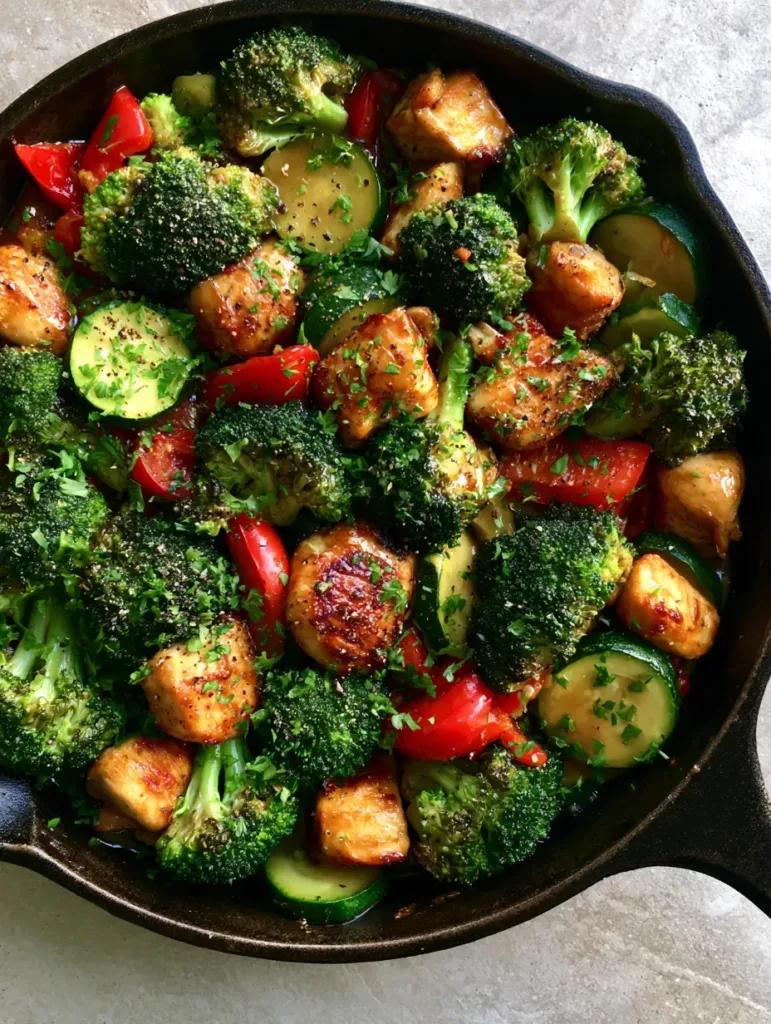
There is nothing quite as satisfying as the sound of high-quality protein hitting a screaming-hot cast iron pan. This Chicken and Vegetable Skillet isn’t just another weeknight meal; it is a masterclass in texture, color, and balanced nutrition. Imagine succulent, golden-brown seared chicken breast cubes nestled alongside vibrant green broccoli florets, snappy red bell peppers, and tender zucchini rounds. Everything is brought together by a shimmering, glossy savory glaze that coats every surface without feeling heavy or greasy.
Whether you are looking for a post-workout refuel or a family-friendly dinner that actually gets everyone to eat their greens, this recipe delivers. By focusing on the Maillard reaction—that magical chemical process that creates a savory crust on meat—we transform humble ingredients into a restaurant-quality feast. The visual appeal of this dish, with its pops of red and green against the dark patina of a rustic skillet, makes it as beautiful to serve as it is delicious to eat.
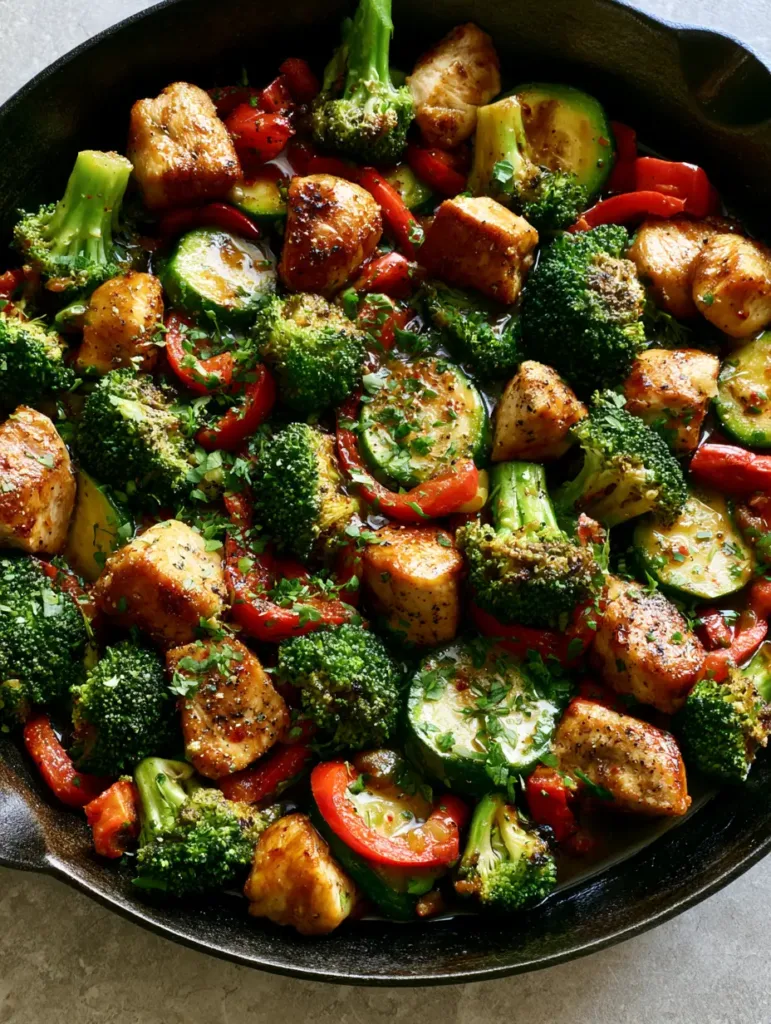
Uniformly sliced vegetables ensure everything in your skillet cooks evenly.
Why This One-Pan Chicken and Veggie Wonder Works
Visual Vibrancy: The combination of forest-green broccoli, bright crimson peppers, and golden chicken creates a stunning color palette that signals freshness and health.
Textural Contrast: We utilize specific cooking intervals to ensure the chicken stays juicy while the vegetables retain a “tender-crisp” bite rather than becoming mushy.
The “Gloss” Factor: A carefully constructed savory sauce provides that professional, shimmering finish that looks like it came straight from a gourmet kitchen.
High-Efficiency Cleanup: By using a single black cast iron skillet, you minimize the “dish mountain” while maximizing flavor development through fond (the brown bits left in the pan).
Foundational Ingredients for the Shimmering Savory Glaze
To achieve the specific visual and flavor profile of this Chicken and Vegetable Skillet, every ingredient serves a dual purpose. We aren’t just adding liquid; we are building a structural sauce that clings to the food.
Chicken Breast (1.5 lbs / 680g): Lean and high in protein, we cut these into 1-inch (2.5cm) cubes to ensure rapid cooking and maximum surface area for searing. The goal is a deep golden-brown exterior that contrasts with the interior moisture.
Broccoli Florets (2 cups / 150g): These act as little sponges for the sauce. We want them vibrant green, which means a short, high-heat sauté to soften the stems without losing the “snap” of the florets.
Red Bell Pepper (1 large / 150g): Sliced into thin strips, these provide a necessary sweetness and a pop of red. They soften slightly but should still provide a structural contrast to the zucchini.
Zucchini (1 medium / 200g): Cut into rounds, zucchini adds a soft, earthy element. Because of their high water content, we add these late in the process to prevent them from breaking down into the sauce.
Avocado Oil (2 tbsp / 30ml): This is an “invisible” essential. With a high smoke point, it allows us to sear the chicken at high temperatures without the oil burning or tasting bitter.
The Savory Glaze Base: A mixture of chicken stock, low-sodium soy sauce, and a touch of honey creates the flavor profile. We use 1 tsp (5g) of cornstarch to create that “shimmering glaze” described in our visual blueprint.
Fresh Parsley & Cracked Black Pepper: These are the finishing touches. Finely chopped green parsley adds a burst of herbal freshness, while large cracks of black pepper provide a pungent, aromatic heat that cuts through the savory sauce.
Essential Tools for a Professional Skillet Finish
To replicate the rustic, top-down visual of our perfect skillet, the choice of cookware is paramount. You need a tool that can hold and distribute heat evenly across the entire surface.
A 12-inch (30cm) rustic black cast iron skillet is the gold standard here. Its thermal mass ensures that when you add cold chicken cubes, the temperature doesn’t plummet, allowing for that essential golden-brown sear. If you don’t have cast iron, a heavy-bottomed stainless steel pan will work, though you may lose some of that iconic rustic aesthetic.
You will also need a sharp chef’s knife for precise vegetable cuts—ensuring the zucchini rounds are uniform means they will cook at the exact same rate. A silicone spatula or a set of tongs is necessary for moving the ingredients without tearing the delicate seared crust of the chicken.
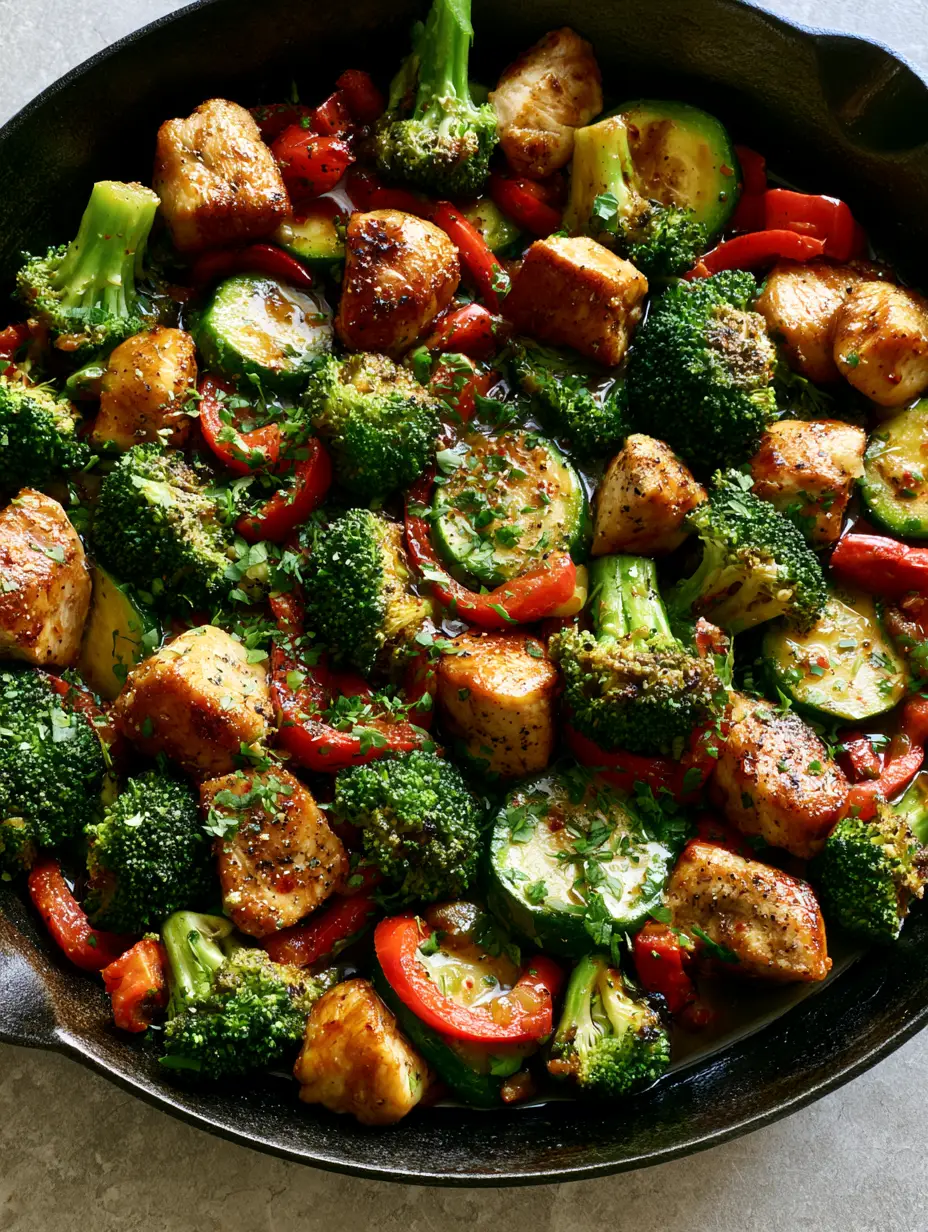
Notice the deep golden-brown sear on the chicken cubes and the vibrant green of the broccoli.
Developing the Perfect Sear: A Step-by-Step Guide
Phase 1: Prepping for Success
Begin by patting your chicken cubes bone-dry with paper towels. This is a crucial culinary secret; moisture is the enemy of the sear. If the chicken is wet, it will steam rather than brown. Season the cubes generously with salt and a few cracks of black pepper. While the chicken rests, chop your broccoli into bite-sized florets, slice the red bell pepper into uniform strips, and cut the zucchini into 1/4-inch (0.6cm) rounds.
Phase 2: The Golden-Brown Sear
Place your cast iron skillet over medium-high heat. Add the avocado oil and wait until it is shimmering and just beginning to wisps of smoke. Add the chicken cubes in a single layer. Do not crowd the pan; if necessary, work in batches. Let the chicken sit undisturbed for 3-4 minutes until a deep golden-brown crust forms on the bottom. Flip and sear for another 2 minutes, then remove the chicken and set it aside on a plate.
Phase 3: Sautéing the Vibrant Vegetables
In the same pan, add the broccoli florets and red bell peppers. The residual chicken fat and oil will flavor the veggies. Toss them frequently for about 3 minutes. Notice the color of the broccoli deepening into a vibrant, brilliant green. Add the zucchini rounds last, as they require the least amount of time to reach a tender-crisp consistency. If the pan looks dry, add a splash of chicken stock to deglaze the brown bits from the bottom.
Phase 4: Thickening the Glossy Glaze
Whisk together your sauce ingredients (stock, soy sauce, honey, and cornstarch). Pour the mixture into the skillet with the vegetables. As the liquid hits the hot pan, it will bubble and begin to thicken almost instantly. Return the seared chicken cubes to the pan, along with any juices that collected on the plate. Toss everything together until the ingredients are lightly coated in a thin, shimmering savory glaze.
Expert Culinary Tips for Skillet Mastery
The Crowd Control Rule: Never overcrowd the skillet. If the pan is too full, the temperature drops and the vegetables will release water, leading to a “boiled” texture rather than a sautéed one.
Staggered Additions: Always add vegetables based on density. Broccoli takes longer than zucchini. By staggering them, you ensure every element is cooked perfectly at the same moment.
Acid Balance: If the sauce feels too heavy, a tiny squeeze of fresh lemon juice at the end can brighten the entire dish without changing the flavor profile significantly.
Cornstarch Slurry Logic: Always whisk cornstarch into cold or room temperature liquid before adding it to the pan to avoid unappetizing white clumps in your glossy sauce.
Storage, Reheating, and Meal Prep Strategy
This Chicken and Vegetable Skillet is a meal-prepper’s dream. It stores beautifully in an airtight container in the refrigerator for up to 4 days. The flavors of the savory glaze actually deepen as they sit, making lunch the next day something to look forward to.
When reheating, avoid the microwave if possible, as it can turn the zucchini soggy. Instead, toss the mixture back into a hot skillet for 2-3 minutes with a teaspoon of water. This revitalizes the glaze and helps the chicken regain some of its texture. This recipe is not ideal for freezing, as the cellular structure of the zucchini and bell peppers will break down, resulting in a mushy texture upon thawing.
What to Serve With Your Savory Chicken Skillet
While this dish is a complete meal on its own, you can easily stretch it or vary the presentation. For a low-carb option, serve it over a bed of cauliflower rice. If you want something heartier, fluffy jasmine rice or quinoa is excellent for soaking up that extra shimmering glaze.
If you enjoy this style of one-pan cooking, you might also love our high-protein honey garlic shrimp (coming soon) for a seafood twist. For those who enjoy Asian-inspired flavors, our Egg Roll in a Bowl (coming soon) offers a similar high-speed, high-flavor experience. If you have extra veggies left over, they would go perfectly alongside a lemon garlic butter salmon (coming soon) or even as a side for a ground turkey taco skillet (coming soon).
The secret is two-fold: pat the chicken completely dry with paper towels before seasoning, and ensure your skillet is shimmering hot with oil before adding the meat. Do not move the chicken for the first 3-4 minutes.
While possible, frozen vegetables release more moisture, which may prevent the chicken from staying crispy and can dilute the glossy glaze. If using frozen, thaw and pat them dry first.
Zucchini has a very high water content. To keep it firm, add it to the skillet during the last 2 minutes of cooking and ensure the pan isn’t overcrowded, which causes steaming.
The cornstarch slurry is key. Ensure you whisk the cornstarch into a cold liquid before adding it to the hot pan, and allow it to reach a full simmer to activate its thickening properties.
Yes! It stays fresh in the fridge for up to 4 days. Reheat in a skillet with a splash of water to keep the chicken moist and the sauce shimmering.
The Perfect Chicken and Vegetable Skillet Recipe
FL Recipes
Chicken and Vegetable Skillet: The Ultimate Healthy 30-Minute Dinner
This Chicken and Vegetable Skillet features perfectly seared chicken breast cubes, vibrant broccoli, and zucchini in a glossy savory glaze. A healthy, one-pan 30-minute meal that is high in protein and bursting with fresh, colorful vegetables.
1 12-inch Cast Iron Skillet A rustic black skillet provides the best sear.
1 Chef's Knife For uniform vegetable slicing.
Method
Preparation
Pat the chicken cubes dry with a paper towel and season with salt and pepper.
Whisk chicken stock, soy sauce, honey, and cornstarch in a small bowl until smooth.
Cooking
Heat oil in the cast iron skillet over medium-high heat. Add chicken and sear until a deep golden-brown crust forms on all sides, about 5-6 minutes total. Remove chicken from pan.
Add broccoli and red peppers to the skillet. Sauté for 3 minutes until vibrant green. Add zucchini rounds and cook for 2 more minutes.
Pour the sauce mixture into the skillet. Once bubbling and thickened, return chicken to the pan. Toss to coat everything in the shimmering glaze.
Garnish with finely chopped fresh parsley and cracked black pepper before serving directly from the skillet.
Nutrition
Calories: 320kcalProtein: 38gFat: 12gFiber: 4g
Notes
Ensure the chicken is patted dry to get a proper sear. Add zucchini last to prevent it from becoming too soft.
Keyword Chicken and Vegetable Skillet,healthy dinner,one pan meal
There is nothing we love more than seeing our recipes come to life in your kitchens. This Chicken and Vegetable Skillet is designed to be a reliable, healthy staple in your home. If you made this dish, please leave a comment below and let us know how the sear on your chicken turned out!
Don’t forget to take a photo of your beautiful cast iron creation and tag us. For more daily recipe inspiration and gorgeous food photography, follow us on Pinterest. Happy cooking!
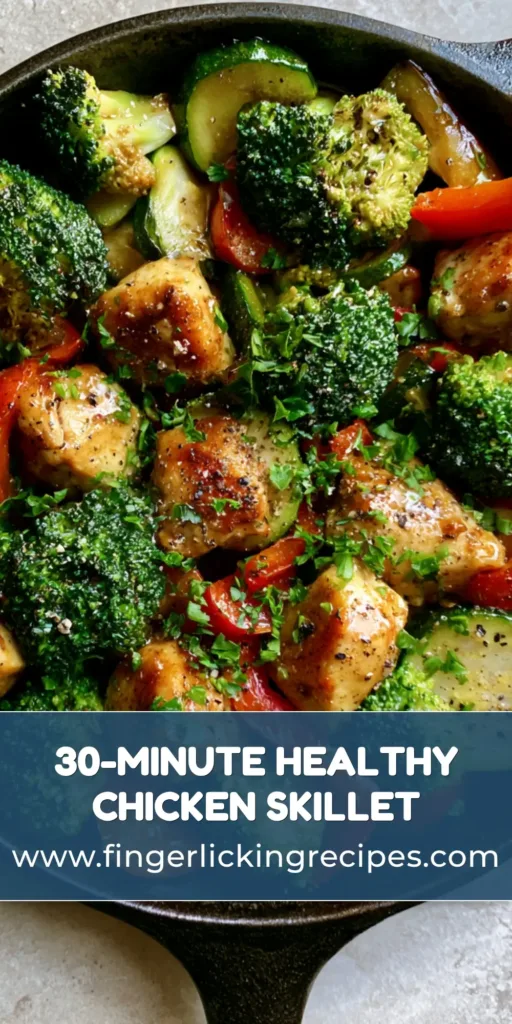
The perfect 30-minute Chicken and Vegetable Skillet for a healthy weeknight meal.
Hi, I’m Emily Carter, and welcome to FL Recipes! I share simple, healthy recipes that make cooking easy, fun, and delicious for everyone. more about me »