If you are searching for a dinner that combines the comfort of a home-cooked meal with the vibrant, exotic flavors of the tropics, look no further than this Creamy Coconut Chicken. This recipe isn’t just about feeding your family; it’s about a sensory experience that begins the moment the chicken hits the hot cast iron and ends with a plate licked clean. Inspired by the rich traditions of Southeast Asian coastal cooking, this dish delivers a velvety, ivory-colored sauce that perfectly balances the savory notes of seared poultry with the natural sweetness of coconut.
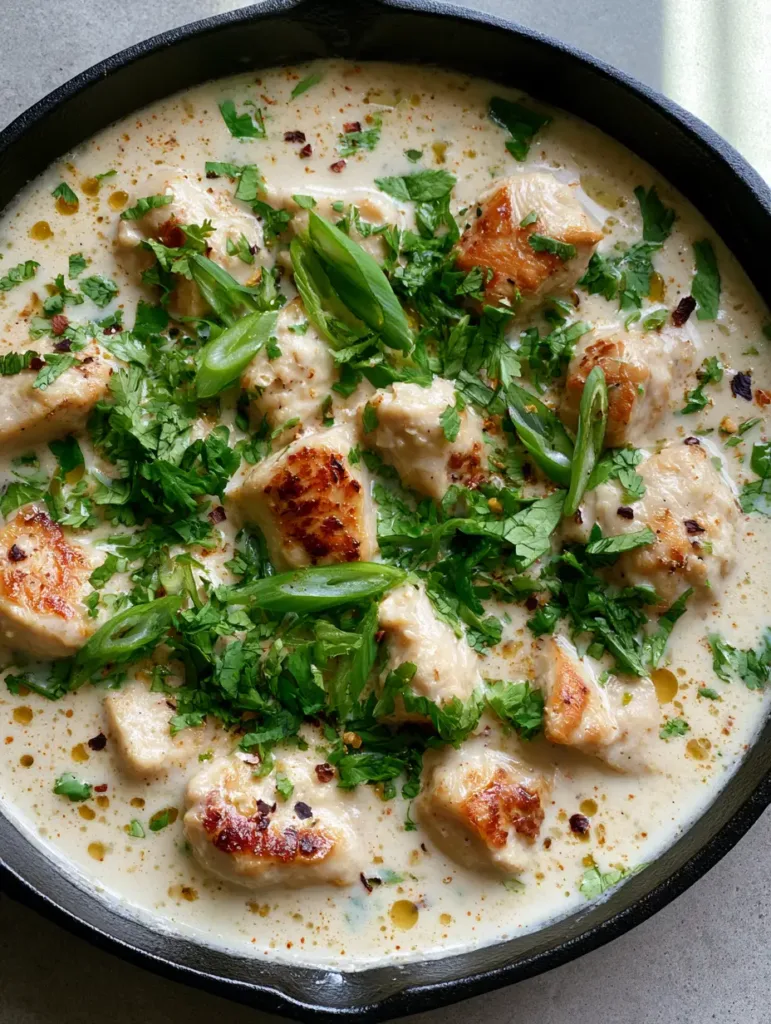
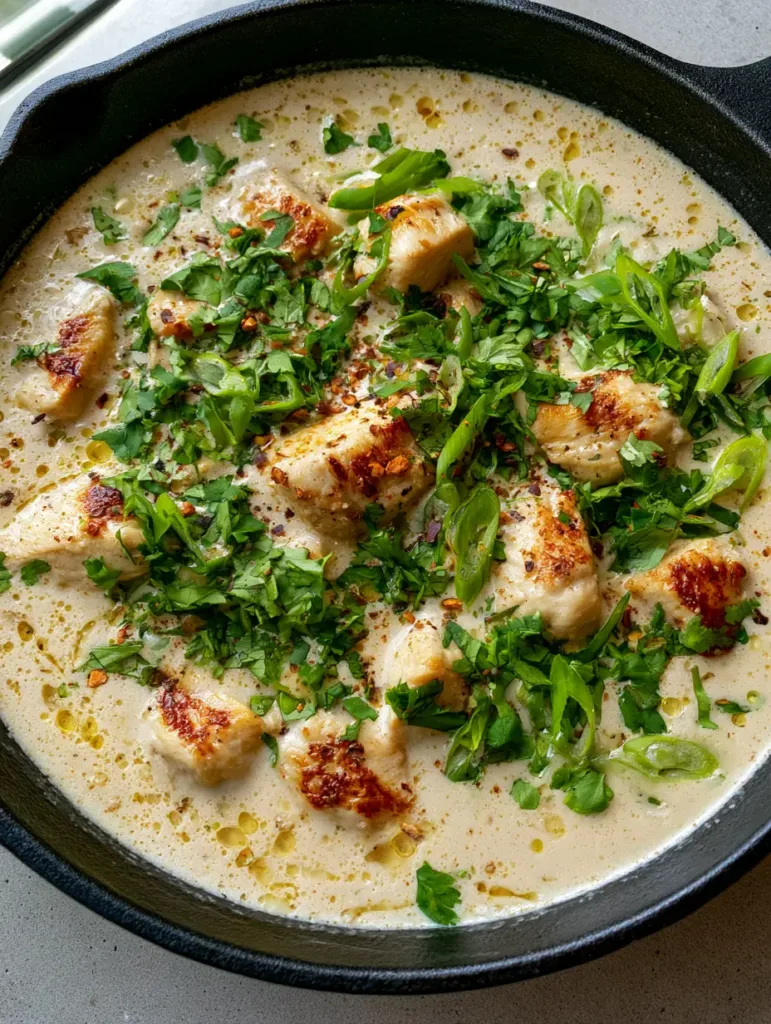
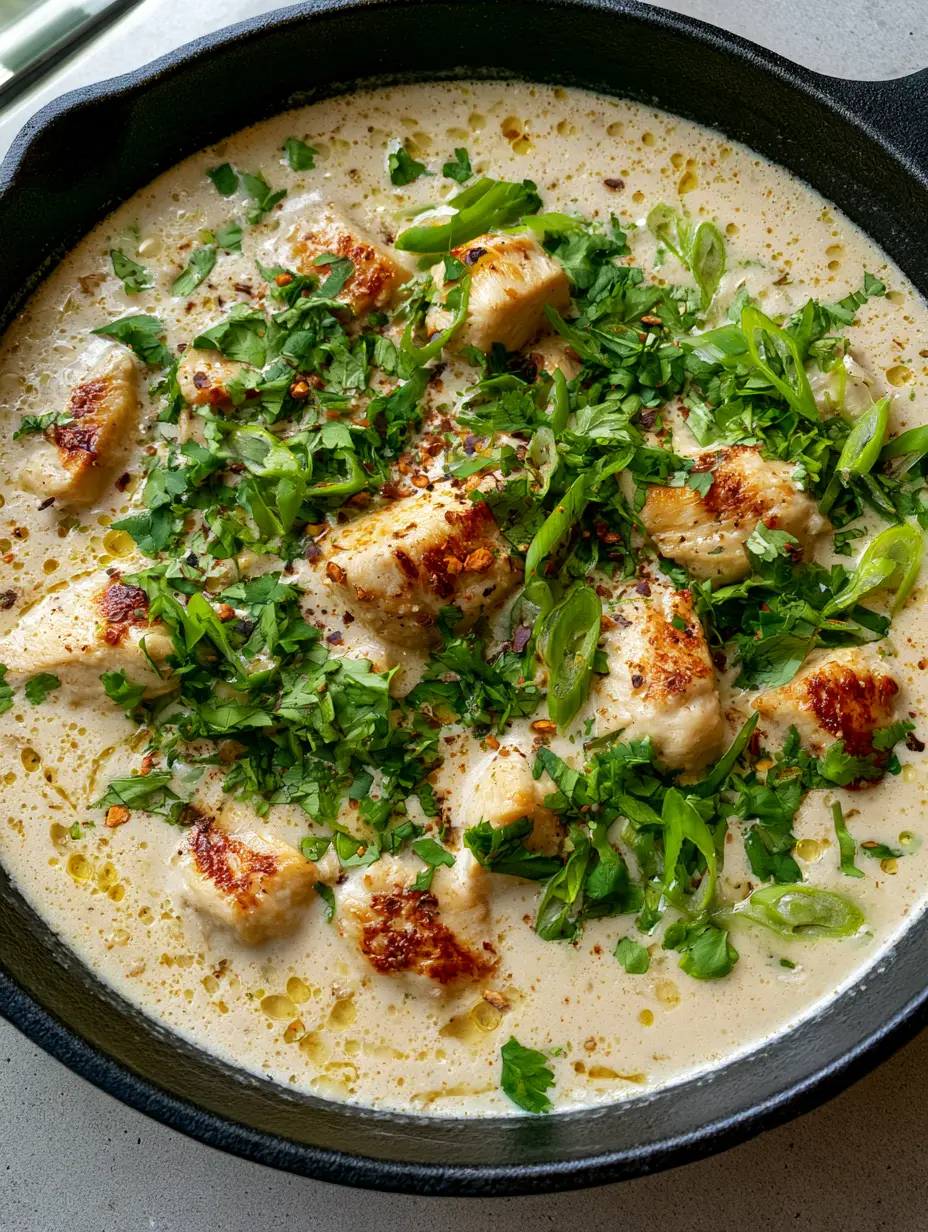
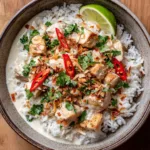
Visually, this dish is a masterpiece that looks like it stepped right out of a professional food shoot. Imagine bite-sized chunks of chicken breast, each boasting a deep golden-brown crust, nestled in a thick, opaque sauce. As you look closer, you’ll see tiny droplets of golden oil shimmering on the surface alongside fine spice particles that hint at the depth of flavor within. The finishing touches—a heavy scatter of bright green cilantro, bias-cut scallions, and a dusting of red chili flakes—create a color contrast that is as appetizing as it is beautiful. This Creamy Coconut Chicken is the bridge between weeknight convenience and gourmet execution.
Fresh cilantro and scallions provide the perfect visual and flavor contrast.
Why This Skillet Creamy Coconut Chicken Will Become Your New Obsession
The Perfect Sear: By using a black cast iron skillet, we achieve a superior Maillard reaction on the chicken chunks, ensuring every bite has a savory, caramelized edge.
Multi-Dimensional Texture: You get the crunch of fresh scallions, the tenderness of the chicken, and the luxurious silkiness of a reduced coconut milk base.
Dairy-Free Decadence: Achieve a restaurant-quality “cream” sauce without using a drop of heavy dairy, making this naturally inclusive for various dietary needs.
Visual Vibrancy: The contrast of the ivory sauce against the dark skillet and the pop of green herbs makes this a “centerpiece” meal that requires minimal effort.
Much like our popular crispy coconut tofu bowl, this recipe leverages the high fat content of coconut to create a satisfying mouthfeel that lingers. It is a testament to how simple ingredients, when treated with the right technique, can transform into something truly extraordinary. Whether you are a seasoned pro or a kitchen novice, this dish is designed to be foolproof while delivering high-impact results.
The Essential Components for Tropical Chicken Perfection
Chicken Breast Chunks: 1.5 lbs (680g) of boneless, skinless chicken breast cut into 1-inch pieces. The lean protein absorbs the coconut fats beautifully while maintaining its structure during the high-heat sear.
Full-Fat Coconut Milk: 1 can (14 oz / 400ml). It is vital to use the full-fat canned variety to achieve that thick, opaque ivory sauce and the characteristic golden oil droplets seen in the visual blueprint.
Aromatic Base: 3 cloves (15g) of minced garlic and 1 tbsp (15g) of freshly grated ginger. These aromatics provide the “fine spice particles” that dot the sauce and create the foundational flavor profile.
Neutral Searing Oil: 2 tbsp (30ml) of avocado or grapeseed oil. A high smoke point oil is necessary to achieve those distinct golden-brown seared edges without the oil breaking down or smoking excessively.
The Garnish Trio: 1/2 cup (15g) fresh cilantro, 3 large scallions (sliced on a bias), and 1 tsp (2g) dried red chili flakes. These are not just garnishes; they provide the essential “bright green” and “red flake” visual markers that define the finished dish.
Foundational Seasoning: 1 tsp (5g) sea salt, 1/2 tsp (2g) cracked black pepper, and 1/2 tsp (2g) ground turmeric. The turmeric is the secret to those “golden oil droplets,” as it pigments the natural fats of the coconut milk into a rich, warm hue.
Precision Tools for the Perfect Sear
To recreate the exact look of our Creamy Coconut Chicken, the most critical piece of equipment is a 12-inch (30cm) black cast iron skillet. Cast iron is unparalleled in its heat retention, which is the only way to get that professional-grade sear on the chicken chunks without overcrowding the pan and steaming the meat. The dark surface of the skillet also provides the perfect backdrop for the ivory sauce, making the colors of the cilantro and scallions pop.
Additionally, you will want a sharp chef’s knife for those “bias-cut” scallions. Cutting on a 45-degree angle increases the surface area of the garnish, making it look more elegant and professional. A microplane is also recommended for the ginger to ensure it integrates seamlessly into the sauce, contributing to the fine spice texture rather than leaving chunky bits behind.
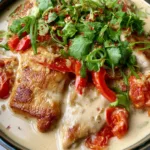
Note the golden-brown edges on the chicken and the rich, spice-particled sauce.
Mastering the Searing and Simmering Process
Achieving the Golden-Brown Maillard Reaction
Heat your cast iron skillet over medium-high heat until a drop of water dances and evaporates instantly. Add the neutral oil, swirling to coat the bottom. Pat your chicken chunks completely dry with paper towels—this is the professional secret to a good sear. Place the chicken in the skillet in a single layer, ensuring they aren’t touching.
Leave them undisturbed for 3-4 minutes. You are looking for a deep, distinct golden-brown crust to form on the bottom. Once seared, flip the pieces and cook for another 2 minutes. The goal is not to cook them through yet, but to build that flavor profile and visual “seared edge” that is central to the recipe’s appeal.
Developing the Aromatic Ivory Sauce
Reduce the heat to medium and push the chicken to the outer edges of the skillet. In the center, add your minced garlic, grated ginger, and turmeric. Sauté for 60 seconds until the aroma fills the room and the spices begin to “bloom” in the residual oil. You will notice the oil turning a beautiful golden color—this is exactly what we want.
Pour in the full-fat coconut milk and use a wooden spoon to scrape the bottom of the skillet. This process, known as deglazing, incorporates all those flavorful browned bits (fond) from the chicken back into the liquid. This is what transforms a simple white milk into a complex, spice-particled ivory sauce.
The Final Simmer and Emulsification
Allow the sauce to come to a gentle simmer. Do not let it reach a rolling boil, as this can cause the coconut milk to break and lose its creamy consistency. Simmer for 5-7 minutes, or until the sauce has reduced slightly and thickened enough to coat the back of a spoon. During this time, the chicken will finish cooking through, remaining succulent and tender.
As the sauce reduces, look for those “visible droplets of golden oil” to appear on the surface. This is a sign of a perfectly executed coconut reduction. If the sauce becomes too thick, you can whisk in a tablespoon of chicken broth or water to reach your desired consistency.
Expert Tips for a Restaurant-Quality Finish
Don’t Crowd the Pan: If your skillet isn’t large enough, sear the chicken in two batches. Overcrowding leads to moisture release, which steams the chicken instead of searing it.
The “Bias-Cut” Garnish: When slicing your scallions, hold your knife at a sharp angle. This creates long, elegant ovals rather than small circles, matching the high-end visual prompt perfectly.
Temperature Control: If your coconut milk begins to separate too much, whisk in a teaspoon of cold water. This helps re-emulsify the fats and liquids for that opaque, ivory look.
Freshness Matters: Only chop the cilantro and scallions right before serving. This ensures they maintain their “bright green” color against the warm sauce.
If you love the technique of searing chicken and then building a pan sauce, you should definitely check out our creamy mushroom asiago chicken for a more earthy, European-inspired version of this cooking method.
Preserving Your Creamy Coconut Chicken
This dish stores remarkably well, making it a great option for meal prep. Place leftovers in an airtight container and refrigerate for up to 3 days. When reheating, the coconut sauce will likely thicken into a gel-like consistency due to the healthy fats solidcing. To restore its original glory, reheat it gently in a small saucepan over low heat, adding a splash of water or coconut milk to bring the sauce back to its creamy state.
We do not recommend freezing this specific dish. Coconut milk-based sauces often undergo a texture change when frozen and thawed, which can result in a grainy or “split” appearance that loses the beautiful ivory smoothness we worked so hard to achieve. It is best enjoyed fresh or within a few days of cooking.
Creative Pairings for a Complete Meal
To soak up every drop of that incredible coconut sauce, we recommend serving this Creamy Coconut Chicken over a bed of jasmine rice or coconut-infused basmati. The floral notes of the rice complement the tropical profile of the sauce perfectly. For a lower-carb option, cauliflower rice works beautifully and maintains the monochromatic elegance of the plate.
If you are looking to round out the meal with other unique chicken preparations, consider serving this alongside a fresh salad or following it up with a tropical dessert like our coconut Raffaello cake. For those who enjoy a variety of skillet meals, the contrast between this and our parmesan crusted chicken provides a wonderful rotation of textures for your weekly menu.
Frequently Asked Questions About Skillet Coconut Chicken
For this recipe, canned full-fat coconut milk is essential. Carton coconut milk is mostly water and will not yield the thick, ivory-colored sauce or the golden oil droplets shown in the visuals.
Avoid bringing the sauce to a violent boil. Maintain a gentle simmer and ensure you aren’t adding highly acidic ingredients (like lime juice) until the very end, once the sauce has stabilized.
Absolutely! Chicken thighs are more forgiving and will remain even juicier. Just ensure you sear them long enough to develop that characteristic golden-brown crust.
The fine spice particles come from the minced garlic, ginger, and turmeric. The golden oil droplets are the result of the natural fats in the coconut milk gently separating and being pigmented by the turmeric.
Yes! This Creamy Coconut Chicken is naturally low-carb and high-fat. Serve it over cauliflower rice or zucchini noodles to keep it keto-compliant.
The Master Recipe: Creamy Coconut Chicken
FL Recipes
Creamy Coconut Chicken: The Ultimate One-Skillet Tropical Dinner
A luxurious Creamy Coconut Chicken featuring perfectly seared breast chunks nestled in a thick, ivory-colored coconut sauce. Garnished with fresh cilantro, scallions, and red chili flakes for a vibrant, restaurant-quality skillet meal made in 30 minutes.
1 12-inch Cast Iron Skillet Essential for the perfect sear.
1 Chef's Knife For bias-cutting the scallions.
Method
Preparation and Searing
Pat chicken chunks dry. Heat oil in the cast iron skillet over medium-high heat. Add chicken and sear for 3-4 minutes per side until deep golden-brown edges form.
Reduce heat to medium. Add garlic, ginger, and turmeric to the center of the pan. Sauté for 1 minute until fragrant and the oil turns golden.
Sauce Development
Pour in coconut milk. Scrape the bottom of the pan to release the browned bits. Simmer gently for 5-7 minutes until the ivory sauce thickens and coats the chicken.
Remove from heat. Top heavily with chopped cilantro, bias-cut scallions, and red chili flakes. Serve immediately.
Nutrition
Calories: 450kcalProtein: 34gFat: 32gFiber: 2g
Notes
Use full-fat coconut milk for the best texture and visual oil droplets. Patting the chicken dry is essential for a proper golden sear.
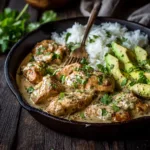
The perfect Creamy Coconut Chicken served in a rustic cast iron skillet.
Join the Culinary Conversation!
We hope this Creamy Coconut Chicken brings a taste of the tropics to your dinner table tonight. The combination of the heavy cast iron sear and the delicate coconut reduction is a technique you will find yourself using again and again. If you made this dish, we would love to hear how it turned out! Did you achieve those perfect golden oil droplets? Let us know in the comments below.
Don’t forget to follow us on Pinterest for more visually stunning and flavor-packed recipes. Sharing is caring—if you loved this recipe, please pin it to your favorite “Easy Dinners” board so others can find it too! For more slow-cooked inspiration, check out our guide on slow cooker chicken thighs.
Hi, I’m Emily Carter, and welcome to FL Recipes! I share simple, healthy recipes that make cooking easy, fun, and delicious for everyone. more about me »