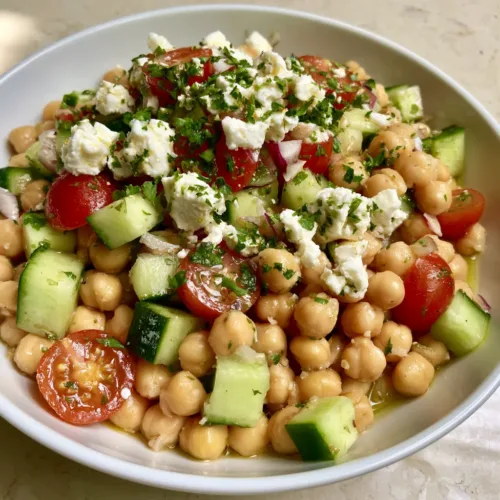
The Authentic Greek Salad, known in its homeland as Horiatiki, is a masterclass in culinary simplicity. It is a dish that relies entirely on the quality of its components, where sun-ripened produce meets the salty tang of the Mediterranean. When you look at a true Horiatiki, you aren’t seeing a messy pile of chopped greens; you are seeing a vibrant, rustic arrangement of nature’s best summer bounty.
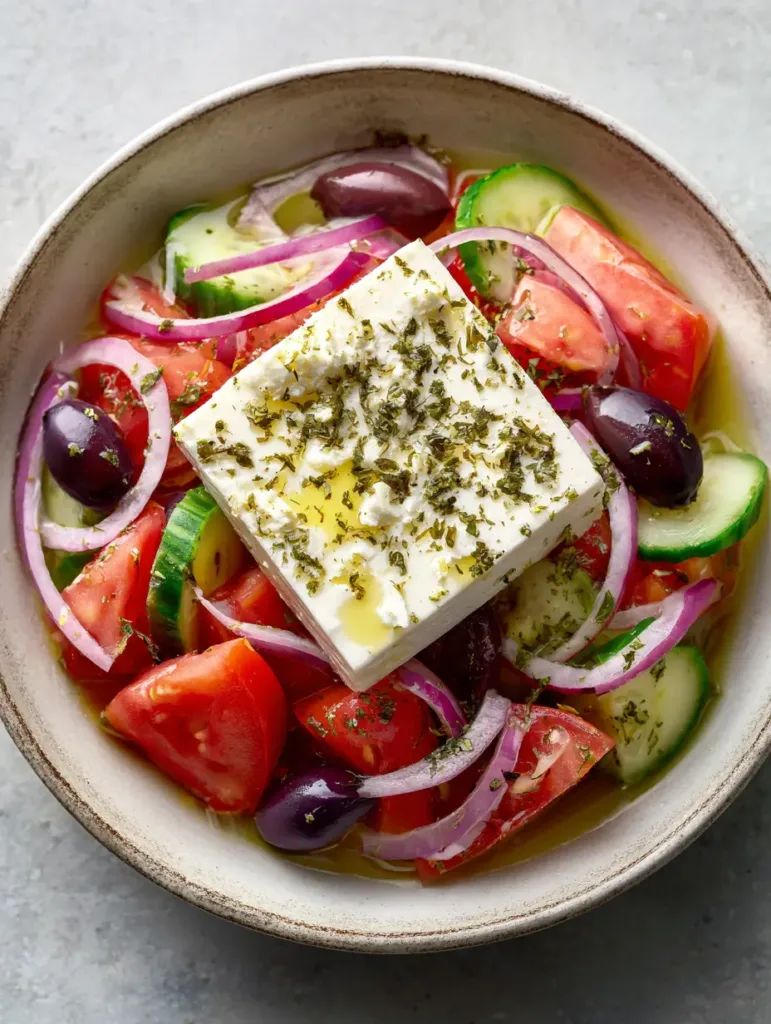
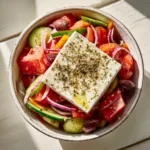
In this guide, we are recreating the exact visual and sensory experience of a Greek seaside taverna. Imagine a wide, shallow rustic ceramic bowl, heavy with the weight of deep red tomato wedges and thick, crisp cucumber rounds. There is no lettuce here—only the crunch of purple onion rings, the brine of whole Kalamata olives, and a proud, rectangular block of creamy feta cheese crowning the center.
Every element is brought to life by a generous drizzle of golden-yellow extra virgin olive oil and a heavy dusting of fragrant dried oregano. The result is a salad that doesn’t just look like a handheld smartphone photo from a dream vacation; it tastes like the very soul of Greece. Let’s dive into how you can achieve this iconic glossy texture and robust flavor profile in your own kitchen.
A thick rectangular block of feta cheese sits prominently on the vegetables.
Why This Traditional Horiatiki Recipe Wins Every Time
Texture-First Architecture: By using thick cucumber rounds and large tomato wedges, we preserve the structural integrity and “snap” of the vegetables, preventing the salad from becoming soggy.
The “No-Lettuce” Rule: This recipe adheres to the strict traditional standard, ensuring an Authentic Greek Salad that is dense, nutrient-rich, and authentically Mediterranean.
Feta Integrity: Instead of crumbling the cheese, we place a solid block on top, allowing guests to break off pieces and control the creaminess of each bite.
Glossy Visual Appeal: The combination of high-phenolic olive oil and natural tomato juices creates a signature “sheen” that is as beautiful to look at as it is to eat.
The Essential Components of a Traditional Village Salad
To achieve the visual and flavor standards of an Authentic Greek Salad, you must be discerning with your shopping list. Because there are so few ingredients, there is nowhere for subpar produce to hide.
Vine-Ripened Tomatoes: These must be deep red and slightly soft to the touch. When cut into large wedges, they should release just enough juice to mingle with the olive oil, creating a natural dressing.
English or Persian Cucumbers: We opt for varieties with thin skins and minimal seeds. These are sliced into thick rounds to provide a cooling, watery crunch that balances the acidity of the tomatoes.
Red Onion Rings: Sliced into thin, translucent purple circles, red onions provide a sharp bite and beautiful visual contrast. If you prefer a milder flavor, we will discuss how to mellow them below.
Whole Kalamata Olives: Never use sliced olives from a can. Whole, dark purple Kalamata olives provide a meaty texture and a deep, fermented brininess that is central to the dish.
Block of Creamy Feta: Look for sheep’s milk feta stored in brine. A thick rectangular block placed prominently on top is the hallmark of a true Horiatiki.
Greek Extra Virgin Olive Oil: This is the “liquid gold” that ties everything together. A golden-yellow oil with a peppery finish will elevate the salad from simple to gourmet.
Dried Oregano Flakes: Use high-quality dried Greek oregano. When heavily dusted over the feta and vegetables, it provides the earthy, floral aroma that defines the Mediterranean scent profile.
Flaky Sea Salt: While the feta is salty, a small pinch of high-quality sea salt is a foundational invisible ingredient. It draws out the juices from the tomatoes, creating the base of your dressing.
While you don’t need fancy gadgets, the right tools will help you achieve the “handheld smartphone photo” aesthetic described in our visual blueprint.
A Sharp Chef’s Knife: Essential for making clean cuts through tomato skins without bruising the flesh. You want those wedges to look sharp and defined.
A Wide, Shallow Ceramic Bowl: The shape of the bowl matters. A wide, shallow vessel allows the ingredients to spread out, ensuring the block of feta can sit proudly on top without being buried.
A Mandoline (Optional): If you want perfectly uniform red onion rings, a mandoline set to a thin gauge is your best friend. However, a steady hand and a sharp knife work just as well for a rustic look.
Building Your Masterpiece: The Step-by-Step Horiatiki Assembly
Preparing the Vegetable Base
Start by washing your produce in cold water and drying it thoroughly. Moisture on the outside of the vegetables can dilute the olive oil, so “dry” is the goal for maximum gloss.
Slice the tomatoes into large, generous wedges. Avoid bite-sized chunks; you want substantial pieces that retain their juice. Place these at the bottom of your ceramic bowl.
Cut the cucumber into thick rounds, about half an inch (1.25cm) thick. Scatter these over and around the tomatoes. The green of the cucumber against the deep red of the tomatoes creates the classic base of the Authentic Greek Salad.
Adding the Aromatics and Brine
Peel your red onion and slice it into thin rings. Gently separate the rings with your fingers and scatter them over the vegetables. They should look like delicate purple halos resting on the salad.
Add the whole Kalamata olives. Do not pit them if you want the most authentic experience, but do warn your guests! Their dark purple hue provides a stunning color pop against the bright vegetables.
The Feta and Finishing Touches
Remove your block of feta from the brine and pat it slightly dry. Place the entire rectangular block right in the center, on top of the vegetable mound. This is the visual anchor of the dish.
Now, for the “drizzle.” Pour your golden-yellow extra virgin olive oil in a slow, steady stream over the feta and the vegetables. You want to see the oil glistening on the surfaces under natural daylight.
Finally, take a generous pinch of dried oregano flakes. Rub them between your palms as you sprinkle them over the bowl to release the essential oils. You want a heavy dusting of green flakes covering the white feta and the glossy vegetables.
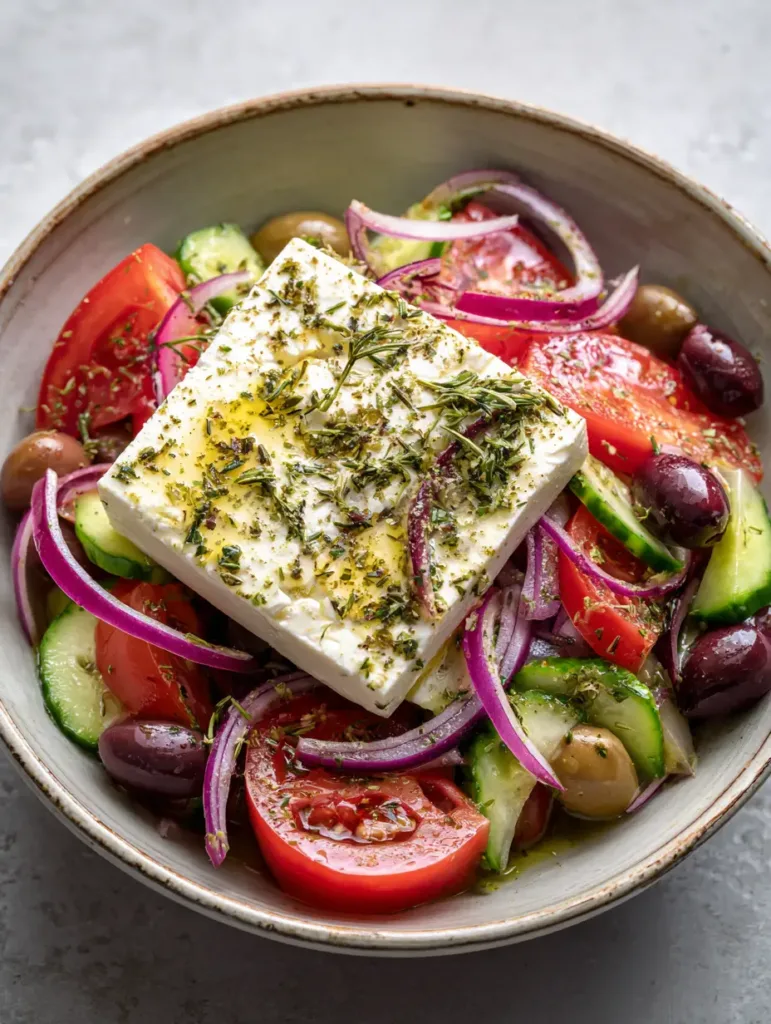
Natural daylight illuminates the glossy textures of the extra virgin olive oil.
Pro-Level Secrets for the Most Flavorful Greek Experience
The Onion Soak: If you find raw red onions too pungent, soak the sliced rings in a bowl of ice water for 10 minutes. This removes the “sulfury” bite while keeping the crunch.
Temperature Matters: Serve the salad at room temperature, not ice-cold. Cold temperatures mute the flavors of the tomatoes and the nuances of the olive oil.
The Mop Factor: The juice at the bottom of the bowl is known as “papara.” It is highly prized! Always serve this salad with crusty bread to soak up the mixture of oil, tomato juice, and oregano.
Salt Strategy: Salt the tomatoes specifically about 5 minutes before adding the other ingredients. This “sweating” process creates the flavorful liquid base that coats the rest of the salad.
Preserving the Crunch: Storage and Freshness
The Authentic Greek Salad is best enjoyed immediately after assembly. Because the salt draws moisture out of the tomatoes and cucumbers, the salad will begin to wilt if left to sit for too long.
If you have leftovers, store them in an airtight container in the refrigerator for up to 24 hours. Note that the feta may absorb some of the tomato juice, turning it a slight pinkish hue, and the cucumbers will lose their snap.
We do not recommend freezing this salad. The high water content of the tomatoes and cucumbers causes the cell walls to burst upon thawing, resulting in a mushy texture that loses all the visual appeal of the original dish.
Mediterranean Feast: What to Serve Alongside
This salad is versatile enough to be a light lunch or a star side dish for a larger dinner spread. If you are keeping it light, it pairs perfectly with a Greek chicken flatbread.
For a high-protein dinner, serve it alongside lemon garlic butter salmon (coming soon) or oven-baked chicken drumsticks. The acidity of the salad cuts through the richness of the meat beautifully.
If you’re hosting a taco night with a twist, try serving this salad as a side to dill pickle ranch chicken tacos or smash burger tacos to provide a fresh, crisp contrast to the savory main courses.
Your Questions Answered: The Greek Salad Masterclass
Traditional Greek Horiatiki (Village Salad) is a summer dish designed to highlight ripe produce like tomatoes and cucumbers. Lettuce is not typically grown in the heat of a Greek summer and is therefore never included in the authentic version.
While it tastes the same, using a single block of feta is the traditional way to serve this salad. It prevents the cheese from dissolving into the vegetable juices, maintaining the salad’s distinct textures and visual appeal.
In Greece, olives are almost always served whole with the pits intact because they retain better flavor and texture. Just be sure to warn your guests before they dig in!
Use an Extra Virgin Olive Oil, preferably from Greece (like Koroneiki olives). It should have a golden-yellow hue and a slightly peppery finish to stand up to the acidity of the tomatoes and saltiness of the feta.
The ‘water’ is actually a delicious mix of tomato juice and olive oil. To manage it, ensure you cut the vegetables into large pieces (wedges and thick rounds) and only salt the tomatoes shortly before serving.
The Authentic Greek Salad Recipe Card
FL Recipes
Authentic Greek Salad: The Ultimate Traditional Horiatiki Recipe
This Authentic Greek Salad (Horiatiki) features ripe tomato wedges, crisp cucumber rounds, and pungent red onions, all topped with a signature block of creamy feta cheese and a heavy dusting of fragrant dried oregano flakes.
1 Sharp Chef's Knife Essential for clean tomato wedges.
1 Wide Shallow Ceramic Bowl Traditional rustic serving vessel.
Method
Prepare the Produce
Cut the ripe tomatoes into large, rustic wedges. Place them in the bottom of a wide ceramic bowl and sprinkle with sea salt to let the juices begin to flow.
Slice the cucumber into thick rounds and scatter them over the tomatoes. Slice the red onion into thin rings and layer them on top of the cucumber.
Assembly and Seasoning
Add the whole Kalamata olives to the bowl. Place the rectangular block of feta cheese prominently in the center of the vegetables.
Generously drizzle the extra virgin olive oil over the entire dish until glossy. Heavily dust with dried oregano flakes, rubbing them between your palms for maximum aroma.
Nutrition
Calories: 285kcalProtein: 7gFat: 24gFiber: 3g
Notes
Serve at room temperature for the best flavor profile. Use crusty bread to dip into the remaining olive oil and tomato juices.
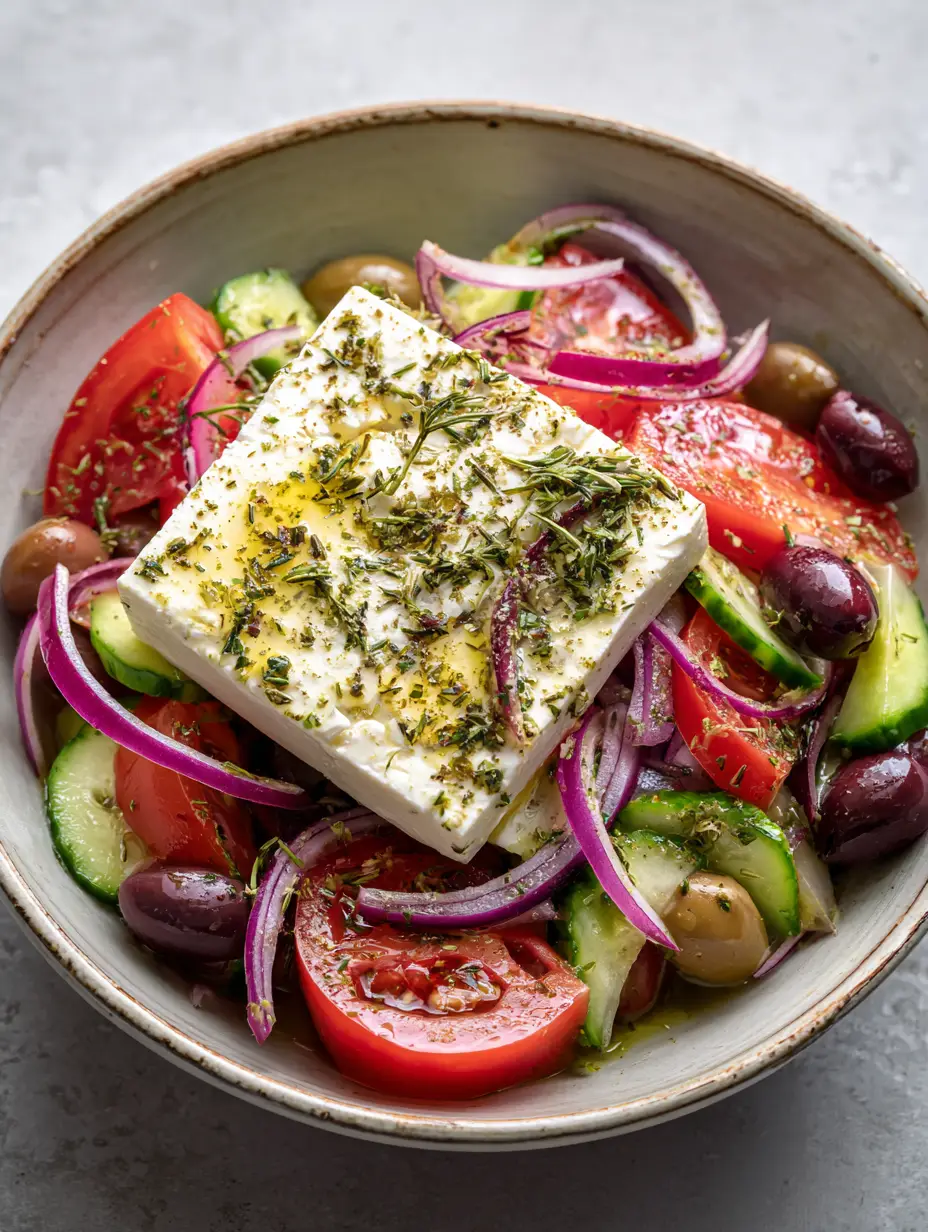
The perfect traditional Horiatiki with thick cucumber rounds and a block of feta.
Bring the Taste of the Islands Home
Creating an Authentic Greek Salad is about more than just chopping vegetables; it’s about respecting the ingredients. When you use the large wedges, the thick rounds, and that iconic block of feta, you aren’t just making a meal—you’re recreating a tradition. The glossy sheen of the olive oil and the earthy scent of oregano will transport you to a sunny Greek tabletop instantly.
Did you try this recipe? We would love to hear how it turned out! Leave a comment below and tell us about your favorite feta brands or olive oil discoveries. Don’t forget to share your beautiful rustic salad creations on Pinterest and tag us!
For more Mediterranean-inspired ideas, check out our high protein honey garlic shrimp (coming soon) for a quick weeknight win!
Hi, I’m Emily Carter, and welcome to FL Recipes! I share simple, healthy recipes that make cooking easy, fun, and delicious for everyone. more about me »