Bibim Guksu is the crown jewel of Korean summer cuisine, offering a refreshing explosion of spicy, sweet, and tangy flavors that dance across your palate. When the mercury rises and you crave something that awakens your senses without weighing you down, these spicy cold noodles are the definitive answer.
There is something undeniably hypnotic about a rustic ceramic bowl filled with thin white wheat somyeon noodles, completely drenched in a thick, glossy, vibrant red gochujang-based sauce. Every bite offers a contrast of textures, from the snap of fresh julienned cucumber to the luxurious, bright orange liquid yolk of a perfectly soft-boiled egg.
This recipe isn’t just about mixing ingredients; it’s about achieving a precise culinary balance. We are going to dive deep into the science of starch removal and the emulsification of the perfect Korean chili glaze to ensure your home-cooked version looks like a professional food photograph.
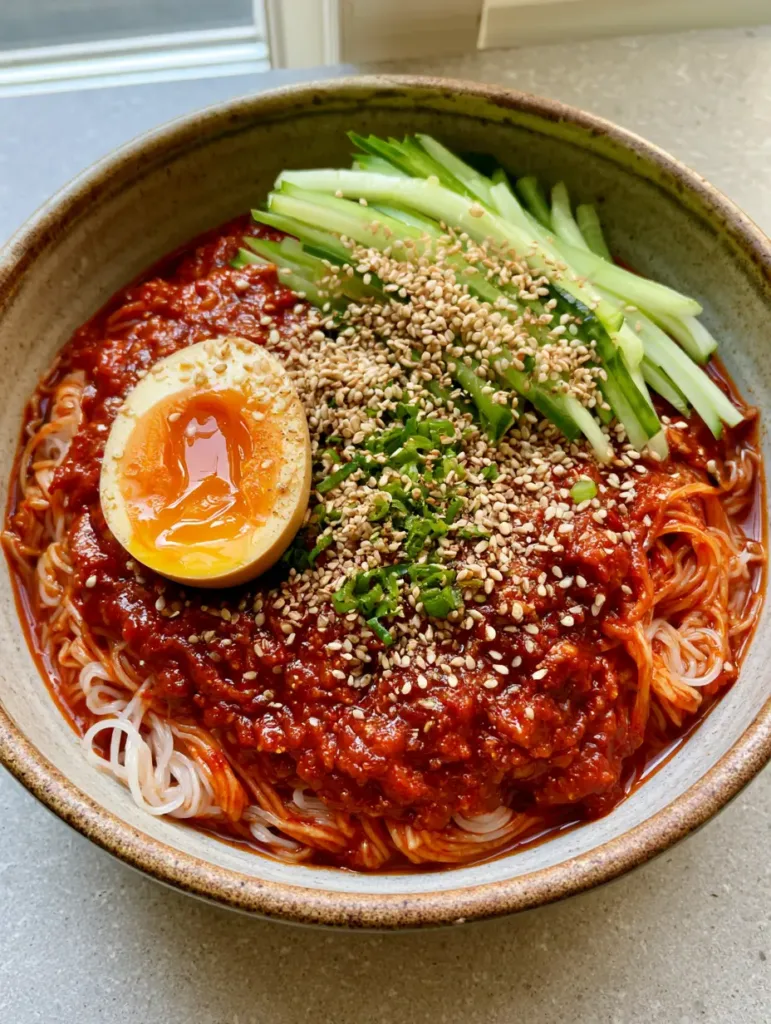
The fresh green julienned cucumber provides a vital textural contrast to the spicy noodles.
The Visual Allure of Authentic Spicy Cold Noodles
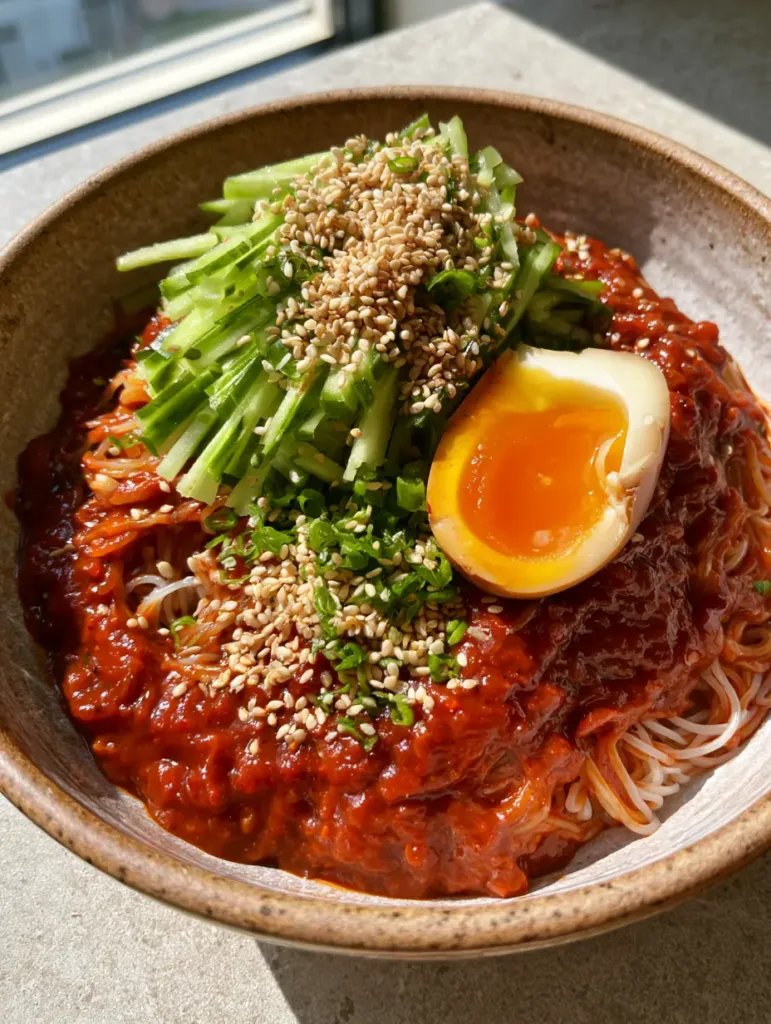
To understand why Bibim Guksu is a global favorite, one must look at its visual and sensory composition. The dish relies on the “Bibim” (mixed) technique, where the noodles are pre-dressed to ensure every strand is coated in a ruby-red sheen.
Vibrant Contrast: The stark white of the somyeon noodles serves as the perfect canvas for the deep crimson gochujang sauce.
Texture Play: Crunchy, water-dense cucumbers provide a cooling relief against the fermented heat of the chili paste.
The Golden Hour: A jammy yolk provides a rich, fatty mouthfeel that rounds out the sharp acidity of the rice vinegar.
Aromatic Finish: A heavy dusting of toasted white sesame seeds and finely chopped scallions adds layers of nuttiness and onion-like bite.
If you enjoy dishes with a complex balance of heat and acid, you might also love our grilled shrimp bowl which shares a similar focus on fresh, vibrant toppings. For those looking for a different kind of picnic staple, our deviled egg macaroni salad offers a creamier take on chilled noodles.
Pantry Staples for the Ultimate Glossy Gochujang Glaze
The foundation of this dish lies in the sauce. To achieve that signature glossy look described in our visual blueprint, we must combine fermented heat with specific liquid sugars and fats.
Somyeon Noodles: These are thin white wheat noodles, similar to angel hair pasta but with a distinct chew. You will need 7oz (200g) of dried noodles to serve two people generously.
Gochujang (Korean Chili Paste): The soul of the dish. Use 3 tbsp (45g) of a high-quality fermented paste to provide the body and the vibrant red color for the sauce.
Rice Vinegar: This provides the “tang.” Use 2 tbsp (30ml) to cut through the density of the chili paste and brighten the overall flavor profile.
Toasted Sesame Oil: This is the secret to the gloss. Use 1.5 tbsp (22ml) to create a shimmering finish on the noodles and provide a deep, nutty aroma.
Granulated Sugar or Honey: You need 1.5 tbsp (20g) to balance the heat. The sugar also helps the sauce cling to the smooth surface of the wheat noodles.
Gochugaru (Korean Chili Flakes): For added texture and a smoky undertone, add 1 tsp (2g) of fine-grind flakes. This deepens the red hue without making the sauce overly thick.
Soy Sauce: A splash of 1 tbsp (15ml) provides the necessary salinity and umami depth that salt alone cannot achieve.
Fresh Aromatics: 1 clove (5g) of finely minced garlic adds a sharp, raw bite that is characteristic of authentic Bibim Guksu.
Essential Kitchen Tools for Precision Cooking
To achieve the “smartphone photo” quality of this dish, you need to handle the ingredients with care. A rustic ceramic bowl is preferred for serving to retain the cold temperature and provide a beautiful aesthetic backdrop.
You will need a large pot for boiling the somyeon, as these noodles release a significant amount of starch. A fine-mesh strainer is non-negotiable for the vigorous rinsing process required to keep the noodles from sticking.
For the toppings, a sharp mandoline or a high-quality chef’s knife is needed to create those thin, uniform green julienned cucumber strips. A small timer is also essential for the eggs; timing a jammy yolk is a matter of seconds, not minutes.
Mastering the Somyeon: Boil, Shock, and Scrub
Achieving the Perfect Noodle Texture
Bring 8 cups (2L) of water to a rolling boil in a large pot. Do not add salt to the water, as somyeon noodles often contain salt in the dough already.
Add the 7oz (200g) of somyeon in a fan motion. As the water begins to foam and boil over, pour in 1/2 cup (120ml) of cold water; repeat this twice to ensure the core of the noodle cooks through while the exterior remains firm.
Immediately drain the noodles and plunge them into a bowl of ice-cold water. Using your hands, “scrub” the noodles against each other in the water to remove excess starch; this ensures the sauce remains glossy and doesn’t become gummy.
The Science of the Jammy Egg
To get that bright orange, jammy liquid yolk, lower two large eggs into boiling water and simmer for exactly 6 minutes and 30 seconds. Prepare an ice bath while they cook to stop the heat immediately.
Once cooled, peel the eggs carefully. When you slice them in half just before serving, the yolk should be thick and jam-like, not runny, creating a visual centerpiece for your Bibim Guksu.
Notice the glossy sheen of the gochujang sauce coating the thin wheat noodles.
Whisking the Signature Red Sauce
In a medium mixing bowl, combine the gochujang, soy sauce, rice vinegar, sugar, minced garlic, and gochugaru. Whisk vigorously until the sugar has completely dissolved and the sauce is uniform.
Slowly drizzle in the toasted sesame oil while whisking. This creates a stable emulsion that gives the sauce its thick, glossy, vibrant red appearance, ensuring it coats the noodles rather than sliding off them.
Taste the sauce at this stage. It should be a bold balance of heat and tang. If you prefer a bit more sweetness to offset the spice, add an extra teaspoon of honey.
Assembling the Masterpiece
Place the thoroughly dried somyeon noodles into the bowl with the sauce. Use tongs or gloved hands to toss the noodles until every white strand is transformed into a glossy red ribbon.
Transfer the noodles into a rustic ceramic bowl, piling them high in the center. This verticality is key for a professional presentation and allows the toppings to sit prominently on top.
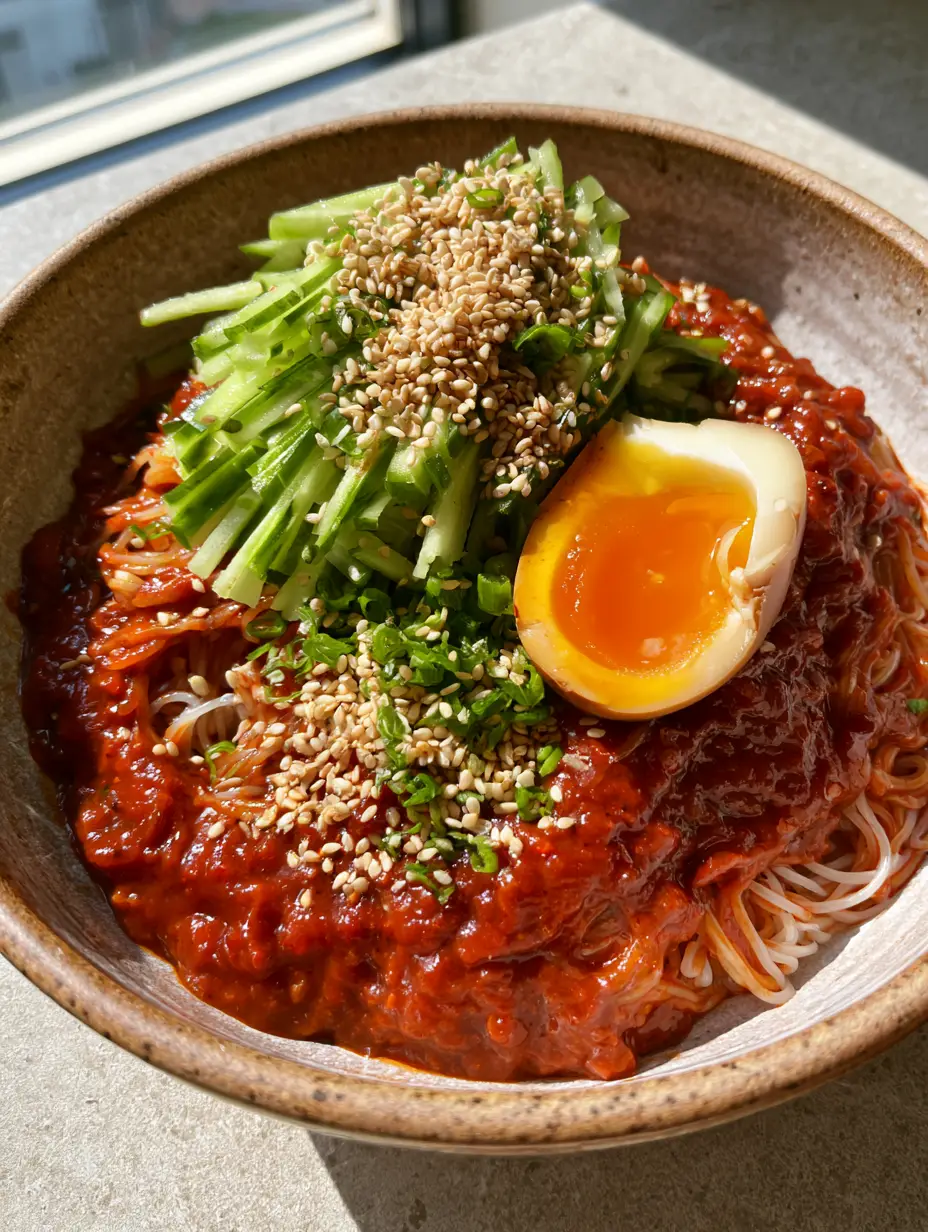
Place a neat pile of fresh green julienned cucumber strips directly on the center of the noodles. Lean one half of the soft-boiled egg against the cucumber, ensuring the bright orange yolk is facing upward.
Finish the dish with a heavy dusting of toasted white sesame seeds. Finally, scatter the finely chopped green scallions over the top for a pop of color and freshness that completes the Bibim Guksu look.
Expert Tips for Recipe Perfection
Cold is Key: Ensure your noodles and sauce are chilled. You can even place your serving bowls in the freezer for 10 minutes before plating.
Drain Thoroughly: Any excess water on the noodles will dilute the sauce and ruin the glossy finish. Use a salad spinner if you want to be extra precise.
Cucumber Prep: If your cucumbers are very watery, salt the julienned strips for 5 minutes, then pat them dry before topping the noodles.
Spice Control: Gochujang brands vary in heat. Start with 2 tablespoons and work your way up if you are sensitive to spice.
Storing and Make-Ahead Advice
Bibim Guksu is best enjoyed immediately after assembly. The somyeon noodles tend to absorb the sauce over time, which can lead to a loss of that glossy texture we worked so hard to achieve.
However, you can prepare the sauce up to a week in advance and store it in an airtight jar in the refrigerator. The flavors will actually deepen and meld together over time.
The soft-boiled eggs can be made 24 hours in advance and kept in their shells in the fridge. Do not freeze the noodles or the assembled dish, as the texture of the wheat noodles will degrade significantly upon thawing.
What to Serve With Spicy Cold Noodles
While this dish is a complete meal on its own, it pairs beautifully with high-protein sides. The spicy acidity of the noodles acts as a palate cleanser for rich, fatty meats.
Try serving it alongside our grilled chicken bites for a lean protein addition. If you want a more fusion-style lunch, these noodles are a surprising but delicious companion to a grilled chicken bacon ciabatta.
While thin white wheat somyeon noodles are traditional for their ability to hold the glossy sauce, you can substitute with soba (buckwheat noodles) or very thin capellini pasta in a pinch.
The gloss comes from the combination of toasted sesame oil and liquid sweeteners like honey or corn syrup. Ensuring the noodles are scrubbed of excess starch also prevents a matte, gummy appearance.
Yes, the name translates to ‘mixed noodles,’ and it is traditionally a chilled dish. The noodles are shocked in ice water to maintain a chewy, resilient texture.
For a bright orange, liquid yolk that matches our visual blueprint, cook a large egg in boiling water for exactly 6 minutes and 30 seconds before plunging it into an ice bath.
The base recipe is vegetarian as long as your gochujang and soy sauce do not contain fish extracts. You can omit the egg for a vegan version, though the yolk adds significant richness.
The Authentic Bibim Guksu Recipe Card
FL Recipes
Bibim Guksu: The Ultimate Spicy Korean Cold Noodle Recipe
This Bibim Guksu features thin wheat somyeon noodles coated in a glossy, spicy gochujang sauce. Topped with julienned cucumber and a jammy soft-boiled egg, it's the perfect refreshing Korean summer meal.
Simmer eggs in boiling water for 6.5 minutes, then immediately shock in ice water. Peel and set aside.
Whisk gochujang, rice vinegar, soy sauce, sugar, garlic, gochugaru, and sesame oil in a bowl until glossy and smooth.
Cook the Somyeon
Cook somyeon in boiling water for 3-4 minutes, adding cold water when it foams up to keep them chewy.
Drain and scrub the noodles under cold running water to remove starch. Drain thoroughly.
Assembly
Mix the cold noodles with the glossy red sauce until fully and evenly coated.
Place noodles in a bowl, top with julienned cucumber, half a jammy egg, sesame seeds, and scallions.
Nutrition
Calories: 485kcalProtein: 16gFat: 18gFiber: 4g
Notes
Scrub the noodles vigorously in cold water to ensure the sauce stays glossy and not gummy. Use a timer for the eggs to achieve that exact liquid orange yolk.
The perfect balance of spice and crunch: Authentic Bibim Guksu.
Join the Community and Share Your Creations
Mastering the art of Bibim Guksu is a rite of passage for any fan of Korean cuisine. The combination of the thick, glossy sauce and the perfectly timed jammy egg makes this a dish you’ll want to photograph before you devour.
Did you achieve that perfect red sheen? We want to see! Leave a comment below with your results or any personal tweaks you made to the heat level. Don’t forget to follow us on Pinterest for more visually stunning recipe inspiration.
Sharing this recipe with friends is the best way to spread the love for Korean cooking. Pin this recipe to your “Summer Dinners” or “Healthy Noodle Recipes” board to keep it handy for the next heatwave!
Hi, I’m Emily Carter, and welcome to FL Recipes! I share simple, healthy recipes that make cooking easy, fun, and delicious for everyone. more about me »