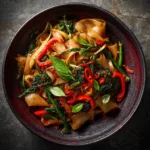
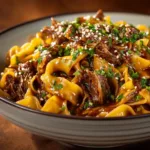
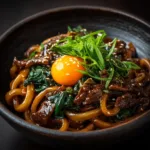
If you have ever wandered through the vibrant night markets of Bangkok, the intoxicating aroma of Thai Drunken Noodles, or Pad Kee Mao, is something you never forget. The sound of metal spatulas clanging against woks and the sight of rising steam carry the promise of a meal that hits every single flavor profile: salty, sweet, spicy, and deeply savory.
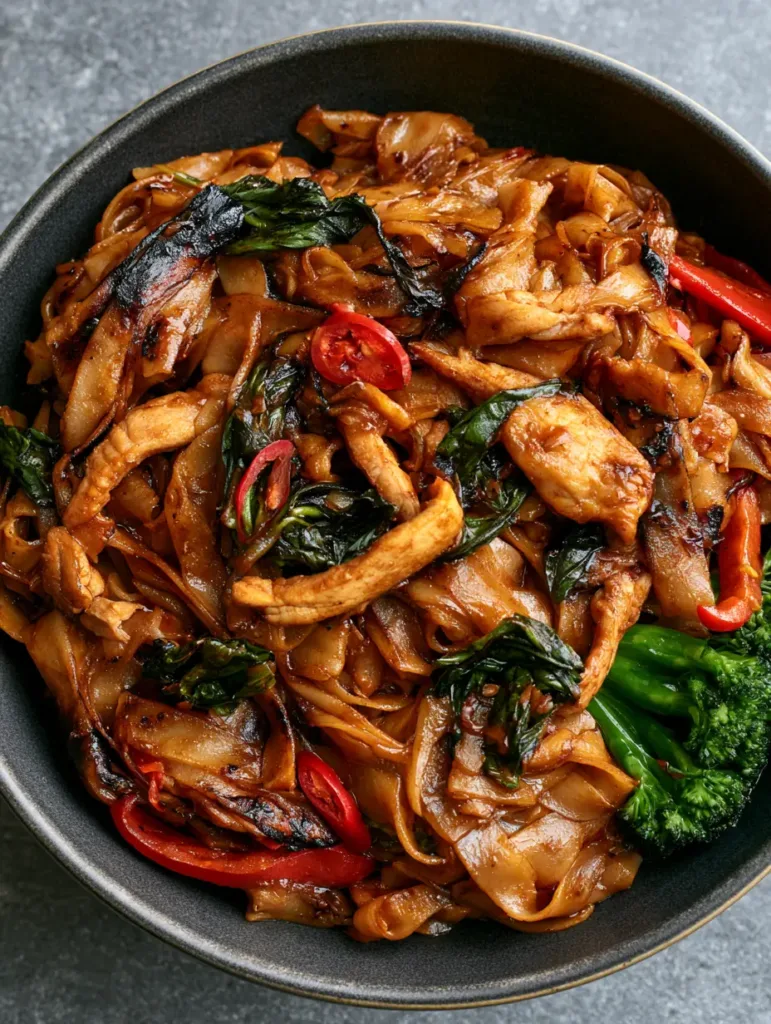
This recipe is designed to recreate that exact sensory experience in your own kitchen. We are focusing on wide, flat rice noodles that are deeply stained with a dark, glossy soy-based sauce, showing those iconic charred edges from high-heat wok searing that define authentic street food.
Every bite of these Thai Drunken Noodles offers a perfect balance of tender seared chicken breast, crisp Chinese broccoli, and the unmistakable peppery punch of fresh Thai basil. Whether you are a heat-seeker or just looking for a restaurant-quality dinner, this guide will show you how to achieve that professional “wok hei” (breath of the wok) flavor at home.
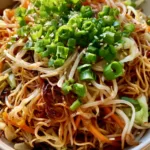
Tender chicken and crisp Chinese broccoli provide the perfect texture contrast in this spicy noodle dish.
Why These Authentic Pad Kee Mao Noodles Stand Out
The Perfect Char: We utilize high-heat techniques to ensure the noodles have visible charred edges and a smoky depth of flavor.
Silken Texture: The sauce is thick, rich, and coats every strand of noodle with a silken sheen, just like the best street stalls in Thailand.
Visual Vibrancy: From the bright green Chinese broccoli to the vibrant red bird’s eye chilies, this dish is a feast for the eyes before the first bite.
Balanced Heat: The inclusion of sliced red bird’s eye chilies provides a clean, sharp heat that cuts through the rich, savory soy glaze.
The Anatomy of Authentic Thai Drunken Noodles Ingredients
To achieve the specific visual and flavor profile seen in professional Thai cooking, choosing the right ingredients is non-negotiable. Each component plays a forensic role in the structure of the dish.
Wide Rice Noodles: You will need 1 lb (450g) of wide, flat rice noodles (Sen Yai). These are the foundation of the dish, providing a chewy, slippery canvas for the sauce to cling to.
Chicken Breast: 12 oz (340g) of chicken breast, sliced into thin, tender pieces. Chicken provides a lean protein that sears quickly, picking up the dark soy glaze beautifully.
Chinese Broccoli (Gai Lan): 2 cups (150g) of chopped Chinese broccoli. This vegetable adds a necessary crunch and a slight bitterness that balances the sweetness of the sauce.
Thai Basil: 1 cup (30g) of firmly packed fresh Thai basil leaves. Do not substitute with Italian basil; Thai basil has a unique licorice-like aroma that wilts into the heat for that signature fragrance.
The Aromatics: 4 cloves (20g) of minced garlic and 3-5 red bird’s eye chilies, sliced. These provide the aromatic base and the “drunken” kick that gives the dish its name.
Red Bell Peppers: 1 medium (150g) sliced red bell pepper. This adds a pop of color and a mild sweetness to contrast the spicy chilies.
Scrambled Egg: 2 large eggs. These are fried quickly into fragments, providing rich, golden pockets of texture throughout the noodles.
The Savory Soy Glaze: A blend of 2 tbsp (30ml) oyster sauce, 1 tbsp (15ml) dark soy sauce (for color), 1 tbsp (15ml) light soy sauce, 1 tbsp (15ml) fish sauce, and 1 tbsp (12g) palm sugar. This creates the thick, glossy coating that makes the dish look so inviting.
Foundational Fats: 3 tbsp (45ml) of high-smoke point oil, such as avocado or grapeseed oil. This is scientifically required to achieve the sear without burning the sauce.
Essential Equipment for High-Heat Stir-Frying
Achieving the look of street-style Thai Drunken Noodles requires the right tools to manage heat distribution. A well-seasoned carbon steel wok is the gold standard, as it allows for the rapid evaporation of moisture, which leads to the “wok hei” effect.
If you don’t have a wok, a large, heavy-bottomed cast iron skillet is a great alternative. You want a surface that retains heat well so the temperature doesn’t drop when you add the cold ingredients, like the crispy coconut tofu bowl components you might have made before.
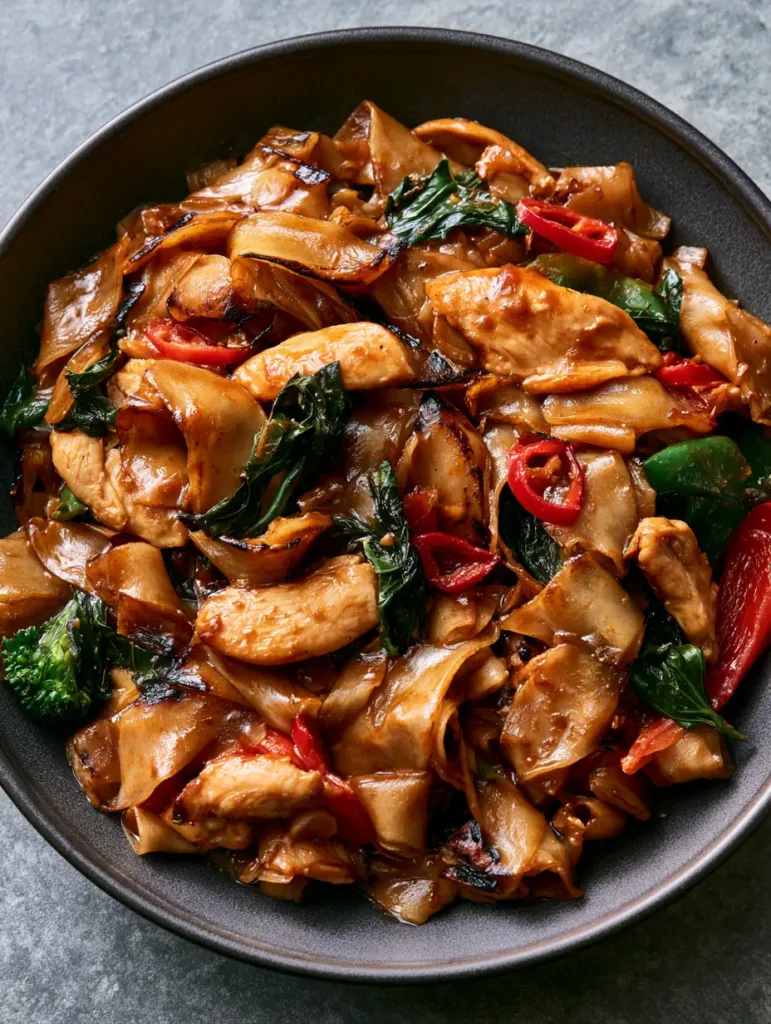
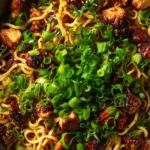
Experience the smoky char and silken sheen of professionally seared Pad Kee Mao.
Step-by-Step Mastery for the Perfect Wok Sear
Preparing the Signature Sauce and Aromatics
In a small bowl, whisk together the oyster sauce, dark soy sauce, light soy sauce, fish sauce, and palm sugar until the sugar is dissolved. This dark liquid is what will give your Thai Drunken Noodles their iconic glossy stain.
Mince your garlic finely and slice the bird’s eye chilies. If you prefer less heat, remove the seeds from the chilies, but for an authentic “drunken” experience, keep them in for that sharp bite.
Searing the Protein and Aromatics
Heat your wok over high heat until a wisps of smoke appear. Add 1 tbsp (15ml) of oil and swirl to coat the surface. Add the chicken slices in a single layer, letting them sear undisturbed for 60 seconds.
Look for a deep golden-brown crust to form on the chicken before flipping. Once seared, push the chicken to the side and add the garlic and chilies, stir-frying for 30 seconds until the aroma fills the room.
Creating the Scrambled Egg Fragments
Push the chicken and aromatics to the edge of the wok. Pour in another teaspoon of oil if the pan looks dry, then crack in the eggs. Let them sit for 10 seconds to set slightly, then scramble them into small fragments.
These golden bits of egg are crucial for the visual recipe blueprint, providing a color contrast against the dark green basil and red peppers. Similar to the texture in a one-pot chicken sausage orzo, these fragments add a layer of richness.
The Main Event: Searing the Rice Noodles
Add the chopped Chinese broccoli and sliced red bell peppers to the wok, tossing for 1 minute until they begin to soften but remain vibrant. Add the wide rice noodles directly into the center of the heat.
Pour the sauce over the noodles and turn the heat to its highest setting. Use a wide spatula to toss the noodles constantly, ensuring every strand is coated in the silken sheen. Let the noodles sit against the hot metal for 20 seconds at a time to develop those coveted charred edges.
The Finishing Touch: Wilting the Basil
Turn off the heat and immediately add the fresh Thai basil leaves. The residual heat of the Thai Drunken Noodles will wilt the basil within seconds, releasing its essential oils without turning the leaves bitter.
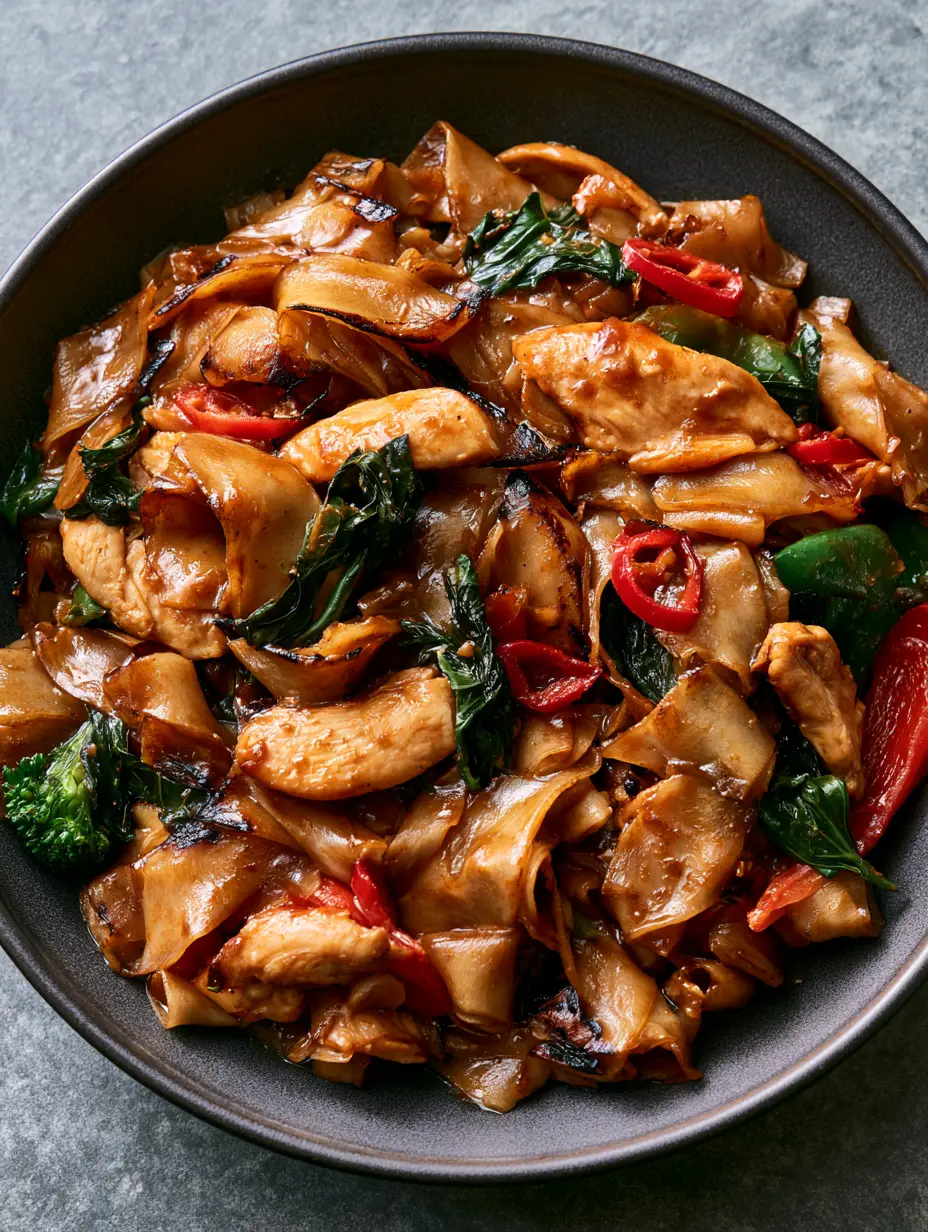
The final dish should show a beautiful contrast: dark, glossy noodles, bright red peppers, wilted green basil, and golden egg fragments all gleaming under a natural light sheen.
Expert Tips for Restaraunt-Quality Results
Room Temperature Noodles: If using fresh rice noodles, ensure they are at room temperature. Cold noodles will break and turn to mush when they hit the hot wok.
The Order of Operations: Have all ingredients prepped and within reach (mise en place). Wok cooking happens in minutes, and there is no time to chop once the oil is hot.
High Heat is Key: If your stove isn’t powerful, cook the noodles in two batches. Overcrowding the pan causes the noodles to steam rather than sear, losing the “drunken” texture.
Sauce Thickness: If the sauce isn’t thickening enough to coat the noodles, a splash of the noodle soaking water (if using dried) can help emulsify the glaze.
Storage and Reheating Advice
Thai Drunken Noodles are best enjoyed immediately while the noodles are at their most supple. However, you can store leftovers in an airtight container in the refrigerator for up to 3 days.
To reheat, avoid the microwave if possible, as it can make rice noodles rubbery. Instead, toss them back into a hot skillet with a tablespoon of water or a splash of light soy sauce to loosen the glaze and restore the silken sheen.
What to Serve With Spicy Thai Noodles
This dish is a complete meal on its own, but it pairs beautifully with other textures. You might serve it alongside a fresh cucumber salad or even some sourdough discard naan for an unconventional fusion twist to soak up the extra sauce.
For those looking for a diverse weekly menu, these noodles offer a wonderful spicy alternative to heartier dishes like balsamic mozzarella chicken. The acidity in the noodles provides a refreshing contrast to creamier recipes.
There are many theories, but the most popular is that the dish is so spicy that the eater needs to drink plenty of alcohol to cool down, or that it’s the perfect late-night meal after a night of drinking.
Thai basil has a distinct anise or licorice-like flavor and a sturdy texture that holds up to heat. Italian sweet basil is much softer and has a different flavor profile; use it only as a last resort.
If using fresh noodles, make sure they are at room temperature and don’t overwork them in the wok. If using dried, soak them until flexible but still firm (al dente) before stir-frying.
No. While both use wide rice noodles and dark soy sauce, Pad See Ew is sweet and mild, whereas Pad Kee Mao (Drunken Noodles) is defined by its spice level and the use of Thai basil and chilies.
Thai Drunken Noodles: The Ultimate Spicy Wok-Seared Street Style Recipe
Authentic Thai Drunken Noodles (Pad Kee Mao) featuring wide rice noodles, tender chicken, and vibrant Thai basil, all seared in a rich, dark soy glaze for that signature smoky street-style flavor.
Authentic Street Style Thai Drunken Noodles (Pad Kee Mao) with a glossy soy glaze.
Closing & Call to Action
Mastering Thai Drunken Noodles at home is a rewarding culinary journey that brings the heat and heart of Bangkok to your dining table. The combination of charred noodles and aromatic Thai basil creates a flavor profile that is truly addictive.
If you loved this recipe, please leave a comment below and let us know how your “wok hei” turned out! Don’t forget to share your creations and follow us on Pinterest for more authentic street food inspiration.
Hi, I’m Emily Carter, and welcome to FL Recipes! I share simple, healthy recipes that make cooking easy, fun, and delicious for everyone. more about me »