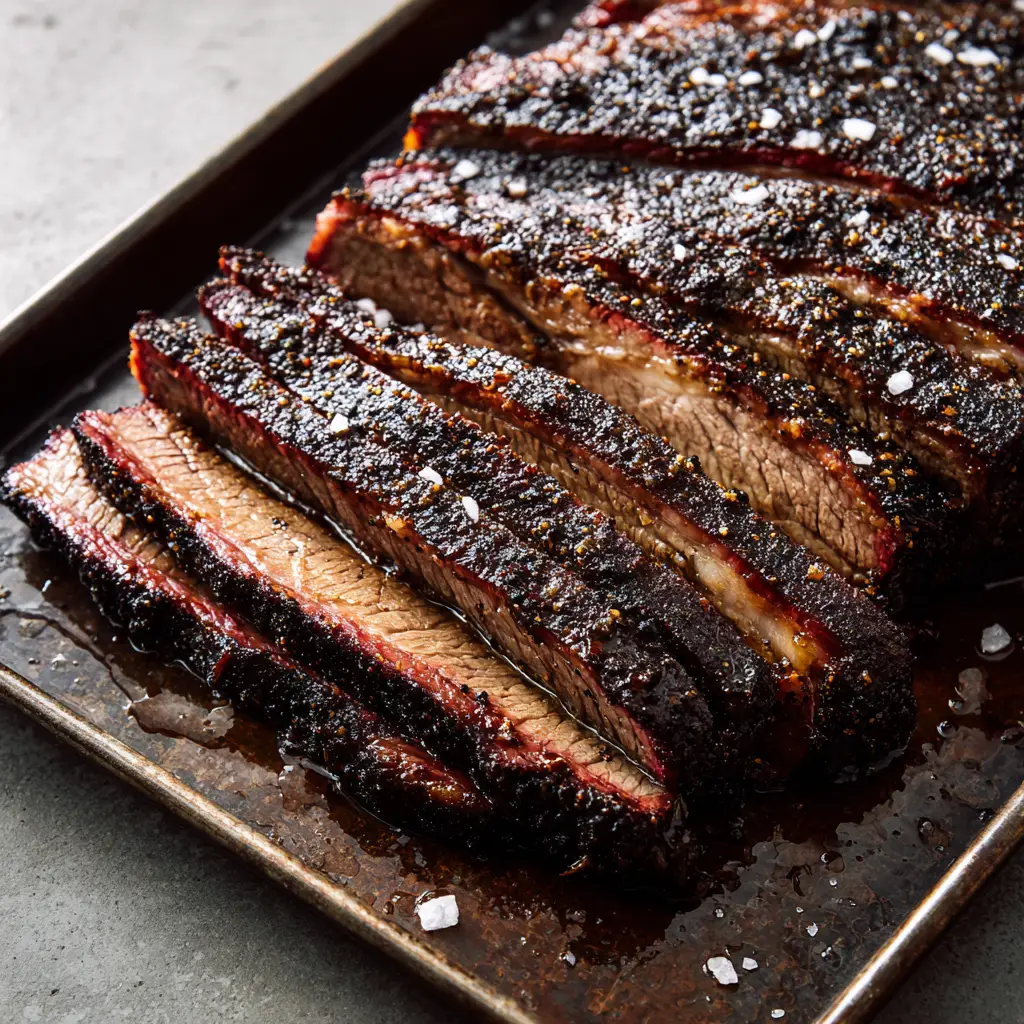
There is a specific, primal magic in the sight of a perfectly rendered Oven Baked Beef Brisket. When you pull that heavy, weathered tray from the oven, the air fills with the intoxicating scent of toasted black pepper and deep, caramelized beef fat. You aren’t just looking at dinner; you are looking at a culinary trophy featuring a heavy, crusty black pepper bark that yields to a succulent, moist interior.
Achieving this level of perfection traditionally required a dedicated smoker and sixteen hours of wood-fire management. However, this Oven Baked Beef Brisket method utilizes precise thermal control to mimic the low-and-slow environment of a professional smokehouse. The result is a brisket with glistening rendered fat and dark brown natural juices that will rival any Texas BBQ joint.
In this guide, we will break down the forensic details of meat science, from the breakdown of collagen to the development of that iconic “bark.” By the time you slice into your first succulent piece, you will understand why this method is the gold standard for home cooks. Let’s transform your kitchen into a high-end steakhouse.
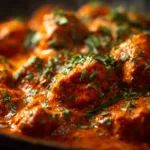
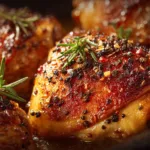
A close-up look at the heavy, crusty black pepper bark that defines this recipe.
Why This Oven-Roasted Masterpiece Stands Above the Rest
The “Bark” Factor: We utilize a specific coarse-grind spice ratio to ensure a heavy, charred black pepper exterior that provides a crunchy contrast to the tender meat.
Foolproof Tenderness: By leveraging the “Texas Crutch” technique within your oven, we bypass the dreaded “stall” while locking in every drop of natural meat dripping.
Visual Precision: This recipe is designed to produce thick, succulent slices with a moist, tender pink-to-brown interior grain that looks as good as it tastes.
Accessibility: No expensive outdoor equipment is required—just a standard oven, a dark baking tray, and a commitment to the “low and slow” philosophy.
The Essential Components for a Signature Black Pepper Crust
To achieve the visual and textural benchmarks of a world-class Oven Baked Beef Brisket, every ingredient must serve a structural purpose. We aren’t just seasoning meat; we are building a protective, flavor-dense shell that regulates moisture loss during the long roasting process.
The Brisket (4-6 lbs / 1.8-2.7 kg): Look for a “packer” cut or a well-marbled flat with at least a quarter-inch fat cap. This fat is the lifeblood of the dish, providing the glistening rendered appearance seen in the final presentation.
Coarse Sea Salt (2 tbsp / 34g): Unlike fine table salt, coarse sea salt draws out proteins to the surface, creating a sticky “pellicle” that allows our pepper to adhere and form that iconic crust.
16-Mesh Cracked Black Peppercorns (3 tbsp / 21g): This is the secret to the charred black pepper dry rub bark. The coarse “16-mesh” size is critical; it doesn’t dissolve into the meat but stays on the surface to create a physical, crunchy barrier.
Granulated Garlic and Onion Powder (1 tbsp each / 10g): These “invisible” ingredients provide a savory depth (umami) that supports the beefy profile without distracting from the primary pepper notes.
Beef Tallow or Olive Oil (2 tbsp / 30ml): Used as a binder, this ensures the dry rub stays exactly where it belongs while contributing to the final glistening fat highlights on the tray.
Professional Tools for High-Performance Roasting
To replicate the “weathered dark metal baking tray” aesthetic and the technical precision of the recipe, you will need a few specific items. A heavy-duty rimmed baking sheet is essential for catching the dark brown natural juices that characterize this dish.
You will also need high-quality aluminum foil or, preferably, un-waxed butcher paper. This is the “shield” used during the second half of cooking to soften the connective tissues without ruining the bark. Finally, a reliable digital meat thermometer is non-negotiable for monitoring the internal grain temperature.
The Master Class: Step-by-Step Oven Baked Beef Brisket
Phase 1: The Forensic Prep and Trimming
Start with your brisket cold, straight from the refrigerator, as the fat is much easier to trim when firm. Trim the fat cap down to an even 1/4 inch (6mm) thickness; this ensures the fat renders fully into those glistening highlights we see in the visual prompt. Pat the entire surface bone-dry with paper towels to ensure the binder and rub can create a seamless bond with the meat.
Apply a very thin layer of beef tallow or oil over the entire surface. This acts as the “glue” for our heavy black pepper rub. If the meat is too wet, the rub will slide off; if it’s too dry, the bark won’t form a cohesive layer during the initial roast.
Phase 2: Applying the High-Contrast Rub
Mix your coarse sea salt, 16-mesh pepper, and aromatics in a small bowl. Liberally coat the brisket, starting with the sides and finishing with the top and bottom. Do not be afraid of the pepper; we are looking for a “heavy, crusty” appearance that completely obscures the red of the raw meat.
Press the spices firmly into the flesh with your palms. This physical contact is what creates the “charred bark” look later. Let the meat sit at room temperature for about 40 minutes while your oven preheats to 250°F (120°C). This allows the salt to begin its chemical work of tenderizing the muscle fibers.
Phase 3: The Low and Slow Initial Roast
Place the brisket on a wire rack set inside your dark metal baking tray, fat-side up. This positioning allows the rendering fat to “baste” the meat as it melts, leading to that moist, tender interior. Slide the tray into the center of the oven and let it roast undisturbed.
During this stage, you are looking for a specific visual cue: the rub should transform from a greyish-pepper color to a deep, dark, almost-black mahogany. This is the Maillard reaction and the dehydration of the exterior. This process typically takes 4 to 6 hours depending on the thickness of your cut.
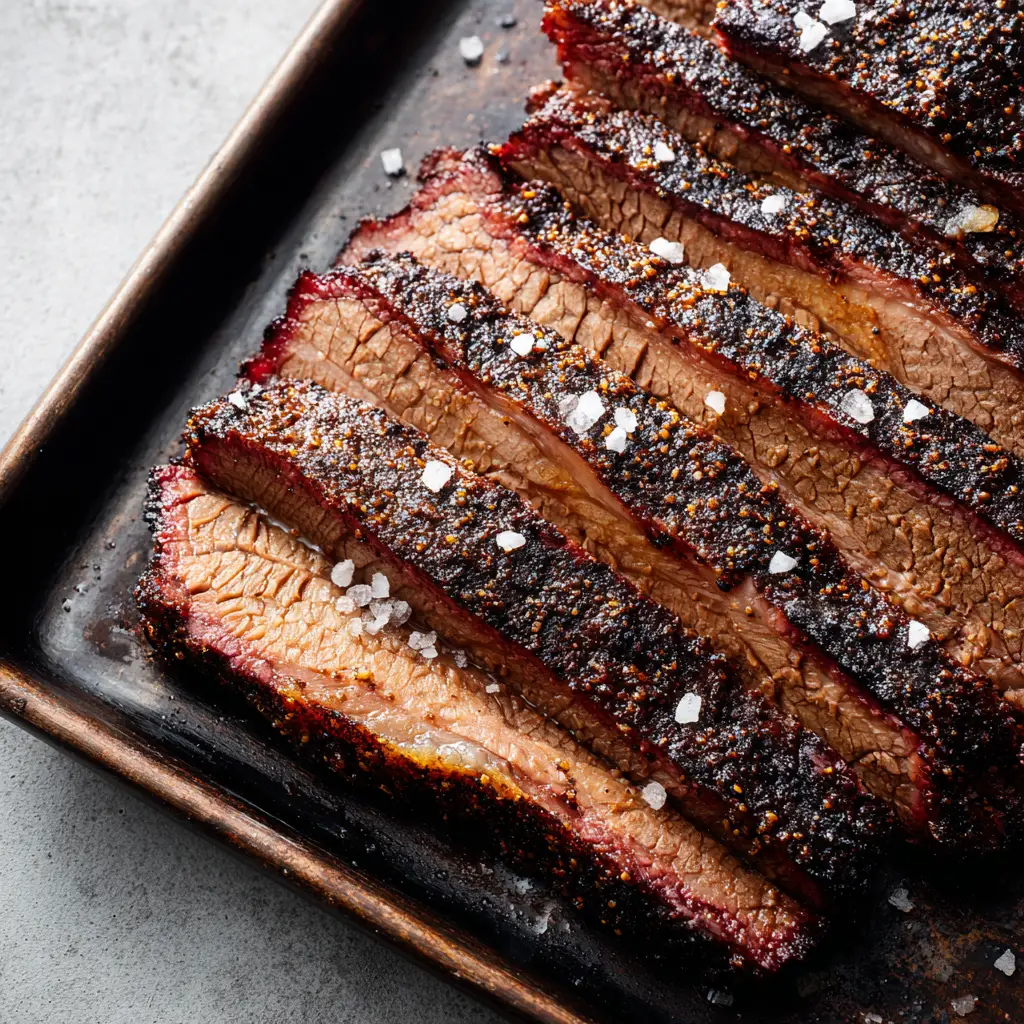
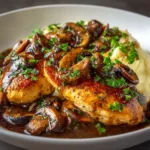
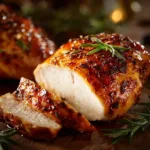
Succulent slices of brisket showcasing the beautiful interior grain and natural juices.
Phase 4: The Texas Crutch (The Softening)
Once the internal temperature reaches approximately 165°F (74°C) and the bark is firmly set (it shouldn’t come off when you touch it), it’s time for the “wrap.” Lay out two long sheets of heavy-duty foil or butcher paper. Place the brisket in the center and pour two tablespoons of natural meat drippings or beef broth over it before sealing it tightly.
Return the wrapped brisket to the oven. This stage is where the magic happens—the collagen in the beef breaks down into gelatin. Continue roasting until the internal temperature reaches a buttery 203°F (95°C). You will know it’s ready when a probe slides into the meat with zero resistance, like a knife through soft butter.
Phase 5: The Crucial Rest and Slicing
The most common mistake is slicing too soon. Remove the brisket from the oven but keep it wrapped. Let it rest for at least 60 to 90 minutes. This allows the muscle fibers to relax and reabsorb those dark brown natural juices. If you skip this, the juice will end up on the cutting board instead of in the succulent slices.
When ready to serve, find the direction of the “grain” (the muscle fibers). Slice the brisket into thick, succulent pieces *against* the grain. This ensures every bite is tender rather than chewy. Arrange the slices on your weathered metal tray, making sure to drizzle any remaining juices from the wrap over the top for that glistening, handheld smartphone photo finish.
Expert Tips for Pitmaster Results
The “Jiggle” Test: When the brisket is fully rested and you pick it up (still wrapped), it should feel like a heavy water balloon or a piece of Jell-O. That “jiggle” is the visual proof of rendered fat.
Don’t Peek: Every time you open the oven door, you lose the humid environment required to keep the meat moist. Use a probe thermometer with a cord so you can monitor progress from the outside.
Salt Timing: If you have time, salt the meat 24 hours in advance and leave it in the fridge. This “dry brine” ensures the interior of the beef is as seasoned as the crust.
Quality of Pepper: Avoid pre-ground table pepper. Use a spice grinder or a mortar and pestle to get those large, cracked peppercorns that create the visual and sensory “pop.”
Storing and Reheating Your Oven Baked Beef Brisket
Brisket is a labor of love, and leftovers are a culinary gift. To store, keep the meat in as large a piece as possible to prevent drying out. Wrap it tightly in plastic wrap and then foil before refrigerating for up to 4 days. The natural meat drippings will solidify into a delicious gel that helps preserve the meat.
To reheat without losing the “succulent” quality, place slices in a baking dish with a splash of beef broth. Cover tightly with foil and heat at 300°F (150°C) until just warmed through. For a secondary use, these tender morsels are incredible when folded into a zesty salad sandwich for a high-protein lunch.
What to Serve With a Texas-Style Feast
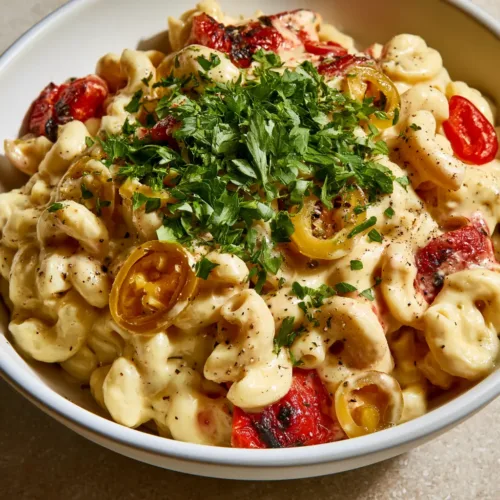
The richness of an Oven Baked Beef Brisket demands sides that provide either a creamy contrast or a sharp, acidic bite. To round out your tray, consider serving a creamy macaroni salad which cuts through the heavy black pepper bark beautifully.
For a crunchier texture, crispy onion rings are a classic smokehouse staple that complements the rendered fat of the beef. If you prefer something lighter, a cucumber ranch salad offers a cooling sensation that balances the heat from the cracked peppercorns. And for dessert? Nothing beats a slice of moist pineapple bread to cleanse the palate after such a savory meal.
Frequently Asked Questions
[faq_section]
The Ultimate Oven Baked Beef Brisket Recipe
FL Recipes
Oven Baked Beef Brisket
Achieve pitmaster-quality Oven Baked Beef Brisket at home with this low-and-slow method. Features a heavy black pepper bark, succulent rendered fat, and tender slices that rival any professional Texas-style BBQ smokehouse.
4-6lbsBeef BrisketFlat or packer cut with a good fat cap
2tbspCoarse Sea Salt34g
3tbsp16-Mesh Cracked Black Peppercorns21g
1tbspGranulated Garlic10g
1tbspOnion Powder10g
2tbspBeef Tallow or Olive Oil30ml, used as a binder
Equipment
1 Rimmed Baking Sheet A dark, weathered tray is ideal for heat retention.
1 Digital Meat Thermometer Essential for tracking the internal grain temperature.
2 Butcher paper or heavy-duty foil Used for the 'Texas Crutch' wrapping phase.
Method
Preparation
Trim the cold brisket fat cap to a uniform 1/4 inch thickness. Pat the meat completely dry with paper towels.
Coat the meat with a thin layer of tallow or oil. Mix the salt, pepper, garlic, and onion powder, then press the rub firmly into all sides of the beef until it forms a heavy crust.
The Roasting Process
Place on a wire rack in a dark tray. Roast at 250°F (120°C) until the internal temperature hits 165°F (74°C) and the bark is dark and set.
Wrap the brisket tightly in butcher paper or foil with a splash of meat drippings. Return to the oven until it reaches an internal temp of 203°F (95°C).
Remove from oven and let rest, wrapped, for at least 60-90 minutes before slicing against the grain.
Nutrition
Calories: 450kcalProtein: 38gFat: 32gFiber: 1g
Notes
Always slice against the grain for maximum tenderness. Keep the trimmings to render down into extra beef tallow for future recipes.
The journey to the perfect Oven Baked Beef Brisket is a testament to the power of patience and precision. By following this forensic approach to the dry rub, the roast, and the rest, you have created a dish that is visually stunning and culinarily superior. Those thick, succulent slices and that charred black pepper bark are proof of your new expertise.
Did your bark turn out as dark and crusty as the photos? We want to see your results! Share your kitchen success on social media and be sure to pin this recipe to your favorite boards on Pinterest. Happy roasting!
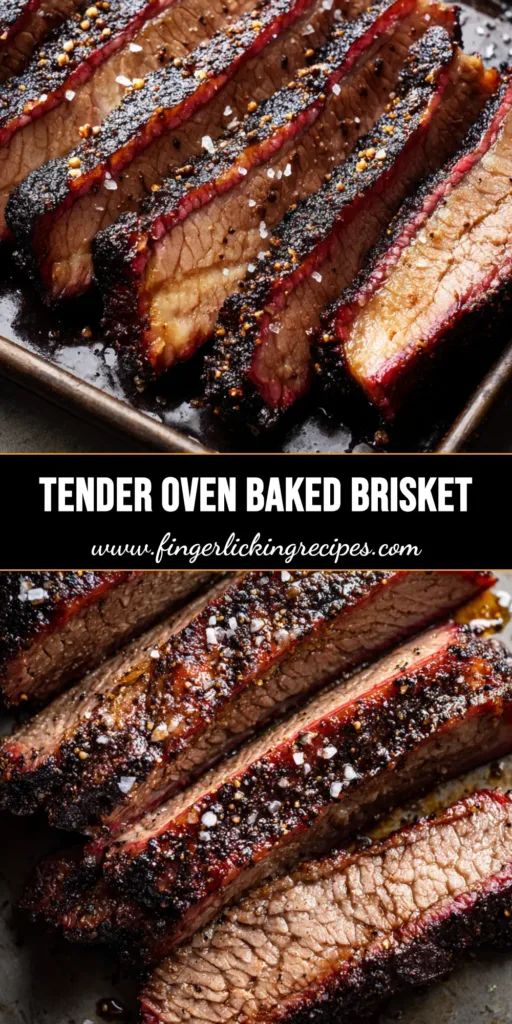
The ultimate Texas-style Oven Baked Beef Brisket with a perfect charred bark.
Hi, I’m Emily Carter, and welcome to FL Recipes! I share simple, healthy recipes that make cooking easy, fun, and delicious for everyone. more about me »