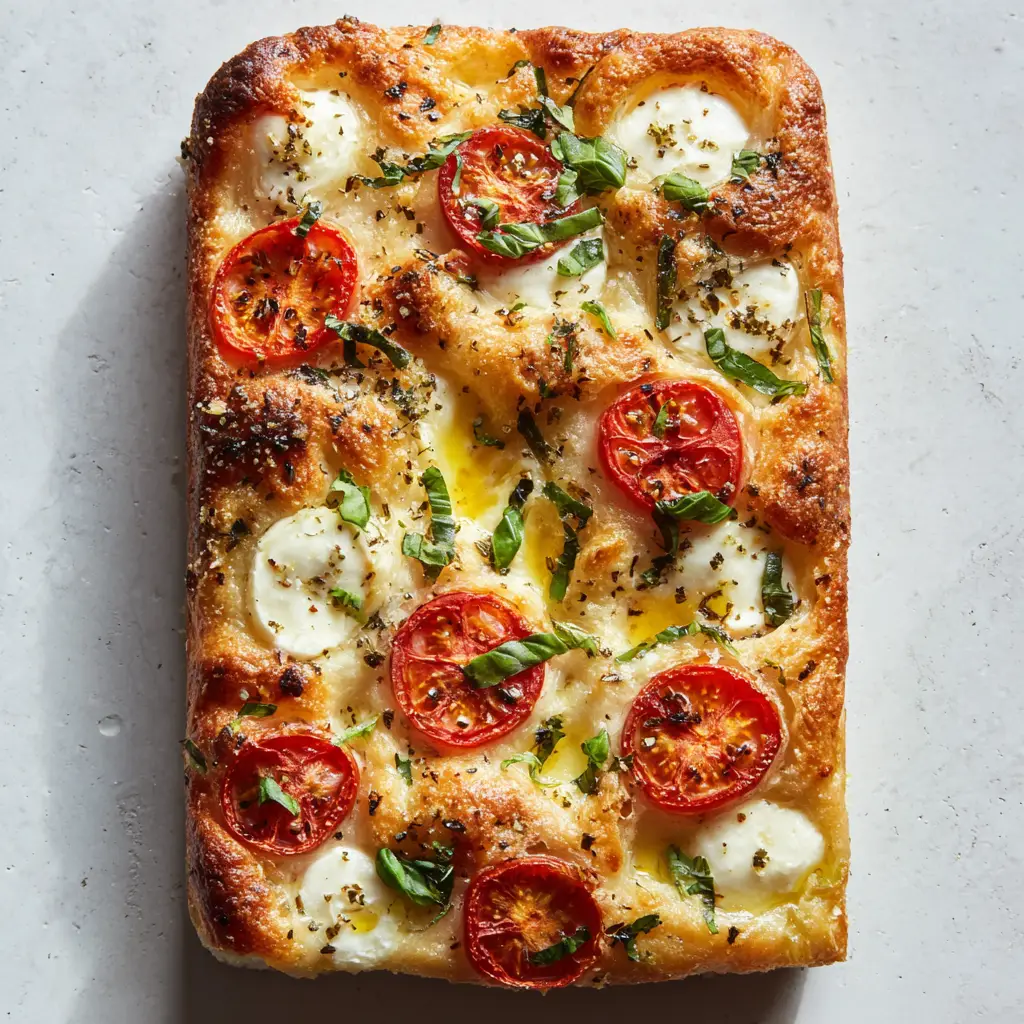
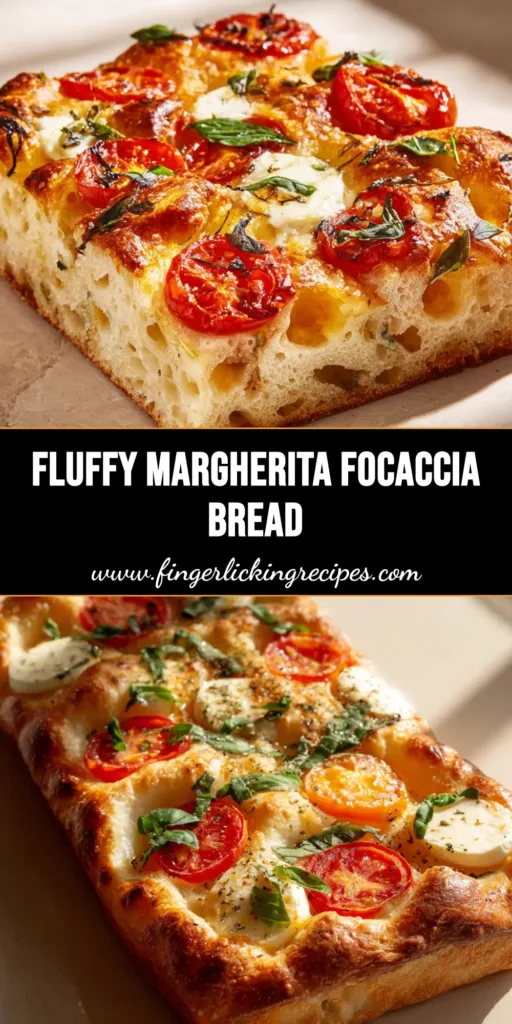
There is nothing quite like the sensory experience of a freshly baked Margherita Focaccia Bread. Imagine a thick, rectangular slab of golden-brown fermented dough, its surface cratered with deep finger-pressed indentations where extra virgin olive oil and tomato juices have pooled into shimmering, flavorful wells.
This recipe captures the essence of a classic Italian pizza but delivers it through the pillowy, airy medium of traditional focaccia. We are focusing on that authentic, handheld smartphone photo aesthetic: unedited, rustic, and incredibly inviting.
From the vibrant red of the thinly sliced tomatoes to the creamy white circles of melted mozzarella pearls, every element of this Margherita Focaccia Bread is designed for maximum visual and culinary impact. Let’s dive into the science of fermentation and the art of the perfect dimple.
Vibrant red tomatoes and white mozzarella pearls create the classic Margherita look.
The Irresistible Texture of This Margherita Focaccia Bread
What sets this Margherita Focaccia Bread apart is the specific harmony of textures and colors confirmed by our culinary blueprint. This isn’t just bread; it’s a structural masterpiece that balances moisture and crunch.
The Crusted Foundation: A high-hydration dough that results in golden-brown, crispy edges with a visible sheen of premium olive oil.
The Dimpled Landscape: Deep, intentional indentations created by hand to trap pools of oil and herb-infused juices.
Vibrant Margherita Toppings: A combination of thinly sliced red tomatoes and melted mozzarella pearls that provide a soft contrast to the chewy dough.
Aromatic Finishing Touches: Scattered fresh green basil leaves, dried oregano, and coarse sea salt for a multi-sensory flavor profile.
Essential Ingredients for the Perfect Fermented Dough
To achieve the “fluffy, dimpled dough” described in our visual prompt, we must use high-quality foundational ingredients. Each component plays a scientific role in the final structure of your Margherita Focaccia Bread.
Bread Flour: 4 cups (500g) of high-protein bread flour is essential for developing the gluten network required to hold large air bubbles. This provides the “chew” that makes focaccia so satisfying.
Warm Water: 1 ¾ cups (420ml) of water at roughly 105°F (40°C). This specific temperature activates the yeast without killing it, ensuring a rapid and healthy fermentation process.
Active Dry Yeast: 2 ¼ tsp (7g) or one standard packet. Yeast is the biological engine that creates the airy, fermented interior visible in our blueprint.
Honey or Sugar: 1 tbsp (21g) of honey. This acts as “food” for the yeast and assists in achieving those deeply caramelized, golden-brown edges during the bake.
Extra Virgin Olive Oil: ½ cup (120ml) total, divided. High-quality oil is responsible for the “visible sheen” and the “pooling” effect in the dough’s indentations.
Sea Salt: 1 ½ tsp (9g) for the dough and extra coarse sea salt for topping. Fine salt regulates yeast activity, while coarse salt provides those visible “flecks” on the crust.
Fresh Tomatoes: 3-4 medium Roma tomatoes (approx. 300g), thinly sliced. These provide the “vibrant red” visual and a necessary acidity to cut through the rich oil.
Mozzarella Pearls: 8 oz (225g) of bocconcini or mozzarella pearls. These create the “melted white circles” that define the Margherita aesthetic.
Fresh Basil: 1 cup (approx. 20g) of whole fresh basil leaves. These are added toward the end to maintain their “scattered fresh green” appearance without turning black.
Dried Oregano: 1 tsp (2g) of dried oregano. This adds the herbaceous “flecks” visible on the crust and provides a classic Italian aroma.
Pro-Grade Baking Tools for a Golden Crust
To recreate the thick rectangular shape seen in the smartphone-style photography, you need the right vessels. Using the correct pan ensures even heat distribution and that signature fried-bottom texture.
A 9×13 inch (23x33cm) metal baking pan is the gold standard here. Metal conducts heat faster than glass, which is vital for achieving those golden-brown edges described in our prompt.
You will also need a large glass mixing bowl for the fermentation phase. The transparency allows you to monitor the dough as it doubles in size, looking for the visible air bubbles that signal a successful rise.
Finally, a cooling rack is non-negotiable. If you leave your Margherita Focaccia Bread in the pan after baking, the steam will ruin the “visible sheen” of the oil and turn the bottom crust soggy.
Step-by-Step Mastery: Achieving That Iconic Dimpled Surface
The secret to the “deep finger-pressed indentations” seen in the visual blueprint lies in the timing of the second rise. Follow these steps carefully to ensure your oil and juices pool perfectly.
Phase 1: The Long Fermentation
In your large bowl, whisk together the warm water, honey, and yeast. Let it sit for 5-10 minutes until a foamy “bloom” appears on the surface, which indicates the yeast is alive and active.
Add the bread flour and fine sea salt. Use a sturdy spatula to mix until a shaggy dough forms. Do not overwork it yet; at this stage, we just want to hydrate the flour completely.
Cover the bowl with a damp cloth and let it rest in a warm, draft-free spot for 1.5 to 2 hours. You are looking for the dough to at least double in size and appear jiggly when the bowl is shaken.
Phase 2: The Pan Stretch and Dimpling
Pour 2 tbsp (30ml) of olive oil into your 9×13 pan, ensuring the bottom and sides are fully coated. Gently transfer the fermented dough into the pan. Do not force it to the corners yet.
Let the dough rest in the pan for 20 minutes. This relaxes the gluten, allowing you to stretch it to the edges without it snapping back. This is key for that “thick rectangular” shape.
Now, the most important part: the dimpling. Drizzle another 2 tbsp (30ml) of oil over the top. Using all ten fingers, press straight down into the dough until you feel the bottom of the pan. You should see “deep finger-pressed indentations” where the oil begins to pool immediately.
Phase 3: The Margherita Toppings
Nestle the thinly sliced red tomatoes and mozzarella pearls into the dimples. Do not just lay them on top; press them slightly into the dough so they become part of the bread as it rises around them.
Sprinkle the dried oregano and coarse sea salt evenly across the surface. Ensure the “small flecks of dried herbs” are visible on the exposed dough areas to match our visual prompt.
Deep dimples and extra virgin olive oil are the secrets to this fluffy dough.
Phase 4: The High-Heat Bake
Preheat your oven to 425°F (220°C). Slide the pan onto the middle rack. Bake for 20-25 minutes. Watch for the sensory cue of the dough pulling away from the sides and the cheese turning into “melted white mozzarella circles.”
The crust should be a deep golden-brown. Remove from the oven and immediately scatter the fresh whole basil leaves over the hot bread. The residual heat will wilt them slightly without losing their vibrant green color.
Culinary Secrets for Focaccia Perfection
Achieving a professional-grade Margherita Focaccia Bread requires more than just following a recipe; it requires understanding the “why” behind the techniques.
The Dimple Depth: Always grease your fingers before dimpling. This prevents the dough from sticking to you and ensures the indentations stay “deep” and defined.
Cold Fermentation: If you have time, let the dough rise in the fridge for 24 hours. This creates a much more complex, sourdough-like flavor and a more “fermented” appearance.
Tomato Moisture: Pat your tomato slices dry with a paper towel before placing them on the dough. This prevents excess water from making the “pools” too soggy.
Salt Timing: Use coarse sea salt specifically for the topping. The large crystals won’t dissolve as quickly, providing that “visible fleck” and a localized burst of flavor.
Preserving Your Homemade Margherita Focaccia Bread
Focaccia is best enjoyed the day it is made to appreciate the contrast between the soft interior and the oily crust. However, you can store leftovers in an airtight container at room temperature for up to 2 days.
To reheat and restore that “golden-brown” crunch, avoid the microwave. Instead, place slices in a 350°F (175°C) oven or a toaster oven for 5 minutes. This re-activates the olive oil and crisps the edges back to their original glory.
For long-term storage, this Margherita Focaccia Bread freezes beautifully. Wrap individual squares in foil and place them in a freezer bag. Reheat directly from frozen in a hot oven until the cheese is bubbling again.
The Perfect Pairings for Your Italian Masterpiece
While this bread is a meal in itself, it shines when served alongside other Mediterranean-inspired dishes. The rich, oily crumb is perfect for wiping up sauces or juices.
Consider serving a thick slice alongside an Italian grinder salad sandwich for a massive deli-style feast. The acidity of the salad vinegar complements the richness of the mozzarella pearls perfectly.
If you are looking for a lighter pairing, this bread goes beautifully with a Thai chickpea salad—the fusion of Italian bread and zesty chickpeas is surprisingly refreshing. For a full Italian spread, start your meal with a classic Italian bruschetta recipe to double down on those fresh tomato and basil notes.
Frequently Asked Questions
[faq_section]
The Ultimate Margherita Focaccia Bread Recipe Card
FL Recipes
Margherita Focaccia Bread with Melted Mozzarella and Blistered Tomatoes
This Margherita Focaccia Bread features a thick, rectangular golden-brown crust, deep dimples filled with olive oil, vibrant red tomatoes, and melted mozzarella pearls. A perfectly fermented, airy Italian classic optimized for home bakers.
The perfect dimpled Margherita Focaccia Bread, fresh out of the oven.
Start Your Italian Baking Journey Today
This Margherita Focaccia Bread is more than just a side dish; it is a celebration of simple, high-quality ingredients. By following our visual blueprint, you have created a bread that looks as good as it tastes—perfect for your next gathering or a cozy night in.
If you enjoyed this recipe, please leave a comment below and let us know how your dimpling turned out! Don’t forget to share your creations with us on Pinterest and subscribe to our newsletter for more elite culinary guides.
Hi, I’m Emily Carter, and welcome to FL Recipes! I share simple, healthy recipes that make cooking easy, fun, and delicious for everyone. more about me »