Experience the vibrant explosion of flavors and textures that only a truly authentic Bibimbap Recipe can deliver. This iconic Korean dish, which literally translates to “mixed rice,” is more than just a meal; it is a nutritional powerhouse and a visual masterpiece. In this guide, we dive deep into the culinary science of creating a bowl that balances the heat of fermented chili with the crunch of seasoned vegetables.
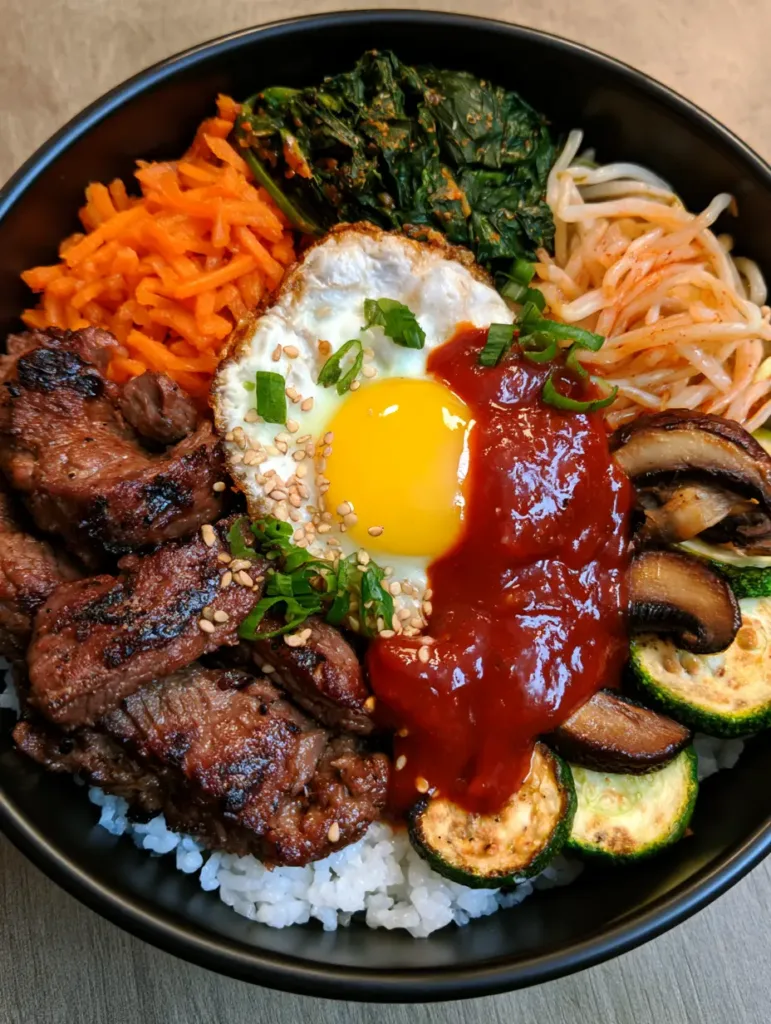
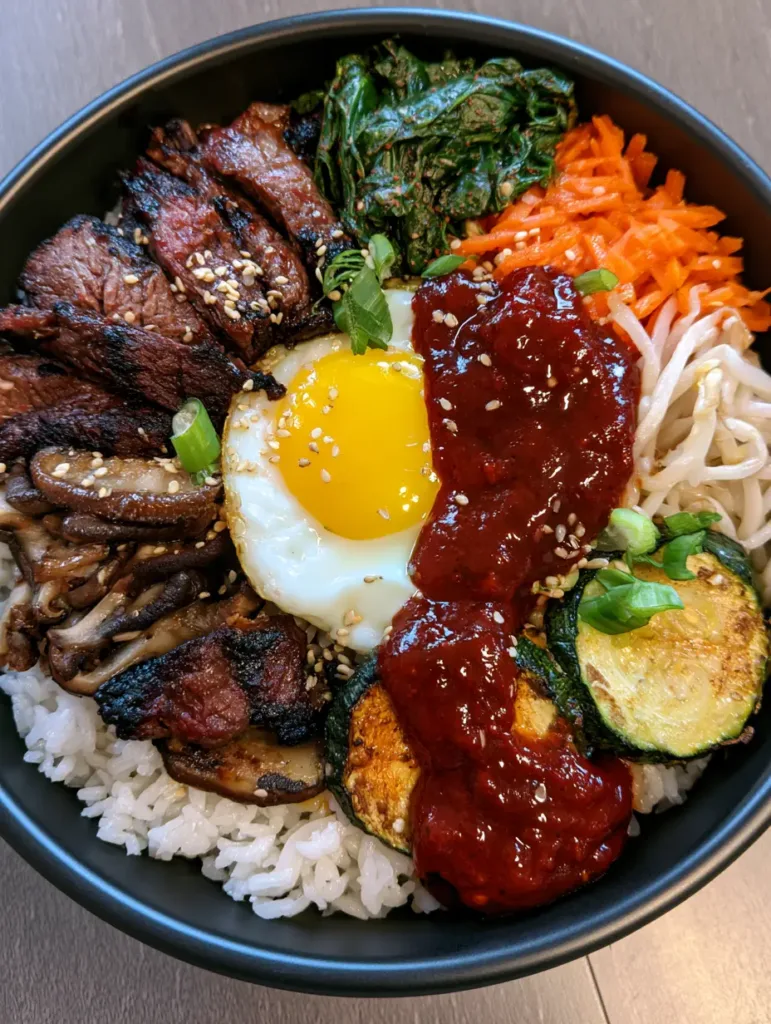
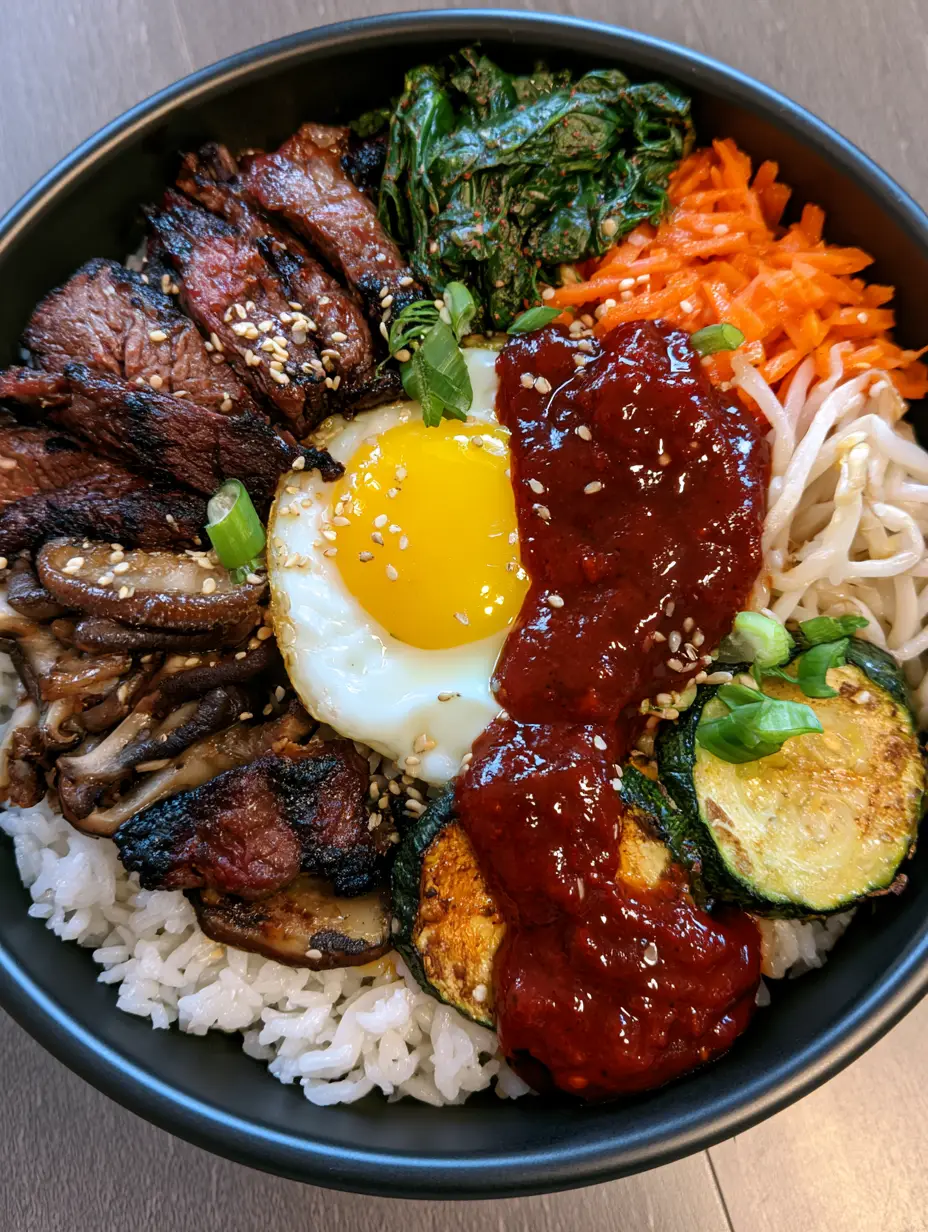
Imagine a top-down view of a traditional black stone bowl resting on a rustic wooden surface. Inside, a foundation of fluffy, steamed white rice supports a colorful wheel of perfectly prepared ingredients. From the deep brown of seared marinated beef to the bright orange of julienned carrots and the golden yellow of a runny egg yolk, every element is designed for maximum sensory impact. This handheld photo-worthy bowl is the perfect way to bring Korean high-end dining into your home kitchen.
Building a professional-grade bibimbap requires attention to detail, specifically the individual preparation of each topping. Unlike a stir-fry where everything is tossed together, this Bibimbap Recipe treats every vegetable as its own star. This ensures that when you finally mix the bowl with that glossy red gochujang sauce, every bite offers a distinct yet harmonious profile of savory, spicy, and earthy notes.
A runny egg yolk is essential for adding richness to the spicy gochujang sauce.
The Anatomy of a Perfect Korean Mixed Rice Bowl
Textural Contrast: We combine the soft “bite” of steamed white rice with the crispness of blanched bean sprouts and the tender chew of shiitake mushrooms.
Maillard Excellence: The beef isn’t just cooked; it is seared to achieve a deep charred exterior that locks in the sweet and salty marinade.
The Umami Bridge: A thick, glossy gochujang sauce provides the fermented depth required to tie the fresh vegetables and rich protein together.
Symmetry and Color: Following the traditional “Obangsaek” color theory, we utilize green, red, yellow, white, and black/brown ingredients for health and visual balance.
Visual Garnish: The final touch of toasted white sesame seeds and finely sliced green scallions provides the aromatic high notes that elevate the dish.
Essential Elements for the Perfect Korean Bowl
Short-Grain White Rice: 2 cups (400g) of dry rice. Use high-quality sushi-style or Korean short-grain rice to ensure a sticky, fluffy base that holds onto the sauce.
Marinated Ribeye or Sirloin: 1 lb (450g) of thinly sliced beef. The fat content in these cuts ensures the meat remains juicy during the high-heat searing process.
Gochujang Paste: 3 tbsp (45g) of fermented chili paste. This is the soul of the Bibimbap Recipe, providing a complex heat that cannot be substituted with standard hot sauce.
Fresh Zucchini: 1 medium (200g) zucchini. We slice these into rounds and sear them until they develop a golden-brown crust while maintaining a firm center.
Shiitake Mushrooms: 6-8 large (150g) mushrooms. Slicing these thinly and sautéing them allows them to absorb the sesame oil and provide an earthy, meaty texture.
Soybean Sprouts: 8 oz (225g) of fresh sprouts. These require a quick blanching to remove the “raw” bean taste while preserving a refreshing, watery crunch.
Fresh Spinach: 1 large bunch (300g). Once wilted and seasoned, spinach provides the essential “green” element that balances the richness of the beef.
Julienned Carrots: 2 medium (150g) carrots. Sautéing these briefly softens their structure and intensifies their natural sweetness to contrast the spicy sauce.
Invisible Essentials: You will also need 2 tbsp (30ml) of toasted sesame oil, 1 tbsp (15g) of minced garlic, and fine sea salt for individual seasoning. These “hidden” ingredients are what create the professional flavor profile found in Korean restaurants.
Tools for Culinary Precision
To achieve the visual results seen in our handheld smartphone photo, you will need a heavy-bottomed cast iron skillet or a traditional dolsot (stone bowl). A sharp chef’s knife is non-negotiable for achieving the precise julienne cuts on the carrots and zucchini. You will also need a small pot for blanching the sprouts and several small prep bowls to keep your ingredients distinct before the final assembly.
Mastering the Art of the Bibimbap Assembly
Preparing the Rice and Beef Base
Start by rinsing your white rice under cold water until the water runs clear. Cook the 2 cups (400g) of rice with 2 cups (480ml) of water in a rice cooker or heavy pot until fluffy. While the rice steams, whisk together 2 tbsp (30ml) soy sauce, 1 tbsp (15ml) sesame oil, and 1 tbsp (12g) brown sugar to marinate the sliced beef for at least 20 minutes.
Heat your skillet over high heat with 1 tbsp (15ml) of neutral oil. Add the beef in a single layer, allowing it to sit undisturbed for 2 minutes to develop that characteristic char. Toss and cook for another 60 seconds until fully browned but still tender, then set aside in a warm bowl.
The Vegetable Searing Process
In the same skillet, add a touch more oil and sear the zucchini rounds. You are looking for a deep golden color on both sides—this “sear” is what sets a gourmet Bibimbap Recipe apart from a standard home version. Next, sauté the julienned carrots with a pinch of salt for 2-3 minutes until they are vibrant and slightly softened.
For the shiitake mushrooms, sauté them until they release their moisture and begin to brown at the edges. The goal is to maximize the surface area contact with the hot pan to develop as much umami flavor as possible. If you love variety in your meals, you might find this process as satisfying as prepping a grilled shrimp bowl.
Notice the distinct sections of vegetables that create the traditional Bibimbap look.
Wilting, Blanching, and Seasoning
Bring a pot of salted water to a boil. Submerge the bean sprouts for exactly 2 minutes, then immediately plunge them into an ice bath. Squeeze out all excess moisture and toss with a teaspoon of sesame oil and a pinch of salt. This technique ensures they remain crisp and don’t become soggy in the bowl.
In the same boiling water, blanch the spinach for 30 seconds. Drain, cool, and squeeze out the water until you have a dense ball of greens. Chop the spinach coarsely and season with minced garlic and sesame oil. This “seasoned vegetable” (namul) technique is a cornerstone of Korean cuisine, much like the precision needed for high protein chickpea salad.
The Final Fry and Sauce Crafting
The centerpiece of our Bibimbap Recipe is the fried egg. Heat a small non-stick pan over medium heat and crack the egg carefully. Cook until the whites are opaque and the edges are slightly crispy, but the yolk remains bright yellow and runny. This yolk will act as a secondary sauce once the bowl is mixed.
Prepare the signature sauce by mixing 3 tbsp (45g) gochujang, 1 tbsp (15ml) sesame oil, 1 tbsp (12g) sugar, and 1 tbsp (15ml) water. The consistency should be thick and glossy, allowing it to drape over the ingredients without immediately soaking into the rice.
Professional Secrets for Kitchen Success
Temperature Control: Ensure your skillet is screaming hot before searing the beef and zucchini to prevent steaming.
Squeeze the Greens: If you don’t squeeze the water out of the spinach and sprouts, your rice foundation will become waterlogged.
Individual Seasoning: Salt every vegetable lightly as you cook it; this builds layers of flavor that a single sauce cannot provide.
The Mix: Encourage your guests to mix the bowl vigorously with a spoon until the red sauce and yellow yolk coat every single grain of rice.
Preserving the Flavors: Storage and Reheating
If you have leftovers, store the rice and each vegetable component in separate airtight containers in the refrigerator for up to 3 days. This prevents the colors from bleeding and maintains individual textures. When reheating, it is best to quickly sauté the vegetables again in a hot pan rather than using a microwave.
Avoid freezing the prepared vegetables, as the freezing and thawing process will destroy the delicate cell structures of the bean sprouts and zucchini. However, the marinated raw beef can be frozen for up to 3 months if stored in a vacuum-sealed bag. This makes it easy to whip up a fresh bowl whenever the craving for a Bibimbap Recipe hits.
Harmonious Pairings for Your Korean Feast
To round out this meal, consider serving it alongside a clear radish soup or a side of spicy kimchi. The acidity of fermented cabbage provides a perfect palate cleanser between bites of the rich, seared beef. If you are looking for a fusion experience, this dish pairs surprisingly well with a refreshing watermelon sorbet for dessert.
For those who enjoy a variety of global flavors, you might also enjoy serving this alongside mexican street corn for a truly eclectic dinner party. The creamy, charred corn complements the spicy gochujang sauce in a unique way that your guests will love.
Short-grain white rice is best because it has a slightly sticky texture that helps hold the vegetables and sauce together, unlike long-grain varieties like Basmati.
Gochujang has a medium heat with a strong fermented sweetness. If you are sensitive to spice, start with half the recommended amount and increase to taste.
Cooking them separately allows you to control the exact texture and seasoning of each ingredient, ensuring the colors stay vibrant and flavors distinct.
‘Bibim’ means mixing various ingredients, and ‘bap’ refers to rice. Literally translated, it means ‘mixed rice,’ which is why mixing the bowl before eating is essential.
The Ultimate Bibimbap Recipe Card
FL Recipes
Bibimbap Recipe: The Ultimate Korean Mixed Rice Bowl Masterclass
This authentic Bibimbap Recipe features seared marinated beef, colorful sautéed vegetables, and a runny fried egg over fluffy rice. Finished with a signature spicy gochujang sauce, it's the perfect balance of Korean flavors and textures.
1 Cast Iron Skillet For searing beef and vegetables.
1 Rice Cooker For perfect steamed white rice.
1 Chef's Knife For precise julienne cuts.
Method
Preparation
Cook 2 cups (400g) of white rice with 2 cups (480ml) water until fluffy.
Mix sliced beef with soy sauce, brown sugar, and sesame oil. Let sit for 20 minutes.
Vegetable Components
Blanch bean sprouts in boiling salted water for 2 minutes, then ice bath and season with sesame oil.
Blanch spinach for 30 seconds, squeeze dry, and season with garlic and salt.
In a hot skillet, sear zucchini rounds until golden. Sauté julienned carrots until tender-crisp.
Sauté sliced shiitake mushrooms with a pinch of salt until browned and earthy.
Final Steps
Sear marinated beef over high heat until charred and caramelized.
Fry eggs in a non-stick pan until whites are set but yolks are still runny.
Divide rice into bowls. Arrange beef and vegetables in sections on top. Place the egg in the center. Drizzle with gochujang sauce and garnish with sesame seeds and green onions.
Nutrition
Calories: 580kcalProtein: 32gFat: 22gFiber: 5g
Notes
Tip 1: Always squeeze excess water from blanched vegetables to keep the rice fluffy. Tip 2: Use high heat for the beef to achieve a smoky, charred flavor profile.
Mastering this Bibimbap Recipe is a significant milestone for any home cook looking to explore the depths of Korean cuisine. The combination of charred meats, seasoned vegetables, and that iconic runny egg yolk creates a meal that is as satisfying to look at as it is to eat. We would love to see your creations and hear how you customized your bowl!
Please leave a comment below with your favorite topping variations or any questions you have about the process. Don’t forget to follow us on Pinterest for more visually stunning recipe inspiration and share your handheld smartphone photos with our community!
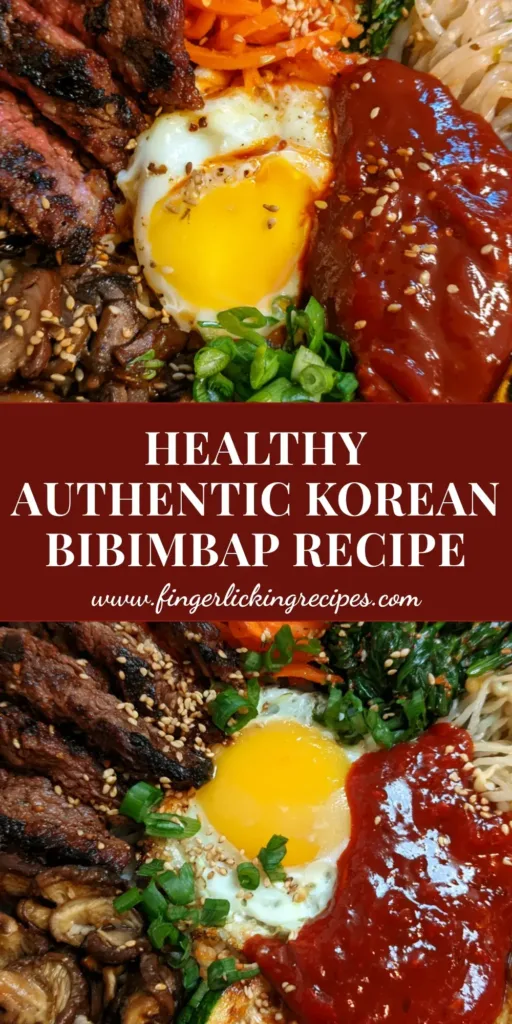
The ultimate guide to making a visually stunning and delicious Bibimbap at home.
Hi, I’m Emily Carter, and welcome to FL Recipes! I share simple, healthy recipes that make cooking easy, fun, and delicious for everyone. more about me »