There is a specific, quiet magic in a kitchen bathed in soft, natural morning light, especially when the scent of yeasty dough begins to fill the air. Making Homemade English Muffins from scratch is a culinary rite of passage that rewards the patient baker with textures and flavors no store-bought bag can replicate.
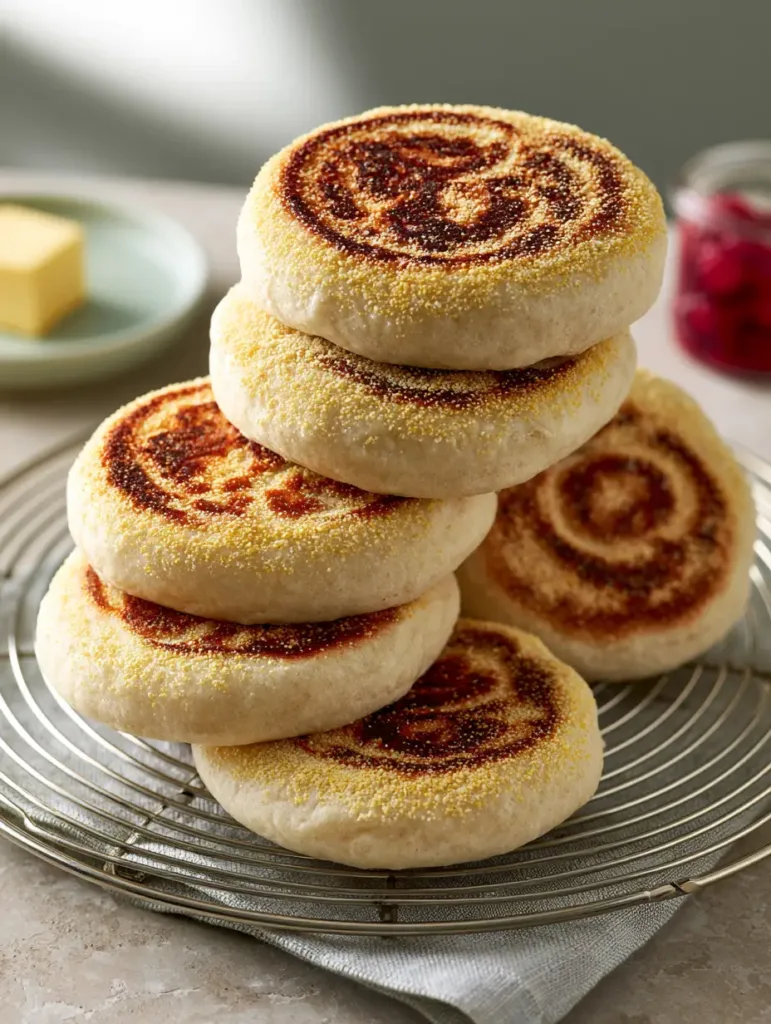
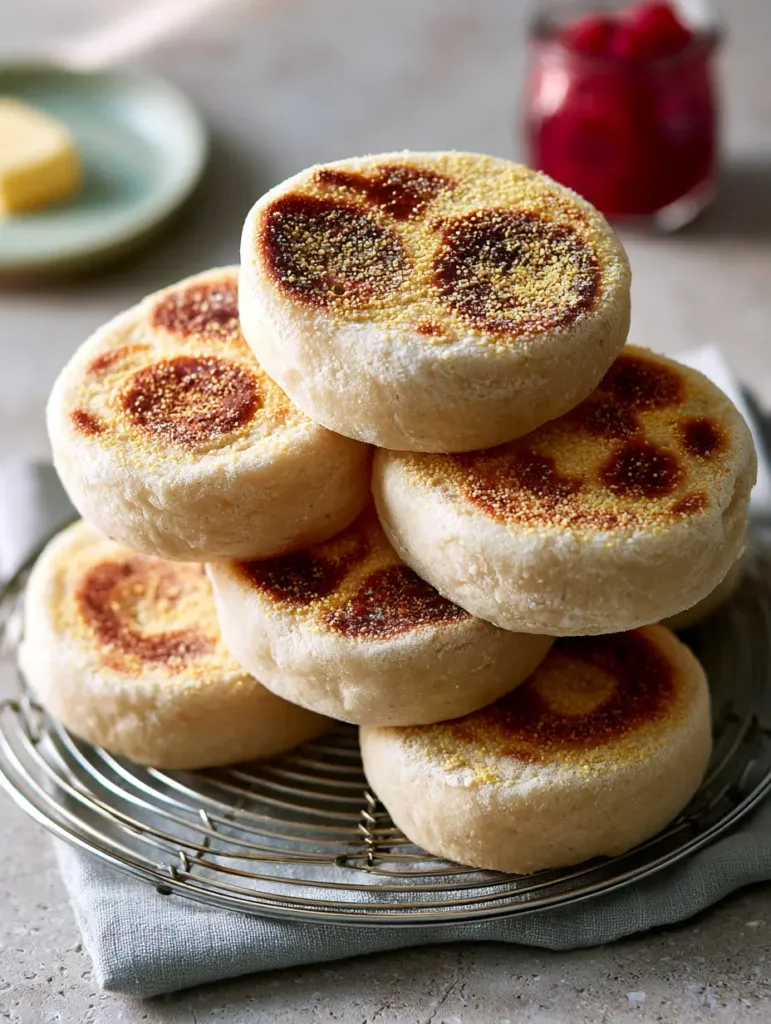
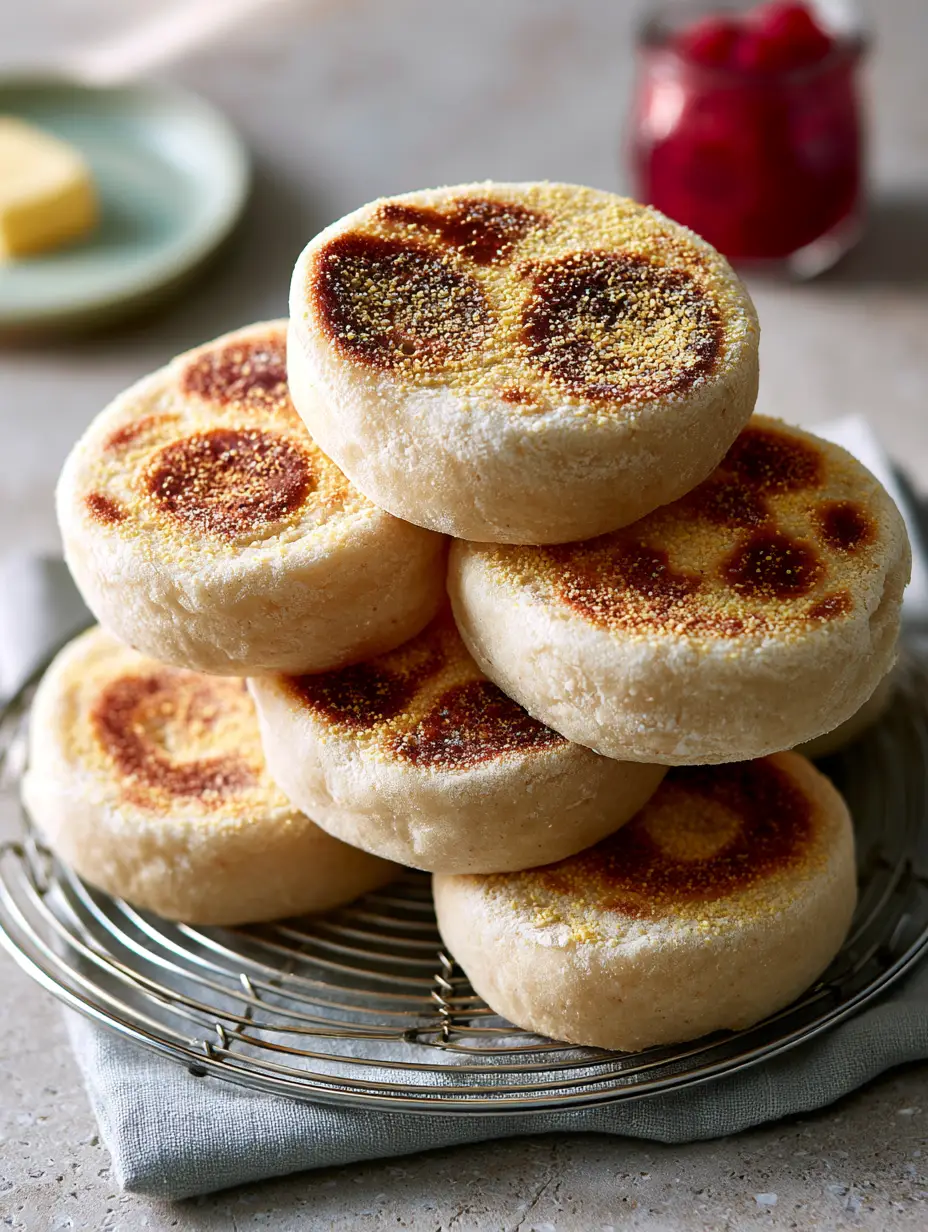
Imagine pulling a stack of five warm, pillowy muffins off a circular stainless steel wire cooling rack, their surfaces heavily dusted with fine, pale yellow cornmeal. The irregular golden-brown toasted circles on the top and bottom offer a satisfying crunch that gives way to a soft, airy interior perfect for pooling melted butter.
Whether you are preparing a weekend brunch or meal-prepping for the week ahead, these Homemade English Muffins are the cornerstone of a sophisticated breakfast. With a few simple ingredients and the right technique, you can achieve that iconic “smartphone-perfect” aesthetic right on your stone countertop.
Serving Homemade English Muffins with vibrant red berry jam and salted butter.
Why These Bakery-Style Muffins Outshine the Rest
Signature Toasted Texture: We utilize a dry-heat griddle method to create those distinct, irregular charred patterns seen in professional artisanal bakeries.
Superior Crumb Structure: Through proper hydration and a gentle fermentation process, we maximize the “nooks and crannies” that define a high-quality muffin.
Forensic Visual Appeal: Heavy dusting of pale yellow cornmeal ensures a floury, rustic finish that looks as incredible as it tastes.
Customizable Fermentation: This recipe adapts to your schedule, allowing for a quick rise or a long, cold ferment for deeper sourdough-like complexity.
Essential Elements for the Perfect Yeasted Dough
Strong Bread Flour: 3 ½ cups (450g). Bread flour provides the high protein content necessary to create a sturdy yet elastic gluten network, ensuring your Homemade English Muffins hold their round shape.
Whole Milk: 1 cup (240ml). Warmed to approximately 110°F (43°C), milk provides the fat and natural sugars needed for a soft, creamy crumb and a richer flavor profile than water alone.
Active Dry Yeast: 2 ¼ tsp (7g). This is the engine of our recipe, responsible for the leavening and the characteristic yeasty aroma that defines a fresh English muffin.
Honey or Granulated Sugar: 1 tbsp (15g). A small amount of sweetener acts as food for the yeast and assists in achieving those beautiful golden-brown toasted patterns during the searing process.
Unsalted Butter: 2 tbsp (30g), softened. Incorporating fat into the dough breaks up the gluten strands just enough to ensure the final result is pillowy and tender rather than chewy like a bagel.
Fine Yellow Cornmeal: ½ cup (80g). This is not just for flavor; a heavy coating of cornmeal prevents the dough from sticking to the griddle and provides that iconic floury, rustic visual finish.
Fine Sea Salt: 1 tsp (6g). Salt is essential for regulating yeast activity and enhancing the natural sweetness of the dairy and grain.
Large Egg: 1 unit (50g). Adding an egg introduces lecithin, which acts as an emulsifier for a more uniform, tender internal structure.
Must-Have Tools for Artisanal Results
To achieve the visual excellence of a professional photo, you will need a circular stainless steel wire cooling rack. This allows air to circulate around the hot muffins, preventing the bottoms from becoming soggy as they cool.
A heavy-bottomed cast iron skillet or griddle is non-negotiable for creating the toasted circular patterns. You may also want a 3.5-inch circular biscuit cutter if you prefer perfectly uniform edges, though hand-shaping adds a lovely rustic charm.
Finally, ensure you have a light grey linen kitchen towel nearby to cover the dough during its rise, keeping the moisture in and the drafts out.
Note the heavy dusting of yellow cornmeal that gives these muffins their authentic floury texture.
The Science of Mixing and First Fermentation
Activating the Yeast
Begin by whisking your warm milk and honey together in a large bowl. Sprinkle the active dry yeast over the liquid and let it sit for about 5-10 minutes until a foamy, frothy head develops.
This foam is a visual cue that your yeast is alive and ready to leaven your Homemade English Muffins. If the mixture remains flat, your yeast may be expired, and you should start over with a fresh batch.
Developing the Dough
Add the softened butter, egg, and half of the bread flour to the yeast mixture. Using a sturdy wooden spoon or a stand mixer with a dough hook, begin incorporating the ingredients until a shaggy mass forms.
Slowly add the remaining flour and salt, kneading for about 8 minutes. You are looking for a “pale, creamy dough base” that is slightly tacky to the touch but pulls away cleanly from the sides of the bowl.
The Bulk Rise
Lightly oil a clean bowl and place your dough inside, turning it once to coat. Cover with your linen towel and let it rise in a warm, draft-free spot for 60-90 minutes, or until doubled in size.
This stage is where the flavor develops. For an even more complex taste, you can perform this rise in the refrigerator overnight, much like you would for specialty sandwich breads.
Shaping and the Critical Cornmeal Dusting
Dividing the Portions
Gently deflate the risen dough and turn it out onto a lightly floured stone countertop. Divide the dough into 10-12 equal pieces, roughly 75g each if you are using a kitchen scale for precision.
Roll each piece into a smooth ball, then gently flatten it into a disc about 1 inch thick. This ensures your Homemade English Muffins have that perfectly round, artisanal look.
The Fine Yellow Cornmeal Coating
Prepare a baking sheet by heavily dusting it with the fine yellow cornmeal. Place each disc onto the cornmeal and sprinkle more over the tops, pressing gently so the grains adhere to the dough.
This cornmeal creates a protective barrier and contributes to the “floury, pillowy” texture described in our visual blueprint. Let the shaped muffins rest for another 30 minutes to puff up slightly.
Mastering the Toasted Golden-Brown Crust
Preheating the Griddle
Heat your cast iron skillet over medium-low heat. Do not use oil or butter in the pan; the dry heat combined with the cornmeal is what creates those irregular charred toasted patterns.
The pan is ready when a drop of water flicked onto the surface sizzles and evaporates instantly. Maintain a low temperature to ensure the interior cooks through before the exterior burns.
The Searing Process
Carefully place 3-4 muffins in the skillet, ensuring they are not crowded. Cook for about 7-9 minutes on the first side. You should hear a gentle sizzle as the moisture in the dough turns to steam.
Flip the muffins once the bottom displays a deep, golden-brown circular pattern. Cook for another 7-9 minutes on the second side until the muffins feel light for their size and sound hollow when tapped.
Cooling and Achieving the Perfect Crumb
Once cooked, transfer the stack to your circular stainless steel wire cooling rack. It is vital to let them cool for at least 20 minutes before “fork-splitting” them open.
Never use a knife to cut Homemade English Muffins. Using a fork to pry them open preserves the internal peaks and valleys, creating the ideal surface for catching melted butter and jam.
Pro Tips for Success
Control the Heat: If your muffins are browning too fast but remain doughy inside, lower the heat and cover the skillet with a lid for 2 minutes to trap steam.
The Fork-Split Method: Always use the tines of a fork to pierce the circumference of the muffin before pulling the halves apart.
Cornmeal Consistency: Use “fine” cornmeal rather than “coarse” to avoid a gritty mouthfeel while still achieving that floury visual.
Internal Temperature: For absolute certainty, a digital thermometer should read 200°F (93°C) in the center of the muffin when they are finished.
Creative Pairings and Serving Suggestions
To recreate the soft-focus background of our visual prompt, serve these warm with a square pat of salted yellow butter on a pale green ceramic plate. A small glass jar of vibrant red berry jam or preserves is the perfect tart accompaniment to the rich, toasted dough.
If you prefer a savory start, these muffins make a stellar base for a breakfast sandwich featuring savory protein fillings (coming soon) or even a modified Mexican-inspired breakfast roll (coming soon).
Store leftover Homemade English Muffins in an airtight container at room temperature for up to 3 days. Because they lack the preservatives of commercial versions, they are best enjoyed toasted after the first day.
To freeze, fork-split the muffins first, then place them in a freezer-safe bag with parchment paper between the layers. They will stay fresh for up to 3 months and can be toasted directly from the freezer.
This usually happens if the griddle temperature is too high. The outside browns before the heat reaches the center. Use medium-low heat and cook for at least 7-9 minutes per side, or finish them in the oven at 350°F for 5 minutes.
Yes, you can substitute the whole milk with unsweetened soy or oat milk, use a vegan butter alternative, and replace the egg with an extra 2 tablespoons of plant milk.
Cornmeal provides the classic ‘floury’ texture, prevents the dough from sticking to the griddle without using oil, and adds a subtle crunch that contrasts with the soft crumb.
High hydration dough and a long fermentation time create more air bubbles. Most importantly, always fork-split the muffins rather than slicing them with a knife to reveal the internal structure.
Traditionally, they are cooked entirely on a griddle or skillet. However, if your muffins are particularly thick, a 5-minute finish in the oven ensures they are fully cooked through.
The Ultimate Homemade English Muffin Recipe
The perfect stack of Homemade English Muffins, freshly toasted and ready for breakfast.
FL Recipes
Homemade English Muffins: The Ultimate Guide to Nooks and Crannies
Master the art of Homemade English Muffins with this professional guide. Achieve a soft, pillowy interior and a perfectly toasted, cornmeal-dusted crust using simple ingredients and a cast-iron skillet for authentic bakery-style results.
1 Cast Iron Skillet Used for achieving the toasted circular patterns.
1 Circular Stainless Steel Wire Cooling Rack Essential for preventing a soggy bottom texture.
1 3.5-inch Biscuit Cutter Optional, for uniform shaping.
Method
Dough Preparation
Combine warm milk and honey in a bowl; sprinkle yeast over the top and let sit for 10 minutes until foamy.
Mix in butter, egg, and flour. Knead for 8 minutes until a pale, creamy, and elastic dough base forms.
Place in an oiled bowl, cover with a grey linen towel, and let rise for 60-90 minutes until doubled in size.
Shaping and Cooking
Divide dough into 10 pieces. Flatten into discs and coat heavily with fine yellow cornmeal on both sides.
Cook on a dry cast iron skillet over medium-low heat for 8 minutes per side until irregular golden-brown toasted patterns appear.
Transfer to a circular wire cooling rack to ensure the muffins remain soft and pillowy without getting soggy.
Nutrition
Calories: 195kcalProtein: 6gFat: 4gFiber: 1g
Notes
Always fork-split your English muffins to preserve the internal texture. If the muffins brown too quickly, finish them in a 350°F (175°C) oven for 5 minutes.
Keyword Griddle Cakes,Homemade English Muffins,Nooks and Crannies,yeast bread
The perfect stack of Homemade English Muffins, freshly toasted and ready for breakfast.
Final Thoughts on Modern Scratch Baking
Mastering Homemade English Muffins is about more than just bread; it is about reclaiming the slow, intentional process of feeding yourself and your loved ones. The contrast between the toasted, cornmeal-dusted crust and the pillowy interior is a sensory experience that justifies every minute of rising time.
We invite you to share your baking results with us! Did you achieve those elusive nooks and crannies? Leave a comment below or share your photos on social media. For more visual inspiration and kitchen tips, follow us on Pinterest.
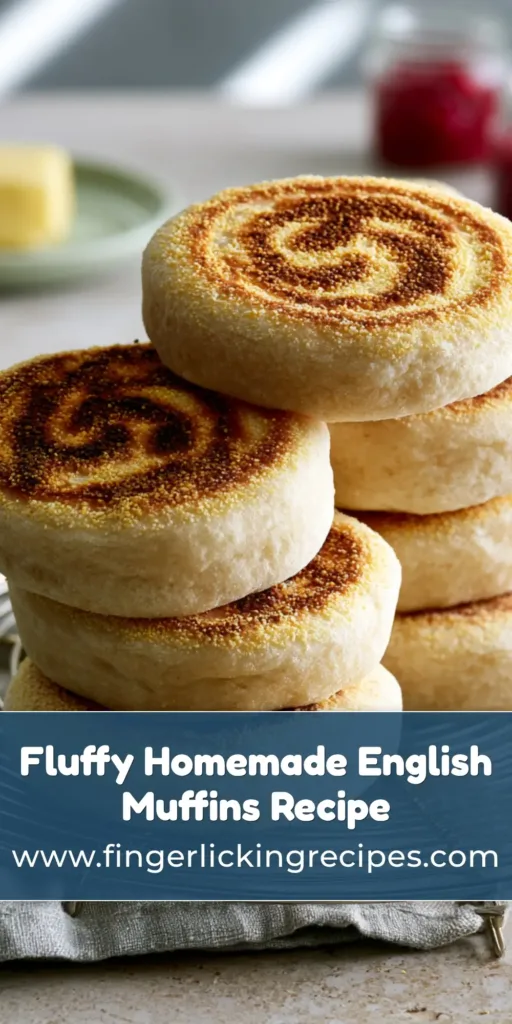
The perfect stack of Homemade English Muffins, freshly toasted and ready for breakfast.
Hi, I’m Emily Carter, and welcome to FL Recipes! I share simple, healthy recipes that make cooking easy, fun, and delicious for everyone. more about me »