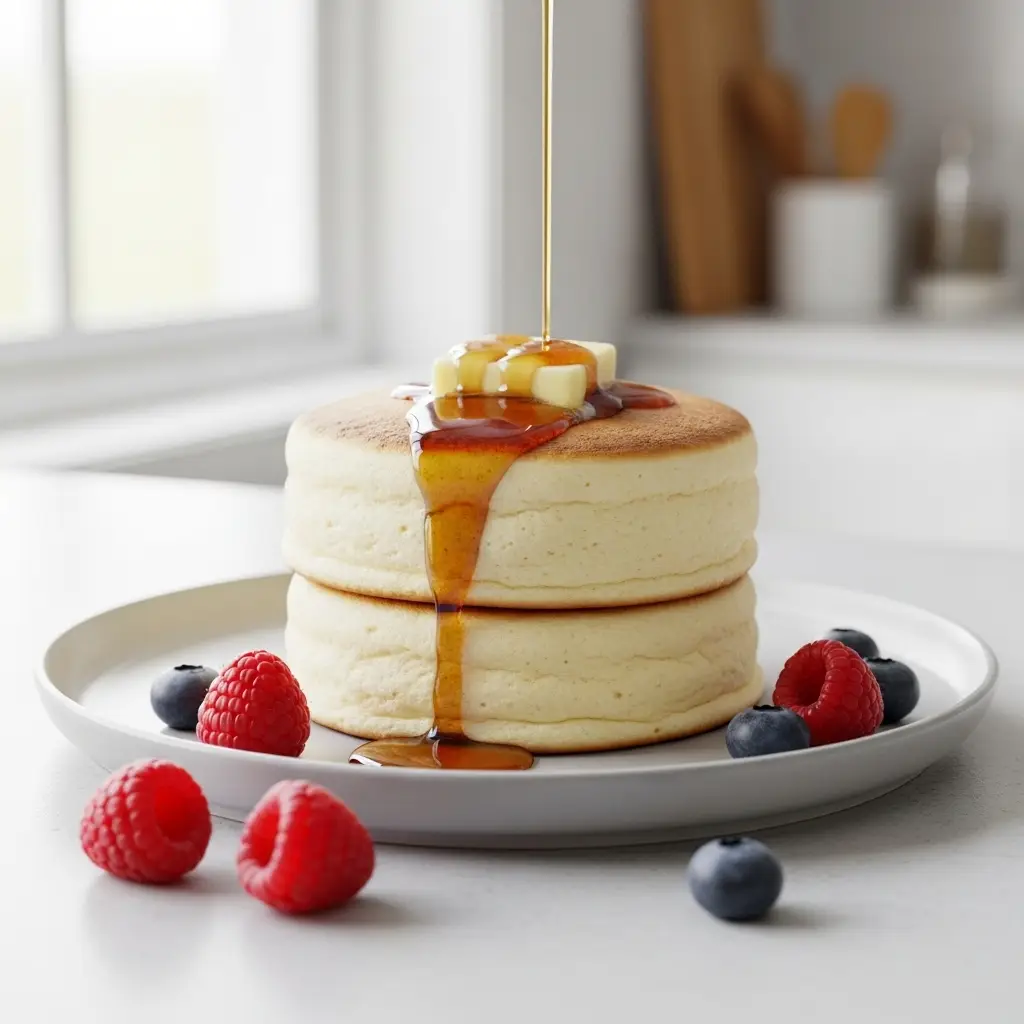
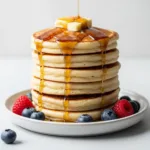
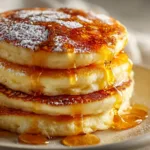
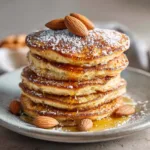
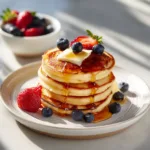
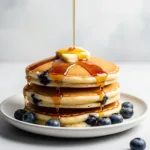
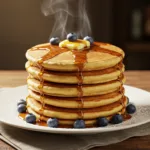
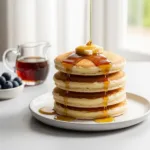
Have you ever dreamed of making those incredibly tall, jiggly, cloud-like pancakes you see online? You’ve come to the right place. This Japanese pancake recipe is your ultimate guide to creating melt-in-your-mouth soufflé pancakes that are just as fun to make as they are to eat. Forget dense, flat pancakes; we’re about to unlock the secret to airy perfection.
The magic isn’t in a long list of fancy ingredients, but in the technique. Specifically, it all comes down to creating a stable, glossy meringue and gently folding it into a simple batter. It might sound intimidating, but I’ll walk you through every step to ensure your pancakes are a towering success.
What Makes Japanese Pancakes So Special?
Unlike their thinner American cousins, Japanese pancakes, or “hottokeki” (ホットケーキ), are famous for their soufflé-like structure. They are exceptionally light, airy, and tall, with a bouncy, jiggly texture that’s incredibly satisfying. The taste is subtly sweet and eggy, making them a perfect canvas for all kinds of delicious toppings.
The secret lies in the two-part construction: a simple pancake batter made with egg yolks, and a stiffly beaten meringue made from the egg whites. When you fold the meringue into the batter, you incorporate thousands of tiny air bubbles. Cooking them low and slow with a bit of steam allows those bubbles to expand, creating that signature height and fluffy interior.
Essential Ingredients for Cloud-Like Pancakes
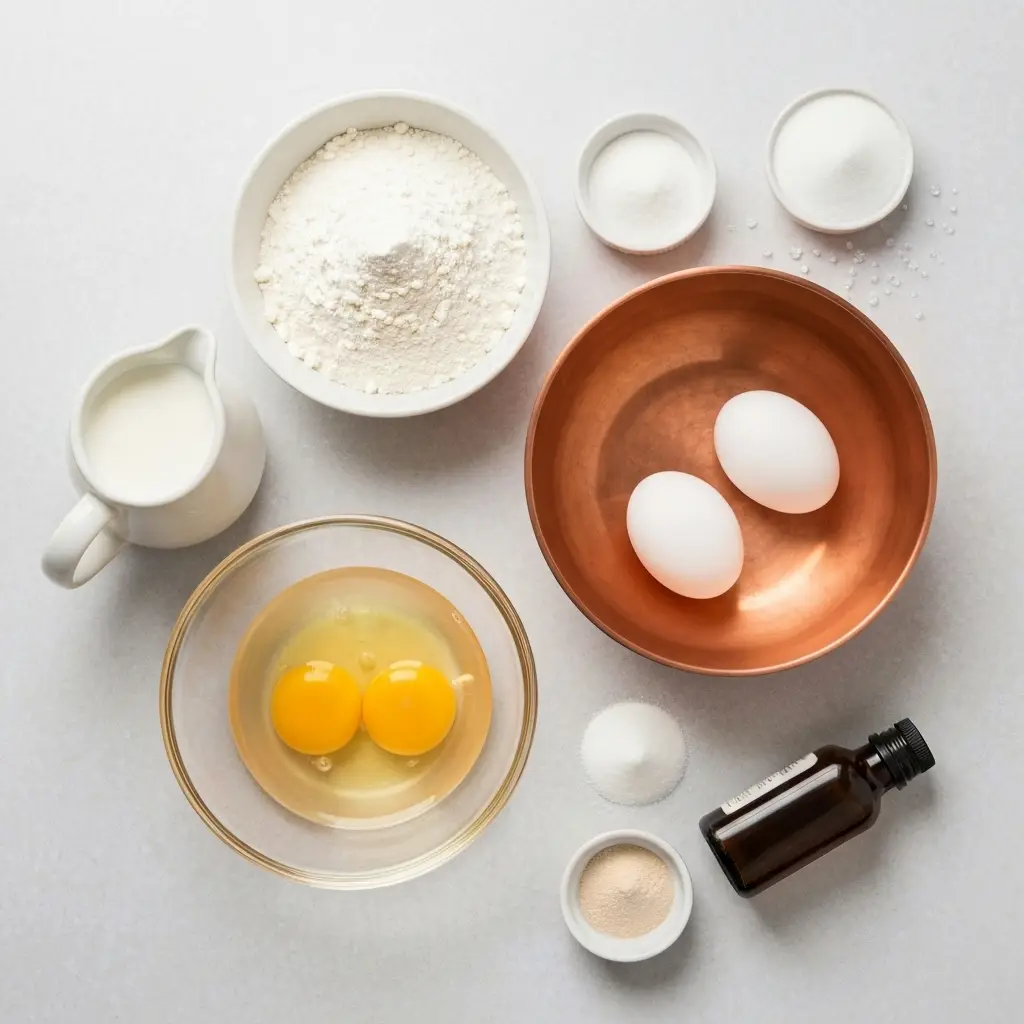
The beauty of this Japanese pancake recipe is its simple ingredient list. You probably have most of these in your kitchen right now. Quality matters, so use the freshest ingredients you can for the best flavor.
Simple ingredients, extraordinary results. Everything you need for the fluffiest pancakes.
Eggs: The star of the show. They need to be separated, as the yolks go into the batter and the whites form the meringue.
Cake Flour: This is highly recommended for the most tender, delicate crumb.
Granulated Sugar: Used to sweeten the batter and, more importantly, to stabilize the meringue.
Milk: Provides moisture and richness. Whole milk works best.
Baking Powder: Gives the pancakes an extra lift.
Vanilla Extract: Adds a beautiful, warm flavor.
Cream of Tartar: This is an acid that helps stabilize the egg whites, making your meringue stronger and less likely to collapse. A little lemon juice is a great substitute.
Neutral Oil or Butter: For greasing the pan and molds.
A Note on Flour: Cake Flour vs. All-Purpose
While you can use all-purpose flour in a pinch, I strongly recommend using cake flour. Cake flour has a lower protein content, which develops less gluten. This results in a much softer, finer, and more tender texture, which is exactly what we want for these delicate soufflé pancakes.
The Secret to a Stable Meringue
The meringue is the heart and soul of this recipe. A stable meringue is the key to tall pancakes that don’t deflate. The magic trio is: spotlessly clean equipment (any grease will ruin the meringue), an acid like cream of tartar to strengthen the egg white proteins, and adding the sugar slowly to allow it to dissolve and create a strong, glossy structure.
Do You Need Special Equipment?
To get that signature height, you’ll need a few specific tools, but don’t worry—there’s an easy DIY option if you’re missing one!
Non-stick Skillet with a Lid: A good non-stick surface is crucial. The lid is essential for trapping steam, which helps the pancakes rise.
Electric Mixer: A stand mixer or a powerful hand mixer is necessary to whip the egg whites into a stiff meringue.
Ring Molds: 3-inch wide by 2.5-inch tall (or 8cm x 6cm) metal ring molds give the pancakes their perfect shape and support them as they rise.
No Ring Molds? No Problem! (DIY Hack)
You can easily make your own molds! Simply take a long piece of parchment paper (about 18 inches), fold it lengthwise a few times to create a strip that is 2.5 inches tall, and form it into a 3-inch diameter circle. Secure the end with a staple or paperclip. Just be sure to grease the inside of your DIY mold very well!
How to Make The Best Japanese Pancake Recipe
FL Recipes
Japanese Pancake Recipe (The Ultimate Guide to Fluffy Soufflé Pancakes)
This Japanese pancake recipe is your foolproof guide to making incredibly tall, jiggly, and fluffy soufflé pancakes at home. Learn the simple secrets to a stable meringue and the perfect low-and-slow cooking technique.
3tbspcake flourSifted. See post for notes on all-purpose flour.
1/2tspbaking powder
2 1/2tbspgranulated sugar
1/4tspcream of tartaror 1/2 tsp lemon juice
1tspneutral oil or butterfor greasing
2tbspwaterfor steaming
Equipment
1 Non-stick skillet with a lid
1 Electric mixer (stand or hand)
4 Ring molds (3-inch wide, 2.5-inch tall) Or use the DIY parchment paper hack in the post.
Method
In a medium bowl, whisk together the 2 egg yolks, milk, and vanilla extract until smooth. Sift the cake flour and baking powder into the bowl and whisk gently until just combined. Do not overmix.
In a large, clean bowl with an electric mixer, beat the 2 egg whites and cream of tartar on medium speed until foamy. Slowly add the granulated sugar while beating. Increase speed to high and beat until stiff, glossy peaks form.
Gently fold about 1/3 of the meringue into the egg yolk batter to lighten it. Add the remaining meringue and fold carefully with a spatula until just a few streaks of white remain.
Set a large, lidded non-stick skillet over the lowest possible heat. Lightly grease the pan and the inside of four 3-inch ring molds. Place the molds in the warm skillet.
Divide the batter evenly among the molds, filling them about 3/4 full. Add 1 tablespoon of water to an empty part of the pan (to create steam) and immediately cover with the lid.
Cook for 9-12 minutes, or until the pancakes have risen to the top of the molds and the surface appears set.
Carefully flip the pancakes. Add another tablespoon of water to the pan and cover again. Cook for another 4-6 minutes, or until golden brown and cooked through.
Remove from the pan, carefully take off the molds, and serve immediately with your favorite toppings.
Nutrition
Calories: 155kcalProtein: 5gFat: 6gFiber: 0.5g
Notes
Cleanliness is Key: Ensure your mixer bowl and beater are completely free of any fat or grease before whipping the egg whites, or they won't form a stable meringue. Low and Slow: The lowest possible heat setting is crucial. Too much heat will cause the pancakes to burn on the outside before the inside is cooked, leading to collapse. Serve Immediately: These pancakes are best enjoyed right away as they will naturally settle as they cool.
Follow these steps carefully, and you’ll be rewarded with the most incredible pancakes. The key is to work gently and pay attention to the visual cues.
Step 1: Prepare the Batter Base
In a medium bowl, whisk together the egg yolk, milk, and vanilla extract until smooth and combined. In a separate small bowl, sift together the cake flour and baking powder. Add the dry ingredients to the wet ingredients and whisk gently until just combined. Be careful not to overmix; a few small lumps are perfectly fine.
Step 2: Whip the Perfect Meringue
In the spotlessly clean bowl of a stand mixer (or a large bowl with a hand mixer), add the egg whites and cream of tartar. Beat on medium speed until the whites become foamy and opaque. With the mixer still running, slowly sprinkle in the sugar, one tablespoon at a time. Once all the sugar is added, increase the speed to high and beat until the meringue is glossy and holds stiff peaks. This means when you lift the whisk, the peak that forms stands straight up without curling over.
Step 3: Gently Fold, Don’t Stir!
This is the most critical step! Take about one-third of your stiff meringue and add it to the yolk batter. Use a spatula to fold it in to lighten the batter. Now, add the remaining meringue to the bowl. Gently fold everything together by running your spatula down the side of the bowl and bringing it up through the middle. Rotate the bowl and repeat until just a few streaks of white remain. You want to keep as much air in the batter as possible.
Step 4: The Low & Slow Cooking Method
Place your large, lidded skillet over the lowest possible heat. Lightly grease the pan and the inside of your ring molds. Place the molds in the pan to heat up for a minute. Fill each mold about three-quarters full with the batter. Place the lid on the pan, add 1 tablespoon of water into an empty space in the pan (not into the molds!), and immediately cover. The water creates steam to help the pancakes rise.
Cook for 9-12 minutes on the first side. The pancakes should rise to the top of the molds and the top surface should look set. Carefully and quickly flip the pancakes, add another tablespoon of water, cover, and cook for another 4-6 minutes, until golden and cooked through. Serve immediately!
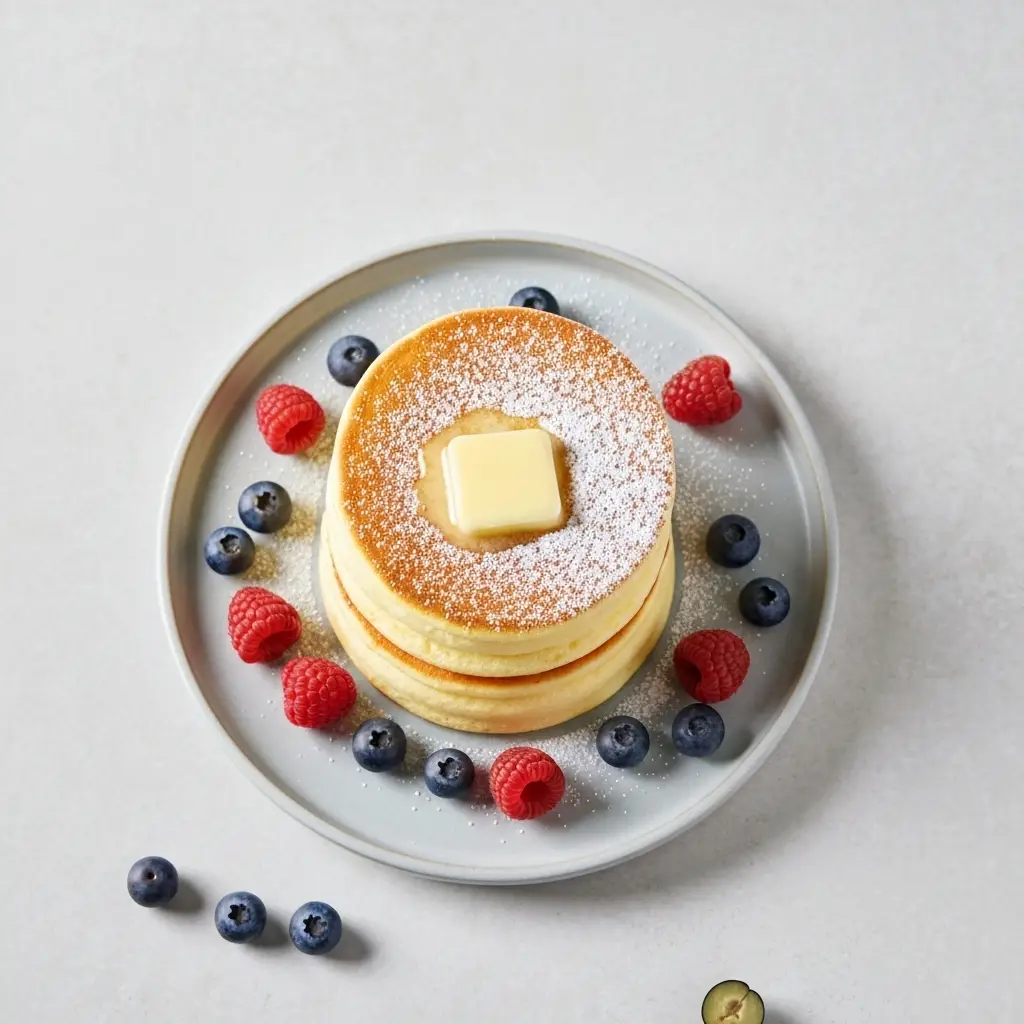
A bird's-eye view of pure, fluffy perfection.
Tips for Tall, Fluffy Pancakes That Don’t Deflate
Measure Your Flour Correctly: Spoon the flour into your measuring cup and level it off. Don’t scoop directly from the bag, as this compacts the flour and can make your pancakes dense.
Don’t Compromise on the Meringue: Stiff peaks are non-negotiable. If your meringue is soft, your pancakes won’t have the structure to stand tall.
Fold with a Light Hand: Over-folding will deflate all the air you just whipped into the meringue. Stop as soon as it’s mostly combined.
Lowest Heat is Key: If the heat is too high, the outside will burn before the inside has a chance to cook and set, causing them to collapse.
Serve Immediately: Like a true soufflé, these pancakes are at their peak right out of the pan. They will naturally settle a little as they cool, so enjoy them hot!
Serving and Topping Suggestions
These pancakes are a delight on their own, but toppings make them even better! Try these classic and creative ideas:
Classic: A pat of salted butter, a generous drizzle of maple syrup, and a dusting of powdered sugar.
Fresh & Fruity: A pile of fresh berries, sliced bananas, or a dollop of fruit compote.
Decadent: A large spoonful of freshly whipped cream, chocolate sauce, or salted caramel.
Storage and Reheating
Japanese soufflé pancakes are definitely best enjoyed fresh. However, if you have leftovers, you can store them in an airtight container in the refrigerator for up to 2 days. To reheat, place them on a plate and microwave in 15-second intervals until just warm. They won’t be as tall or airy as when they were fresh, but they will still be delicious.
Pancakes usually deflate for two main reasons: an unstable meringue or improper cooking. Ensure your egg whites are beaten to stiff, glossy peaks. Cook the pancakes on very low heat with steam (a little water in the covered pan) to allow the inside to set before the outside browns.
Yes! You can create DIY molds by folding a long strip of parchment paper into a 2.5-inch tall band, forming it into a 3-inch circle, and securing it with a staple or paperclip. Be sure to grease the inside well.
The main difference is texture and height. Japanese pancakes have a meringue folded into the batter, which makes them incredibly tall, light, and airy, like a soufflé. Regular American pancakes are denser and flatter.
You can, but the texture won’t be as delicate. Cake flour has a lower protein content, which results in a softer, more tender pancake. If using all-purpose flour, your pancakes may be slightly chewier.
Store leftovers in an airtight container in the refrigerator for up to 2 days. To reheat, warm them in the microwave in 15-second intervals. Note that they will lose some of their signature height and airy texture upon reheating.
More Breakfast Recipes to Try
If you loved the process of making these show-stopping pancakes, you’ll enjoy exploring other breakfast favorites. For a more traditional morning meal, try our classic fluffy pancakes or some tangy buttermilk pancakes. If you’re feeling adventurous, you might also love making delicate delicate French crêpes (coming soon).
Your Guide to Perfect Japanese Pancakes
Congratulations, you now have the ultimate Japanese pancake recipe! Remember that practice makes perfect, and the key takeaway is to respect the meringue and cook low and slow. We are confident this guide will help you achieve pancake perfection right in your own kitchen.
If you make this recipe, we’d love to see it! Leave a comment below or tag us on Pinterest. Happy cooking!
Hi, I’m Emily Carter, and welcome to FL Recipes! I share simple, healthy recipes that make cooking easy, fun, and delicious for everyone. more about me »