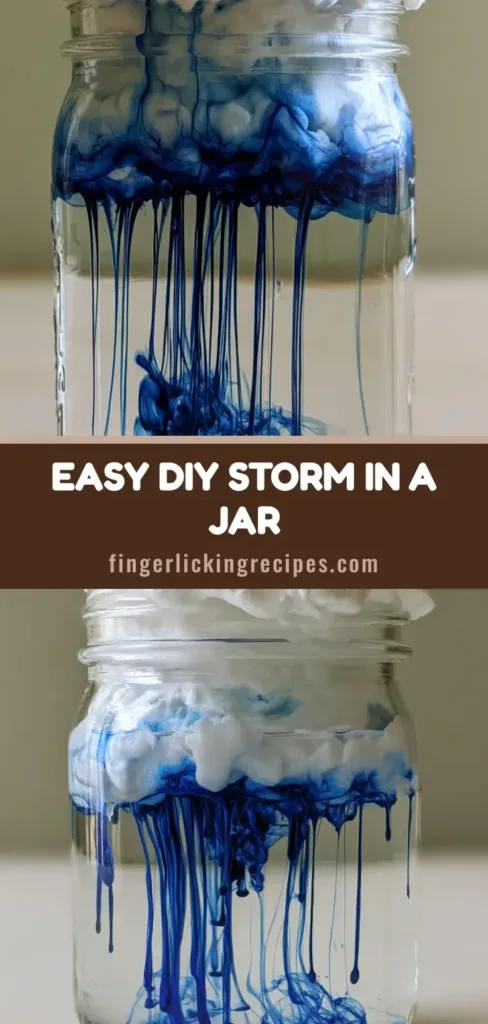
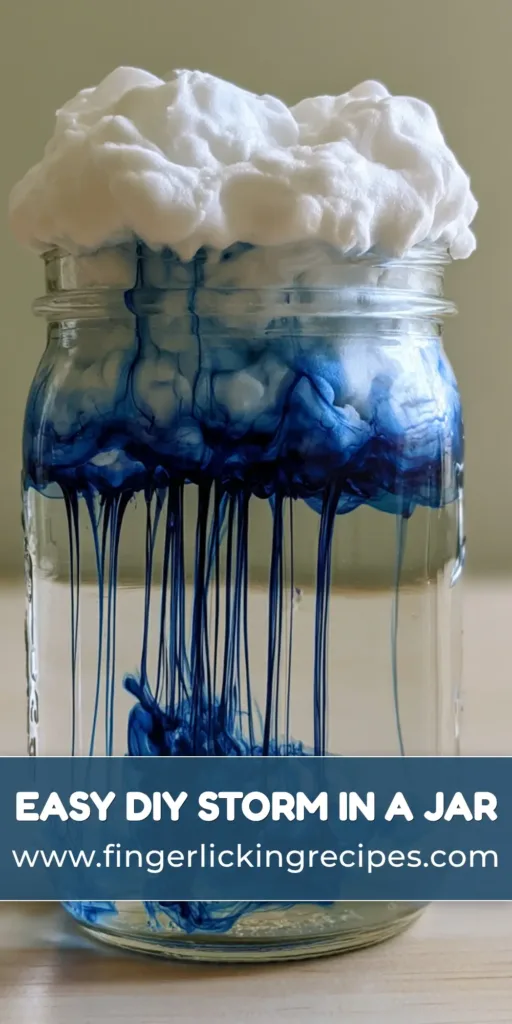
Creating a Static Electricity Storm in a Jar is more than just a simple afternoon activity; it is a breathtaking visual journey into the world of meteorology and fluid dynamics. This experiment captures the exact moment a storm breaks, using common household items to simulate the weight of the atmosphere and the beauty of precipitation.
The visual contrast between the billowy white “clouds” and the sharp, piercing blue “rain” creates a handheld smartphone-style aesthetic that is as educational as it is Instagram-worthy. Whether you are a parent looking for a teaching tool or a curious cook who loves the science of liquids, this project delivers instant gratification.
By mimicking the density changes found in our own atmosphere, you can witness the descent of blue liquid plumes that look like frozen lightning or rushing rain. Let’s dive into the sensory-rich process of building your own miniature storm on your kitchen counter.
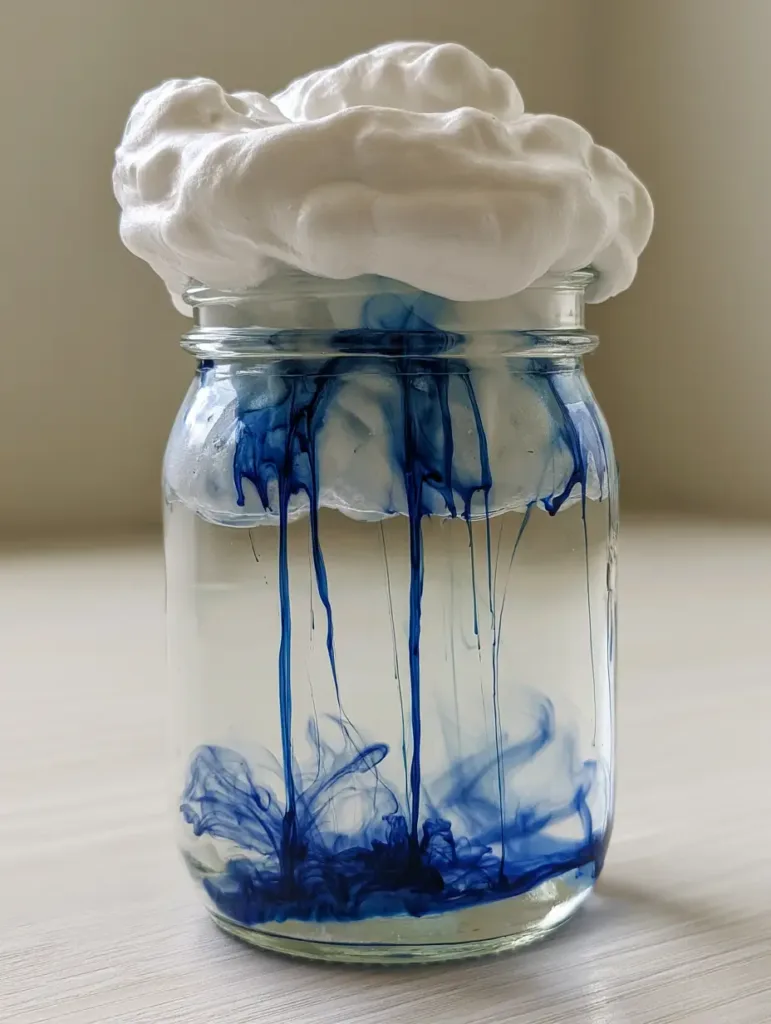
Why This Science Experiment Captures the Imagination
- Instant Visual Feedback: Watch in real-time as concentrated blue droplets pierce through the white foam, creating long, thin vertical streaks.
- Tactile Sensory Experience: The thick, opaque layer of billowy shaving cream offers a dense, pillowy texture that perfectly resembles a cumulus storm cloud.
- Atmospheric Realism: Using filtered water ensures a transparent “sky,” allowing every swirling blue plume to be seen with high-definition clarity.
- Foundational Science: It perfectly demonstrates how density and saturation work together to trigger a “storm” once the cloud can no longer hold the weight.
Atmospheric Essentials for Your Science Storm
3 cups (720ml) Filtered Water: The water serves as our transparent atmosphere. Using filtered water prevents mineral cloudiness, ensuring your blue streaks remain sharp and distinct against the light wooden surface backdrop.
1 cup (240ml) White Shaving Foam: Ensure you use the thick, billowy white foam variety, not the gel. This creates the dense, opaque layer that sits atop the water, mimicking a heavy storm cloud ready to burst.
2 tbsp (30ml) Blue Liquid Food Coloring: This is the “static” or rain of our storm. The concentrated blue droplets provide the weight needed to break the surface tension of the foam and create those iconic swirling plumes.
1 pinch (1g) Fine Sea Salt (Optional): While not always required, a tiny pinch of salt can increase the density of the coloring, helping it drop more rapidly through the “cloud” layer for a more dramatic effect.
Essential Tools for Precision Observation
To achieve the look of an unedited, soft-lit natural daylight photo, you will need a 32 oz (950ml) clear glass mason jar. The height of the mason jar is crucial because it provides enough vertical space for the blue streaks to develop into complex swirling patterns before hitting the bottom.
You will also want a small dropper or a teaspoon to control the placement of your food coloring. Placing the jar on a neutral, light-colored wooden surface will help reflect the natural light upwards, making the blue liquid pop against the transparent water.
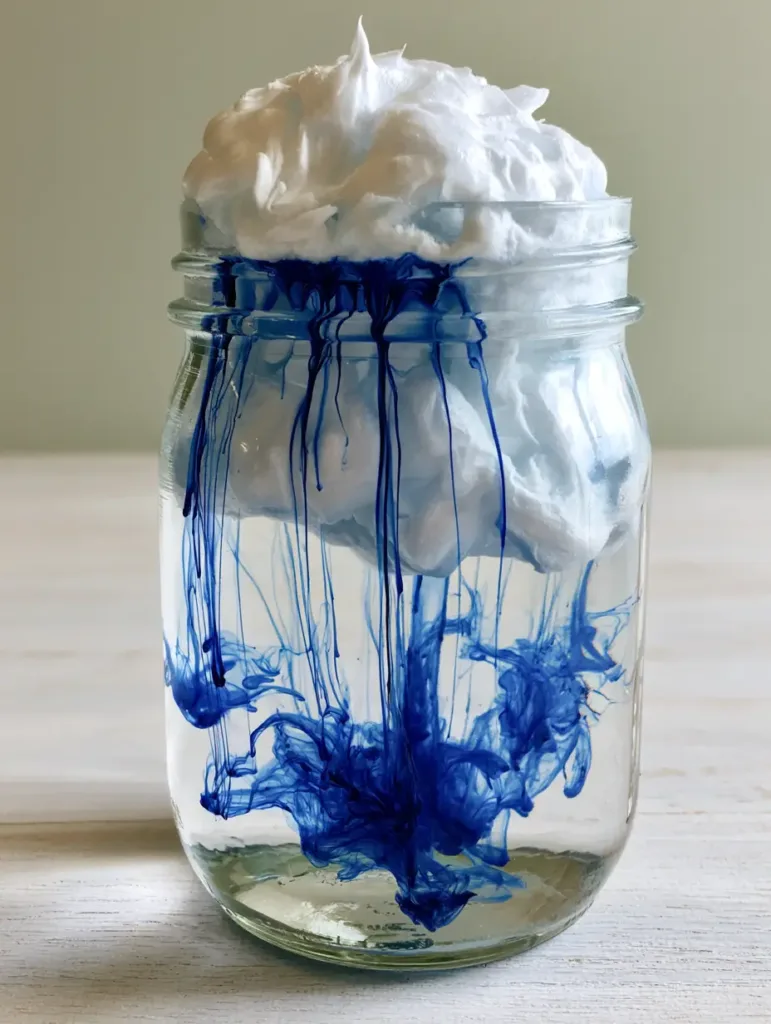
Step-by-Step Visualization: Building the Storm
Constructing the Transparent Atmosphere
Begin by filling your clear glass mason jar exactly three-quarters full with your filtered water. You want enough “airspace” at the top to accommodate the cloud layer without it overflowing.
The water should be room temperature to avoid condensation on the outside of the glass, which would ruin the clear view of your descending plumes. Ensure the water is completely still before moving to the next step.
Generating the Billowy Storm Cloud
Shake your shaving foam vigorously to ensure it is light and airy. Carefully spray a thick, opaque layer of foam directly onto the surface of the water, filling the remaining quarter of the jar.
The foam should sit high above the rim like a dense, billowy cloud. Look for that “billowy” texture described in the visual blueprint—it should look like a miniature cumulus cloud hovering over a calm sea.
Triggering the Blue Precipitation Plumes
Using your dropper, begin to add concentrated blue food coloring droplets onto the top of the shaving foam. Focus the droplets in the center to create a heavy “core” for your storm.
Wait for about 30 to 60 seconds. As the coloring saturates the foam, you will see the first long, thin vertical streaks begin to pierce the bottom of the “cloud” and descend into the clear water below.
Observing the Fluid Dynamics
As the blue liquid descends, it will begin to swirl and plume. This is where the magic happens—the streaks will transform into intricate, swirling blue liquid patterns that mimic the chaotic energy of a static electricity storm.
Watch for the sensory cues: the way the blue “rain” billows outwards as it hits the cooler water and the rhythmic movement of the plumes as they travel toward the bottom of the jar.
Expert Tips for the Most Dramatic Visuals
- Avoid Over-Mixing: Once the “storm” starts, do not shake or stir the jar. The beauty of the Static Electricity Storm in a Jar lies in the natural, gravity-fed streaks.
- Lighting is Key: Position your jar near a window with soft natural daylight. This highlights the transparency of the water and the deep contrast of the blue coloring.
- Dilution Control: If your coloring is too thick and won’t drop, mix 1 tbsp (15ml) of food coloring with 1 tsp (5ml) of water in a small bowl before adding it to the foam.
- Patience for Plumes: The best swirling patterns often happen 2-3 minutes after the first drop. Let the physics work at its own pace.
Maintenance and Safe Disposal
This experiment is temporary and will eventually turn the water a solid, murky blue. To maintain the visual integrity for photos, capture your shots within the first 5 minutes of the storm’s peak. When finished, simply pour the contents down the drain; the shaving foam and food coloring are non-toxic and water-soluble.
If you want to try a second “storm,” be sure to rinse the mason jar thoroughly with warm soapy water to remove any oily residue from the shaving cream, ensuring the glass is crystal clear for your next attempt.
What to Enjoy While You Observe
Since this Static Electricity Storm in a Jar takes a few minutes to fully develop, it is the perfect time to prep a quick and delicious meal. If you are doing this as a family activity, you might want something hearty and fast like a savory egg roll in a bowl (coming soon) or a comforting bubble up pizza casserole (coming soon).
For those who enjoy a bit of heat to match the “stormy” theme, consider pairing your science afternoon with a roasted jalapeno cowboy cream cheese (coming soon) dip. If you prefer a lighter, more refreshing pairing, a peach watermelon salad provides a beautiful color contrast to your blue storm jar.
Frequently Asked Questions
If the food coloring is stuck, your shaving foam layer may be too thick or the coloring too light. Try diluting the coloring with a few drops of water or gently adding a pinch of salt to increase its density.
Gel food coloring is often too thick to move through the foam. For the best vertical streaks and plumes, mix the gel with a tablespoon of water first to create a liquid consistency.
The most vibrant swirling plumes and thin streaks last for about 5-10 minutes. After that, the water will gradually become a uniform blue as the coloring fully disperses.
Yes, standard white shaving foam is generally safe for skin contact, but ensure children do not ingest it and avoid contact with eyes due to the soap content.
This happens due to fluid dynamics and density. The food coloring is denser than the water, and as it descends, it creates small vortexes that appear as billowy plumes.
The Ultimate Static Electricity Storm in a Jar Recipe
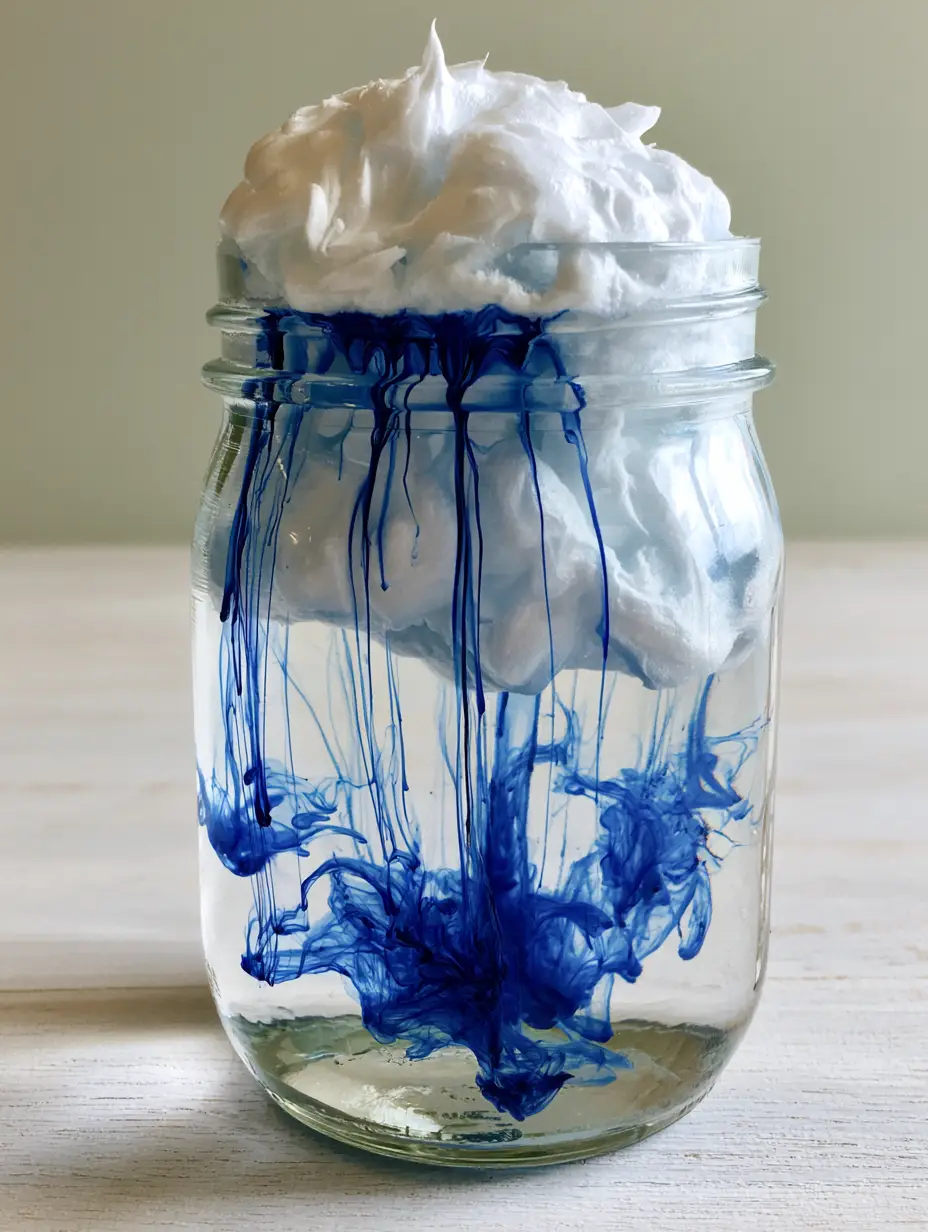
Static Electricity Storm in a Jar: A Mesmerizing Atmospheric Science Experiment
Ingredients
Equipment
Method
- Fill the clear glass mason jar three-quarters full with 3 cups (720ml) of filtered water. Ensure the water is still and room temperature.
- Spray a thick layer of white shaving foam (1 cup/240ml) on top of the water until it reaches the rim, creating a billowy cloud texture.
- Using a dropper, add 2 tbsp (30ml) of blue food coloring to the top of the foam. Watch for the color to saturate and break through the bottom.
- Monitor the long, thin vertical streaks as they descend into the clear water, forming swirling blue plumes and storm-like patterns.
Notes
Add the food coloring slowly to see more distinct vertical streaks.
Tried this recipe?
Let us know how it was!
Join the Storm Chasing Community!
Creating this Static Electricity Storm in a Jar is a reminder of how beautiful science can be when we take the time to look closely. We hope this guide helps you create a stunning visual masterpiece in your own kitchen. Did your blue plumes swirl in a unique way? We would love to hear about your results!
If you enjoyed this experiment, please leave a comment below and share your photos. Don’t forget to follow us and save this project to your favorite boards on Pinterest so you can find it for your next rainy day activity!