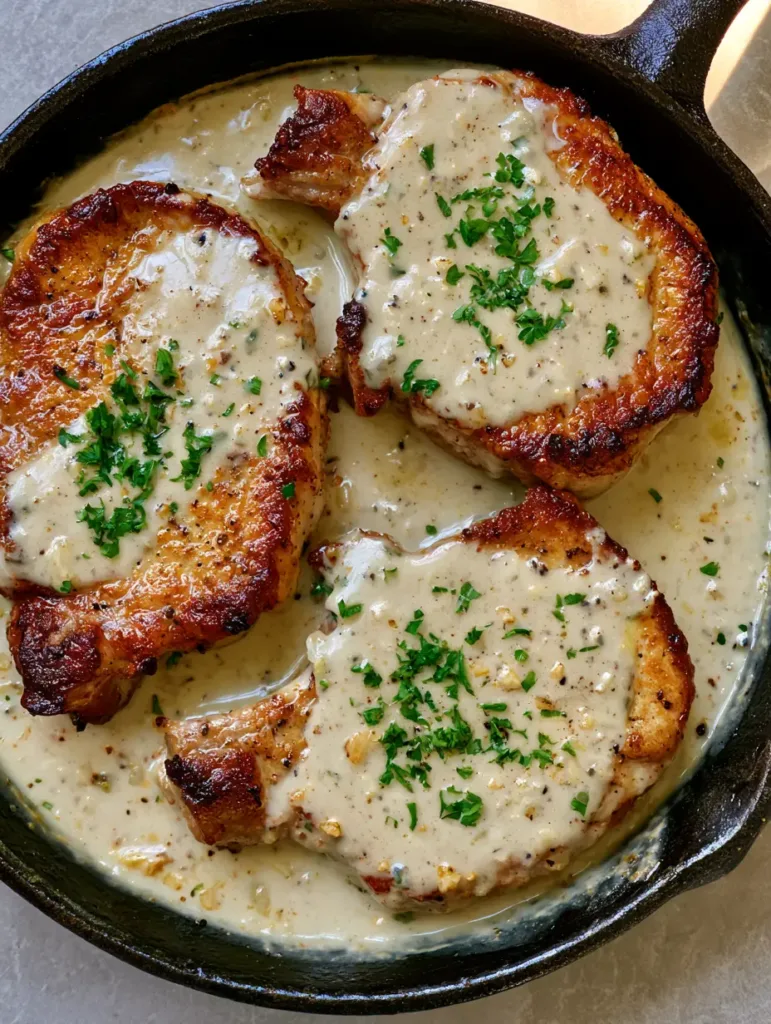
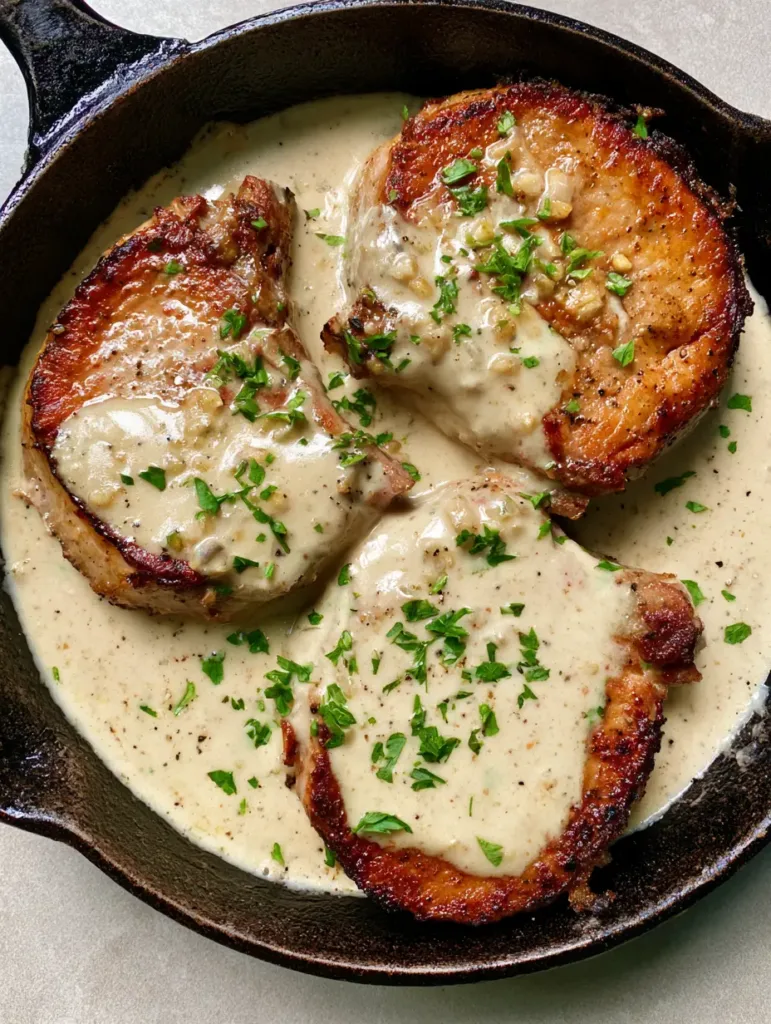
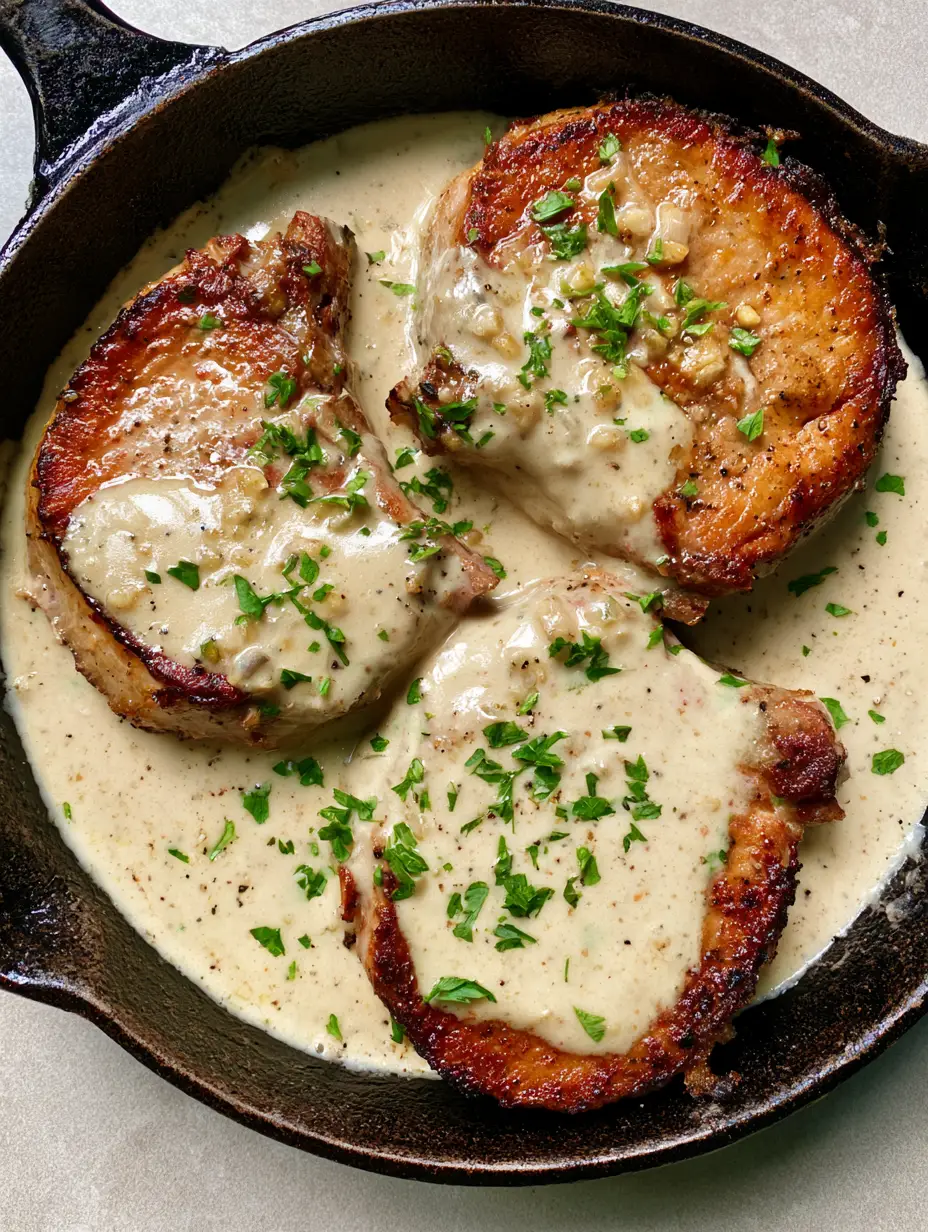
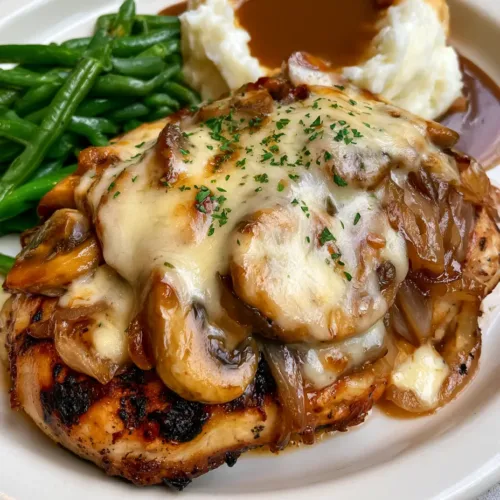
There is nothing quite as satisfying as the sizzle of meat hitting a hot pan, especially when the end result is as visually stunning as these Creamy Garlic Pork Chops. This recipe isn’t just about feeding a family; it is about mastering the art of the perfect sear and the velvet-smooth emulsion of a restaurant-quality cream sauce. By the time you finish, you will have three thick, golden-brown pork chops nestled in a pool of ivory-colored garlic sauce that looks exactly like a professional food photograph.
When you look at a top-down view of a rustic black cast iron skillet, the contrast is breathtaking. The deep brown caramelized edges of the pork pop against the light, glossy cream sauce. Sprinkled with cracked black pepper and a generous handful of bright green parsley, this dish is a sensory explosion. Whether you are a seasoned home cook or just starting your culinary journey, these Creamy Garlic Pork Chops provide a reliable, high-impact dinner that feels like a celebration.
We have designed this guide to walk you through the forensic details of the cook. From achieving that specific “ivory” sauce tone to ensuring your garlic bits remain tender rather than bitter, every step is scientifically calibrated for success. Let’s dive into the mechanics of the perfect skillet dinner.
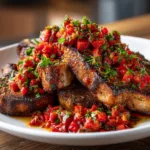
A stunning, rustic presentation of Creamy Garlic Pork Chops ready for the table.
Why These Golden Skillet Pork Chops Are a Weeknight Triumph
Visual Perfection: The recipe achieves a specific “ivory” gloss in the sauce, speckled with visible minced garlic bits that look as good as they taste.
Maillard Reaction Mastery: We focus on high-heat searing to create that distinct brown caramelized crust that locks in moisture.
Textural Harmony: The crunch of cracked black pepper and the freshness of finely chopped parsley cut through the richness of the heavy cream.
One-Pan Efficiency: Using a single rustic black cast iron skillet ensures maximum flavor retention through deglazing while minimizing cleanup.
Essential Components for This Creamy Garlic Pork Chops Recipe
Every ingredient in this list serves a specific culinary and visual purpose. To achieve the result seen in our professional blueprints, do not skip the foundational elements like patting the meat dry or using fresh aromatics.
Thick-Cut Pork Chops: Use 3 thick pork chops (about 1 inch or 2.5cm thick). The thickness is crucial to ensure the meat stays juicy while the exterior reaches a deep golden-brown sear.
Kosher Salt and Coarse Black Pepper: You will need 1 tsp (6g) salt and 1/2 tsp (2g) cracked black pepper. The coarse pepper provides the visual “specks” in the sauce described in our visual blueprint.
High-Smoke Point Oil: 1 tbsp (15ml) of avocado or grapeseed oil. You need an oil that can withstand the intense heat required to caramelize the pork edges without smoking out your kitchen.
Unsalted Butter: 2 tbsp (30g) of butter. Butter adds a nutty depth to the sauce and helps the garlic soften into the “minced bits” required for the ivory sauce texture.
Fresh Garlic Cloves: 6 cloves, finely minced. We are looking for distinct garlic bits, so avoid using a paste; the texture of minced garlic is key to the visual appeal.
Chicken Broth or Dry White Wine: 1/2 cup (120ml). This is the deglazing agent that lifts the brown bits (fond) from the skillet, integrating them into the sauce for a complex flavor profile.
Heavy Cream: 1 cup (240ml) of heavy cream. This is what creates that thick, glossy, ivory-colored finish that drapes over the meat.
Fresh Parsley: 2 tbsp (5g) finely chopped. The bright green color is the final “pop” that finishes the dish, providing a necessary herbal contrast to the rich garlic cream.
The Right Tools for a Professional Skillet Finish
To recreate the handheld smartphone photo aesthetic of a rustic kitchen, your equipment matters. A 12-inch rustic black cast iron skillet is the non-negotiable hero of this recipe. Cast iron provides superior heat retention, which is the only way to get those distinct brown caramelized edges on the meat.
You will also need a pair of heavy-duty tongs for flipping the meat without piercing the surface. Piercing the meat lets juices escape, which ruins the sear. Finally, a sharp chef’s knife is required to get that “finely chopped” look for the parsley, ensuring it scatters evenly across the skillet rather than clumping.
The Anatomy of the Perfect Sear: Step-by-Step
1. Prepping the Pork for Maximum Crust
Start by taking your pork chops out of the refrigerator 20 minutes before cooking. Cold meat hitting a hot pan causes the muscle fibers to tense up, leading to a tough result. Use a paper towel to pat each chop bone-dry. Moisture is the enemy of the sear; if the meat is wet, it will steam rather than brown.
Season generously with salt and half of the cracked black pepper on both sides. Press the seasoning into the meat so it adheres during the high-heat transition. This is the foundation of those golden-brown pork chops you see in the skillet.
2. Achieving the Golden-Brown Caramelization
Place your rustic black cast iron skillet over medium-high heat. Add the oil and wait until it begins to shimmer and show faint wisps of smoke. Carefully lay the three pork chops into the pan. You should hear a loud, aggressive sizzle immediately.
Do not move the chops for at least 4-5 minutes. You are waiting for the Maillard reaction to work its magic. Use your tongs to peek underneath; once you see a deep, even golden-brown crust, flip them. Sear the other side for another 4 minutes until the edges are beautifully caramelized. Remove the pork to a plate and tent loosely with foil.
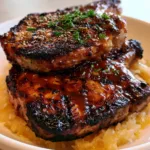
Look for these distinct brown caramelized edges when searing your pork.
3. Crafting the Thick Garlic Cream Sauce
Lower the heat to medium. There should be brown bits stuck to the bottom of the skillet—this is liquid gold. Add the butter and the minced garlic. Sauté the garlic for only 1 minute. You want the bits to be soft and fragrant, but they must not turn dark brown, or they will taste bitter.
Pour in the chicken broth or wine to deglaze. Use a wooden spoon to scrape every bit of flavor off the bottom. Pour in the heavy cream and the remaining cracked black pepper. Simmer for 3-5 minutes until the liquid reduces into a thick, glossy, ivory-colored cream sauce.
4. The Final Assembly and Visual Cues
Slide the pork chops and any accumulated juices back into the skillet. Spoon the thick sauce over the meat, ensuring it drapes elegantly over the golden crust. Let it simmer for just 1-2 minutes until the pork reaches an internal temperature of 145°F (63°C).
Turn off the heat. This is where you finalize the visual blueprint. Scatter the finely chopped fresh green parsley across the top of the meat and sauce. The contrast of the green against the ivory sauce and black skillet is what makes this dish look like a professional handheld photo.
Expert Tips for Culinary Forensic Accuracy
The Sauce Color: If your sauce is turning too brown, you likely let the garlic or the deglazing liquid reduce too far. To maintain that “ivory” look, keep the heat at a steady simmer, not a rolling boil.
Resting is Key: Never cut into the pork immediately. Letting it rest for 5 minutes allows the juices to redistribute, ensuring the meat is tender when served.
Garlic Texture: For those “minced garlic bits” mentioned in the blueprint, use a knife to hand-mince rather than a garlic press. A press creates a paste that disappears into the sauce; a knife leaves the beautiful texture we want.
Skillet Maintenance: Ensure your cast iron is well-seasoned. A dull, grey pan won’t provide the same “rustic black” contrast as a well-oiled, dark skillet.
Perfect Pairings for a Complete Skillet Meal
These Creamy Garlic Pork Chops are incredibly rich, so you want sides that can either soak up that ivory sauce or provide a crisp contrast. We highly recommend serving this alongside garlic parmesan smashed potatoes (coming soon), which echo the garlic notes in the main dish perfectly.
If you are looking for a lower-carb option, a simple roasted vegetable medley or even sourdough discard naan for dipping into the extra cream sauce works wonders. For those who enjoy a variety of skillet meals, you might also enjoy the flavor profile of our creamy mushroom asiago chicken, which uses a similar reduction technique.
If you have extra pork on hand, consider looking into a coca-cola pork loin for a completely different flavor profile later in the week. But for tonight, the focus is strictly on the garlic, cream, and cast iron.
Storage and Reheating Guidelines
Storage: Place leftovers in an airtight container in the refrigerator for up to 3 days. The sauce will thicken significantly as it cools.
Reheating: The best way to maintain the ivory cream texture is to reheat on the stovetop over low heat. Add a splash of milk or broth to loosen the sauce. Avoid the microwave if possible, as it can cause the cream to break and the pork to become rubbery.
Freezing: We do not recommend freezing this dish, as the heavy cream sauce tends to separate and lose its glossy, thick consistency upon thawing.
Avoid boiling the sauce aggressively. A gentle simmer ensures the heavy cream remains stable and glossy. Using full-fat heavy cream also provides more stability than lower-fat alternatives.
Yes, but be careful with cooking times. Boneless chops cook faster and can dry out easily. Use a meat thermometer to ensure you pull them at exactly 145°F (63°C).
Two main reasons: either the meat was too wet when it hit the pan, or the skillet wasn’t hot enough. Always pat the pork dry and wait for the oil to shimmer before cooking.
If the garlic turns dark brown, it will become bitter. Lower the heat immediately after removing the pork chops and add a bit more butter if the pan seems too hot before adding the garlic.
While cast iron is recommended for its superior heat retention and the specific rustic visual, a heavy-bottomed stainless steel pan will also yield a high-quality sear.
The Official Creamy Garlic Pork Chops Recipe
FL Recipes
Creamy Garlic Pork Chops: The Ultimate One-Pan Cast Iron Masterpiece
These Creamy Garlic Pork Chops feature a perfect golden-brown sear and a thick, glossy ivory garlic sauce. A 30-minute rustic cast iron skillet dinner finished with cracked black pepper and fresh parsley.
1 12-inch Cast Iron Skillet A rustic black skillet is best for even heat.
1 Kitchen Tongs For flipping meat without piercing.
Method
Sear the Pork
Pat the pork chops completely dry with paper towels. Season both sides generously with salt and half of the cracked black pepper.
Heat oil in a cast iron skillet over medium-high heat. Sear the chops for 4-5 minutes per side until a deep golden-brown caramelized crust forms. Remove and set aside.
Prepare the Sauce
Lower heat to medium, add butter and minced garlic bits. Sauté for 1 minute until fragrant but not browned.
Pour in broth to deglaze the pan, scraping the bottom. Stir in heavy cream and remaining pepper. Simmer for 3-5 minutes until the sauce is thick and ivory-colored.
Finish and Serve
Return pork chops to the skillet. Spoon sauce over the meat and simmer for 2 minutes. Scatter fresh chopped parsley over the top before serving.
Nutrition
Calories: 485kcalProtein: 32gFat: 38gFiber: 1g
Notes
Ensure the pork is at room temperature before searing for even cooking. Use a rustic cast iron skillet for the best visual and culinary results.
Keyword Cast Iron Pork Chops,Creamy Garlic Pork Chops,skillet dinner
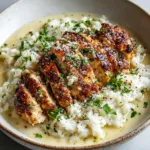
The perfect Creamy Garlic Pork Chops in a rustic skillet.
Conclusion: Bring the Restaurant Home
Mastering these Creamy Garlic Pork Chops is a milestone for any home cook. By following the visual cues—looking for the golden-brown crust, the ivory sauce, and the bright green parsley—you have created a dish that is as much a feast for the eyes as it is for the palate. This skillet dinner proves that with the right technique and a rustic black cast iron pan, you can achieve professional results in your own kitchen.
If you loved this recipe, please leave a comment below and let us know how your sear turned out! Don’t forget to share your photos and tag us, or save this recipe to your favorite boards on Pinterest for your next Sunday dinner.
Hi, I’m Emily Carter, and welcome to FL Recipes! I share simple, healthy recipes that make cooking easy, fun, and delicious for everyone. more about me »